


 Airbus Tests Valkyrie Combat Drone in Europe for Eurofighter Integration
  Amazon Cuts More Jobs as AI Investment Expands
  OpenAI Revenue Hits $50 Billion, Below Earlier $70 Billion Estimate
  Apple Cuts iPhone 18 Pro Production Orders Amid Weak Demand
  Broadcom, Oracle and SpaceX Seek Billions in Private Debt for AI Expansion
  TSMC Profit Set to Surge 65% as AI Chip Demand Drives Record Earnings
  Samsung Q3 Profit Hits Record High on AI Memory Demand
  Coinbase CEO Backs SEC Accredited Investor Reform
  Ethereum Foundation-Linked Wallets Move $11.13M in ETH to Kraken
  Amazon in Talks to Acquire AI Startup Decart for $7 Billion
  Blockchain.com Seeks CFTC Approval for Prediction Markets and Crypto Derivatives
  Micron Shares Rise 4% Despite Taiwan Strike Risk
  Canton Network Expands in South Korea With Major Partnerships
  OpenAI Annualized Revenue Hits $50 Billion, Below Earlier Estimates
  Apple Supplier Luxshare Sees Limited Impact From US Patent Probe
  FAA Warns US Airlines Over Saudi Arabia Flight Risks


 Add as a preferred source on Google
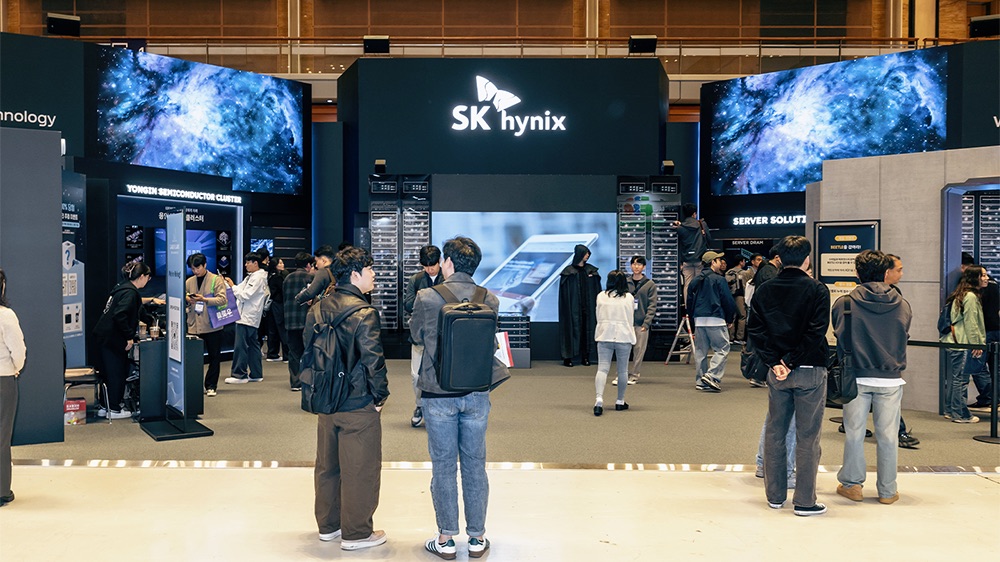
Shares of South Korean semiconductor giants Samsung Electronics and SK Hynix dropped more than 3% on Monday after Chinese memory chipmaker ChangXin Memory Technologies (CXMT) announced progress in advanced DRAM technology, raising concerns about intensifying competition in the global memory chip market.
Samsung Electronics shares declined 3.6% to 252,500 won, while SK Hynix fell 3.4% to 1,624,000 won. Meanwhile, CXMT shares slipped 3.1% to 49.42 yuan despite the company's announcement of a technological breakthrough.
CXMT revealed significant advancements in developing a next-generation 4F² DRAM memory-cell structure, a technology also being explored by Samsung and SK Hynix. The innovative design aims to increase memory density by fitting more cells onto semiconductor chips, potentially improving storage capacity and power efficiency.
Current commercial dynamic random-access memory (DRAM) technology primarily uses a 6F² cell structure. CXMT's new approach incorporates its proprietary Vertical Surrounding Gate transistor architecture, which reduces electrical leakage and minimizes the physical space required for individual memory cells, according to the South China Morning Post.
Speaking at an industry event in Shanghai over the weekend, CXMT President Cao Kanyu announced plans to introduce next-generation DDR5 registered dual in-line memory modules (RDIMMs) using the advanced technology before the end of 2026.
These memory modules are intended for enterprise servers, where manufacturers must satisfy strict standards for reliability, durability and compatibility. Successful commercialization could strengthen CXMT's position in the competitive server memory market.
However, CXMT has not released detailed technical specifications or confirmed an exact product launch date. Analysts and investors will therefore be watching whether the Chinese semiconductor manufacturer can successfully transition its latest DRAM innovation into commercially viable products.
The announcement highlights China's growing efforts to reduce its technological dependence on foreign semiconductor suppliers while challenging established industry leaders.
SK Hynix previously outlined its development roadmap for 4F² memory technology in 2025. Samsung Electronics, meanwhile, has reportedly set a target of 2028 for mass production of sub-10-nanometer DRAM chips incorporating the advanced architecture.
As competition intensifies, developments in next-generation memory technology could reshape the global DRAM industry, particularly as demand for high-performance memory continues to expand across artificial intelligence infrastructure, data centers and enterprise computing.







