


 Colombia Extradites FARC Dissident Leader ‘Spider’ to US
  Trump Cancels Alabama Football Trip as Hurricane Isaias Approaches
  Flydubai Co-Pilot Planned Suicide Attack on Israel Airport, UAE Says
  Trump Asks Supreme Court to Restore Third-Country Deportations
  SEC Investor Reform Validates Barry Silbert’s Tokenization Vision
  Trump Backs Florida Golf Course as Presidential Retreat
  TikTok Reaches $100 Million Alabama Settlement Over Child Safety Claims
  US Supreme Court Revives Trump Administration Voter Citizenship Database
  Evan Gershkovich Says FSB Set Trap for 2023 Russia Arrest
  CNN, Politico and MS NOW Seek Court Order Blocking Trump White House Ban
  Berlin Coalition Talks Advance After Left Party Antisemitism Deal
  US Suspends Microsoft, Adobe From Green Card Program
  Flavio Bolsonaro Leads Lula 49%-45% in Brazil Runoff Poll
  San Francisco Halts New Data Center Construction With 45-Day Moratorium
  Marco Rubio Warns Russia-Ukraine War Could Spark Wider Conflict
  JD Vance Questions Pentagon Plan to Livestream Fort Hood Shooter’s Execution


 Add as a preferred source on Google
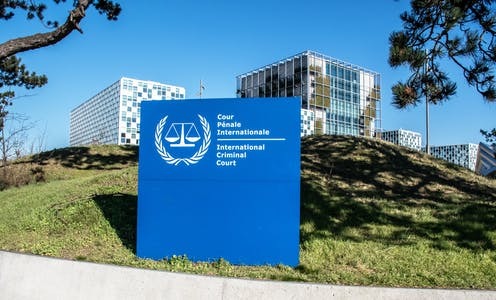
US President Donald Trump's administration imposed sweeping sanctions on the International Criminal Court (ICC) on Friday, escalating tensions with European allies and raising concerns over the future of international justice.
The sanctions were announced hours after former ICC judge Navi Pillay received the Nobel Peace Prize, an award recognizing the importance of international courts amid growing political pressure.
The ICC condemned Washington's decision as an attack on international law and urged its 125 member states to defend the institution.
US Secretary of State Marco Rubio said the Trump administration would prohibit transactions with the court, restricting its financial resources and operational capabilities.
"President Trump will never allow the International Criminal Court to prosecute Americans," Rubio stated.
The US Treasury Department introduced a six-month grace period alongside exemptions covering telecommunications, software services, pensions and detainee-related transactions. Rubio indicated that restrictions could be adjusted depending on whether the ICC addresses Washington's concerns.
The Trump administration has repeatedly criticized the ICC over arrest warrants targeting Israeli Prime Minister Benjamin Netanyahu and investigations involving American military personnel in Afghanistan.
However, ICC officials maintain that their investigations and prosecutions will continue despite the financial restrictions.
ICC Deputy Prosecutor Nazhat Shameem Khan accused Washington of attempting to weaken international accountability and judicial independence.
European leaders expressed concern over the sanctions. EU foreign policy chief Kaja Kallas described the six-month grace period as an opportunity for diplomatic discussions while emphasizing Europe's commitment to protecting the court.
Belgium's foreign minister also called for activating an EU blocking statute to shield the ICC from US restrictions.
Established in 2002 under the Rome Statute, the ICC investigates genocide, war crimes and crimes against humanity. Its arrest warrants have targeted prominent figures, including Russian President Vladimir Putin and former Sudanese President Omar al-Bashir.
The latest sanctions could significantly disrupt the court's operations by preventing American banks, technology providers and insurance companies from conducting business with the institution.
Anticipating these measures, ICC officials have reportedly begun replacing Microsoft software with open-source alternatives and securing new banking and insurance arrangements.
Meanwhile, the Nobel Committee's decision to honor Pillay highlighted the importance of protecting international judicial institutions from political interference.
The escalating dispute threatens to deepen divisions between Washington and European governments over international law, judicial independence and accountability for alleged war crimes.







