


 Asian Stocks Fall as Bond Yields Surge Ahead of Trump-Xi Summit
  Gold Prices Fall as Treasury Yields Rise on Fed Rate Hike Bets
  Trump, Xi Focus on Trade and AI at White House Summit
  South Korea, US Discuss Warship Building Cooperation
  US Stock Futures Fall as Treasury Yields Surge Ahead of Trump-Xi Summit
  US 10-Year Treasury Yield at 6% Emerges as New Market Risk Threshold
  Japanese Bank Stocks Surge as Bond Yields Fuel Rate Hike Bets
  Wall Street Falls as Treasury Yields Surge, Oil Rebounds on Iran Tensions
  Fed Unveils Stablecoin Rules Under GENIUS Act
  Soybean Futures Slip as Traders Await Trump-Xi Trade Signals
  Gold Holds Near $4,275 as Rising Treasury Yields Fuel Fed Rate Hike Bets
  US, China Extend Trade Truce to Jan. 10 Ahead of Trump-Xi Summit
  European Stocks Fall as Bond Yields and Geopolitical Risks Weigh
  U.S. Dollar Hits Two-Month High as Oil, Treasury Yields Surge
  Fed Unveils Stablecoin Rules Under GENIUS Act
  Russian Envoy Dmitriev Heads to US for Ukraine Talks
  Asian Currencies Mixed as Dollar Holds Near Two-Month High


 Add as a preferred source on Google
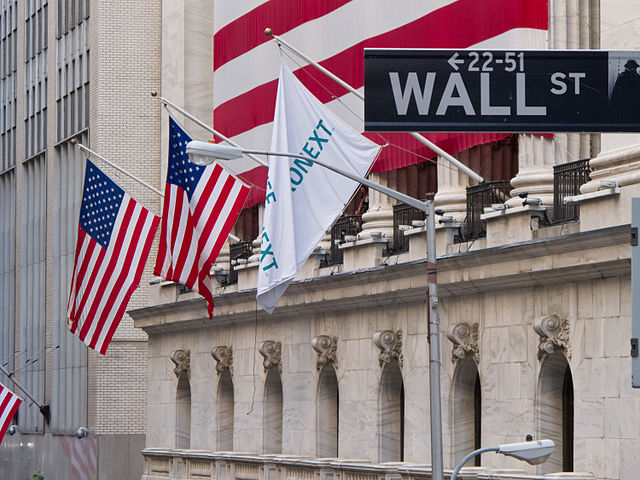
U.S. stock index futures moved slightly higher Thursday night as escalating tensions between the United States and Iran in the Strait of Hormuz pressured investor sentiment and pulled Wall Street away from recent record highs. Despite geopolitical uncertainty, strong confidence in artificial intelligence continued to support technology stocks and limited broader market losses.
S&P 500 Futures gained 0.2% to 7,377.25 points, while Nasdaq 100 Futures climbed 0.3% to 28,767.0 points. Dow Jones Futures also rose 0.1% to 49,768.0 points during late trading activity. Investors remained focused on the impact of the Middle East conflict on global markets and the upcoming U.S. nonfarm payrolls report, which could provide fresh signals on Federal Reserve interest rate policy.
The U.S. military confirmed it intercepted Iranian attacks targeting three American warships traveling through the Strait of Hormuz. Iran accused Washington of violating an existing ceasefire after U.S. strikes reportedly hit several locations near the strategic waterway. Tehran has continued efforts to strengthen control over the strait, a critical route for global oil shipments.
President Donald Trump stated that the ceasefire agreement remains active, describing the latest military exchange as “a love tap.” However, he later warned Iran of additional strikes if negotiations failed to progress quickly.
Renewed military activity weakened hopes for a near-term U.S.-Iran peace agreement, especially after both nations previously indicated signs of diplomatic progress earlier in the week. The uncertainty dragged major U.S. indexes lower during Thursday’s session. The S&P 500 declined 0.3%, the Nasdaq Composite slipped 0.1%, and the Dow Jones Industrial Average fell 0.6%.
Technology and semiconductor stocks saw mild profit-taking after recent rallies, although enthusiasm surrounding AI-driven growth continued to support the sector. Investors are now closely monitoring Friday’s nonfarm payrolls data to assess the strength of the U.S. labor market and potential economic disruptions caused by the Iran conflict. Analysts believe the Federal Reserve may keep interest rates unchanged for the remainder of the year amid ongoing geopolitical and economic uncertainty.







