


 Canada Unveils Bill to Fast-Track Major Resource Projects
  Taiwan Vows to Advance US Arms Sales Ahead of Trump-Xi Meeting
  Russian Strikes Kill Eight Across Ukraine as Energy Sites Hit
  Trump Says U.S.-Iran Peace Deal Near After UN Talks
  Marco Rubio to Meet Russia’s Lavrov in New York
  Trump Board of Peace Unveils $2.45 Billion Gaza Recovery Plan
  Scott Bessent Eyed as Trump’s New AI Czar
  CNN, MS NOW and Politico Sue Trump Over White House Media Ban
  Carney Condemns Belleville Synagogue Shooting That Wounded Police Officer
  China Tightens Fentanyl Rules Ahead of Trump-Xi Summit
  Zelenskiy Meets CIA Chief John Ratcliffe at Ireland’s Shannon Airport
  Vietnam, US Trade Deal Could Be Signed Soon, To Lam Says
  Lula Meets Mamdani in New York as Elections Approach
  Trump Meets Venezuela’s Delcy Rodriguez at UN Assembly
  Iran Vows ‘Crushing’ Response as US Talks Continue
  Trump Administration Prepares Sanctions Against Entire ICC
  UK, Mauritius Seek Diego Garcia Base Deal


 Add as a preferred source on Google
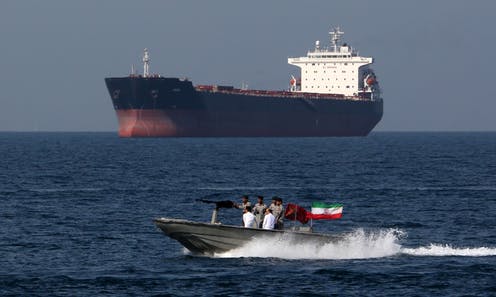
The United States and Iran have reportedly agreed to halt military attacks as both sides prepare for high-level talks in Doha on Tuesday aimed at resolving tensions over the Strait of Hormuz, according to a senior U.S. official cited by Axios.
The official said both countries had agreed to "stop all the kinetic activity" before the negotiations. The meeting was initially planned for Switzerland to discuss Iran’s nuclear program but was moved to Doha after recent hostilities shifted attention toward security and navigation in the Strait of Hormuz, one of the world’s most important energy shipping routes.
The ceasefire, which has been in place for 11 days, has faced repeated challenges after both countries accused each other of violating the agreement. U.S. President Donald Trump warned that Washington could restart military operations if Iran continued its alleged breaches.
Trump said U.S. forces recently targeted Iranian missile and drone storage sites, along with coastal radar installations, after accusing Tehran of violating the ceasefire for a second time. In a Truth Social post, he said the strikes were a direct response to Iran's actions and warned that the United States could be "forced to militarily complete the job" if further violations occur.
According to U.S. Central Command (CENTCOM), the latest strikes followed an Iranian drone attack on commercial shipping in the Strait of Hormuz. Washington said Iran launched one-way attack drones that struck cargo vessels, including the M/V Ever Lovely and later the M/T Kiku, prompting immediate military retaliation.
Iranian state media reported explosions in Sirik, Bandar Lengeh, and Qeshm Island, all locations with military facilities, following the U.S. strikes. Tehran maintained that its actions were a response to what it described as American violations of the war-ending memorandum and the U.N. Charter.
Regional tensions also escalated after Bahrain reported that several Iranian drones targeted the country. Bahrain’s Foreign Ministry condemned the incident as a serious threat to national security, while Britain’s UK Maritime Trade Operations confirmed attacks involving commercial shipping in the Gulf.
The renewed violence has disrupted maritime traffic through the Strait of Hormuz. QatarEnergy-chartered LNG tanker Umm Slal became the latest vessel to reverse course, highlighting growing concerns about the safety of energy shipments through the strategic waterway.
The Joint Maritime Information Center has since raised its regional threat level for commercial vessels operating in the area. Meanwhile, the International Maritime Organization (IMO) paused its planned evacuation of more than 11,000 seafarers after attacks on commercial ships complicated navigation through the strait.
According to CENTCOM, U.S. forces remain deployed to protect commercial shipping and ensure freedom of navigation. The military said its operations are intended to deter further attacks while preserving the opportunity for diplomacy.
Iran has reportedly instructed vessels to use shipping routes under its control, while the United States continues supporting an alternative maritime corridor along Oman’s coastline. Iranian media also claimed Revolutionary Guard forces fired warning shots at ships using routes not authorized by Tehran.
U.S. Vice President JD Vance urged Iran to resolve disagreements through diplomatic channels, stating that Washington had honored the ceasefire agreement. He warned that any further attacks would receive a military response.
Financial markets are now closely watching the outcome of the Doha negotiations, as any breakthrough could ease concerns over global oil supplies and stabilize investor sentiment. With the Strait of Hormuz handling a significant share of the world's crude oil exports, the talks are expected to play a critical role in shaping energy markets and regional security in the coming days.







