


 White House Bars CNN, MS NOW and Politico Reporters
  DOJ Will Investigate AI-Related Crimes, Attorney General Blanche Says
  Trump Scales Back Endangered Species Act Protections
  Trump, Iran Trade Threats as Middle East Tensions Escalate
  Zelenskiy Meets CIA Chief John Ratcliffe at Ireland’s Shannon Airport
  Trump Sets High-Stakes UN Meetings With Zelenskiy, Gulf Leaders
  Macron, Trump Discuss Ukraine-Russia Energy Strike Moratorium
  FAA Allows Boeing to Sell 35 More 777F Freighters Beyond 2028
  Trump Bans CNN, MS NOW and Politico From White House
  US Northeast Airports Resume Operations After Telecom Outage Disrupts Thousands of Flights
  US-China Talks Target AI, Tariffs Ahead of Trump-Xi Summit
  Burnham Eyes UK Leadership Role in AI Ahead of Trump Meeting
  Appeals Court Rejects Trump Third-Country Deportation Policy
  United Russia Leads Russia Election as Ukraine Drones Hit Moscow
  US Resumes Immigrant Visa Processing for Hungary, Poland
  US, Japan and South Korea Back Taiwan Ahead of Trump-Xi Summit
  Trump Administration Prepares Sanctions Against Entire ICC


 Add as a preferred source on Google
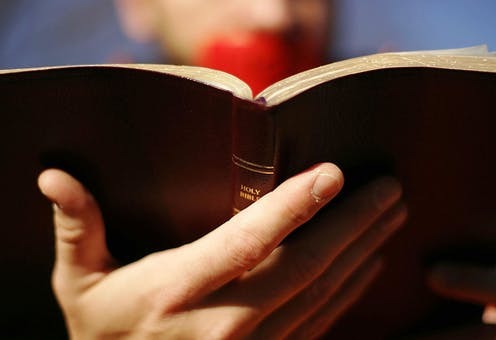
Texas has approved new mandatory reading lists for public school students that include passages from the Bible, marking the latest move by state leaders to incorporate conservative and religious values into public education. The decision, approved by the Republican-controlled Texas State Board of Education, will affect more than 5 million students beginning in 2030.
The board voted 9-5 in favor of the reading lists, with one member absent. The approved curriculum features a mix of classical literature, historical texts, and selected Biblical passages intended for classroom instruction. Supporters argue the changes recognize the historical and cultural significance of Judeo-Christian teachings in American society, while critics say they blur the constitutional separation between church and state.
The decision follows a series of education policies adopted in Texas that emphasize religious content in schools. Earlier this year, a federal appeals court upheld the state's requirement that the Ten Commandments be displayed in every public school classroom. Texas joins several Republican-led states that have introduced similar measures aimed at expanding the role of Christianity in public education.
Beyond the Bible, the required reading list includes a broad selection of traditional literature such as Aesop’s fables, stories about Native American history, and children's adaptations of Miguel de Cervantes’ Don Quixote. State officials describe the curriculum as a comprehensive collection of influential literary works designed to strengthen reading skills while exposing students to historically significant texts.
However, the decision has drawn criticism from civil rights and education advocacy groups. Opponents argue that including Biblical passages in mandatory classroom reading violates the First Amendment's Establishment Clause, which has long been interpreted as preventing government endorsement of a particular religion. They also contend that the reading list lacks diversity, noting that many of the featured authors are white men despite Texas having a student population largely composed of Latino and Black children.
Rachel Laser, president of Americans United for Separation of Church and State, criticized the board's decision, arguing that public schools should not be used to promote a single religious viewpoint. She said the policy attempts to impose a narrow set of beliefs on students and misrepresents the nation's religious foundations.
Supporters of the curriculum reject those claims, maintaining that Biblical references are presented within their historical and literary context rather than as religious instruction. They argue that understanding Biblical stories is essential for studying Western literature, history, and the development of American culture.
The debate over religion in public education continues to intensify across the United States as states adopt differing approaches to curriculum standards. Texas' latest move is expected to face continued public scrutiny and could prompt additional legal challenges before the new reading requirements take effect in 2030.







