


 Kremlin Says No Grounds Yet for Ukraine Peace Talks
  Scott Bessent Eyed as Trump’s New AI Czar
  Burnham Eyes UK Leadership Role in AI Ahead of Trump Meeting
  Canada Unveils Bill to Fast-Track Major Resource Projects
  China Tightens Fentanyl Rules Ahead of Trump-Xi Summit
  Lula and Flavio Bolsonaro Tied in Brazil Runoff Poll
  Lula Meets Mamdani in New York as Elections Approach
  Zelenskiy Warns Russia Preparing Major Attack on Ukraine
  Trump Says ‘Freedom’ Is Coming to Cuba
  Macron, Trump Discuss Ukraine-Russia Energy Strike Moratorium
  Trump Scales Back Endangered Species Act Protections
  Trump Meets Venezuela’s Delcy Rodriguez at UN Assembly
  Trump Board of Peace Unveils $2.45 Billion Gaza Recovery Plan
  Carney Condemns Belleville Synagogue Shooting That Wounded Police Officer
  Trump Says U.S.-Iran Peace Deal Near After UN Talks
  UK, Mauritius Seek Diego Garcia Base Deal
  Vietnam, US Trade Deal Could Be Signed Soon, To Lam Says


 Add as a preferred source on Google
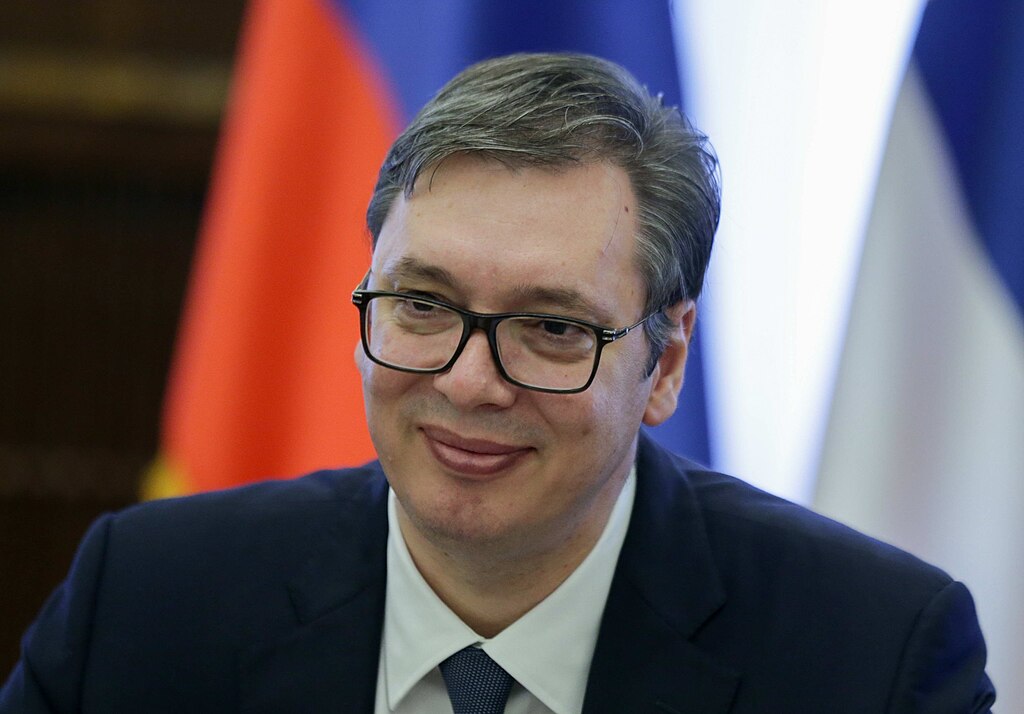
Serbian President Aleksandar Vucic announced on Saturday that he will resign within the next few weeks and pave the way for early presidential and parliamentary elections, marking a dramatic political shift after 18 months of anti-government protests driven by corruption allegations and public outrage over a deadly railway station disaster.
Vucic, who has served as Serbia's president or prime minister for the past 12 years, made the announcement during a pro-government rally in Belgrade. His current presidential term was scheduled to end in mid-2027, but he said he intends to step down early and campaign for his Serbian Progressive Party (SNS) in the upcoming elections.
"I will be president for only a couple more weeks, and then I will resign," Vucic told supporters, proposing that the party's election coalition be named "United Serbia." However, he did not provide a timeline for his resignation or explain when parliament would be dissolved, a constitutional requirement before early parliamentary elections can take place.
The decision follows sustained nationwide protests that erupted after the collapse of a railway station awning in Novi Sad in November 2024, killing 16 people. Students, opposition parties, and civil society groups argue the tragedy exposed widespread government corruption, poor oversight of public infrastructure projects, and systemic mismanagement.
Demonstrators have staged the largest wave of protests in Serbia since the overthrow of former President Slobodan Milosevic in 2000. Student organizations recently renewed calls for snap elections, with additional rallies planned across the country.
Despite his resignation announcement, political analysts believe Vucic is unlikely to leave Serbia's political scene. They expect him to seek the role of prime minister if the SNS secures a parliamentary majority, allowing him to maintain significant influence over government affairs.
Warsaw-based political analyst Radivoje Grujic said Vucic's resignation should not be viewed as a political retirement. Instead, he believes the Serbian leader already has a strategy to remain at the center of power, potentially by installing a trusted ally as president while returning to the premiership.
Opposition leaders share a similar assessment. Savo Manojlovic, head of the Move-Change movement, argued that Vucic's decision is an attempt to regain political momentum before growing public dissatisfaction further weakens his position. According to Manojlovic, the student-led movement has gained significant public support and now represents the government's strongest political challenge.
Although Serbia's presidency is largely ceremonial, Vucic has exercised substantial influence through his leadership of the ruling SNS and close control over government institutions. He has previously suggested he could return as prime minister after his presidential term, and several senior party officials have publicly endorsed the idea.
In a Reuters interview earlier this year, Vucic said he had not decided on his political future but acknowledged he might remain active to protect his political legacy.
During Saturday's rally, Vucic accused student protesters and opposition groups of attempting to destabilize Serbia and alleged they were working with unnamed foreign interests. Protest organizers have consistently rejected those accusations, insisting their demonstrations are focused on accountability, transparency, and democratic reforms.
Looking ahead, Vucic pledged that his party would intensify efforts to combat corruption while increasing pensions, expanding financial support for low-income citizens, and improving Serbia's public healthcare system.
Opposition figures, however, continue to accuse Vucic's administration of widespread corruption, restricting media freedom, maintaining ties to organized crime, and using intimidation against political rivals. Vucic and his allies have repeatedly denied those allegations.
The political uncertainty comes as Serbia continues its bid for European Union membership while maintaining close economic and diplomatic ties with both Russia and China. EU officials have repeatedly urged Belgrade to strengthen the rule of law, improve election standards, combat corruption, and align its foreign policy more closely with the European bloc before accession negotiations can advance.







