


 South Korea, US Discuss Warship Building Cooperation
  U.S. 10-Year Treasury Yield Hits 2007 High as Fed Rate Hike Bets Rise
  RBI Uses $10 Billion Currency Swaps to Drain Excess Rupee Liquidity
  Gold Holds Near $4,275 as Rising Treasury Yields Fuel Fed Rate Hike Bets
  Wall Street Falls as Treasury Yields Surge, Oil Rebounds on Iran Tensions
  Australia Unemployment Hits Five-Year High Despite Strong Jobs Growth
  China’s ‘Lipstick King’ Says AI Won’t Replace Livestream Hosts
  Wall Street Ends Flat as Oil, Treasury Yields and Fed Jitters Rattle Markets
  U.S. Dollar Hits Two-Month High as Oil, Treasury Yields Surge
  Mexico-US Trade Talks Delayed to October as Tariff Negotiations Continue
  Soybean Futures Slip as Traders Await Trump-Xi Trade Signals
  US Stock Futures Fall as Treasury Yields Surge Ahead of Trump-Xi Summit
  Japanese Bank Stocks Surge as Bond Yields Fuel Rate Hike Bets
  Japan Private-Sector Growth Slows as Domestic Demand Weakens
  Fed Unveils Stablecoin Rules Under GENIUS Act
  Oil Prices Jump 3% as Houthi Attack Revives Supply Fears
  European Stocks Fall as Bond Yields and Geopolitical Risks Weigh


 Add as a preferred source on Google
Announced on February 2, 2026, the US-India commerce deal offers Indian exports significant tariff relief. From 25% to 18%, US reciprocal tariffs on Indian goods have been cut; the extra 25% punitive tariff connected with India's Russian oil imports has been absolutely waived, lowering the effective rate from about 50% to only 18%. India has promised to raise US imports to $500 billion across important industries like energy (LPG, LNG), technology, agriculture, and defense; at near-zero levels. In exchange, India has committed to steadily removing non-tariff restrictions and customs on American goods. This historic agreement signals a strategic change away from India's dependence on discounted Russian oil in favor of US energy supplies and closer bilateral economic relations.
Indian markets immediately showed enthusiasm as the Sensex and Nifty increased over 2% on February 3, thereby reversing recent declines. Lower tariffs will greatly improve India's main export industries' competitiveness (textiles, medications, IT services, and engineering goods), therefore enabling producers to grab market share against regional competitors like Vietnam and Bangladesh. While improving India's position in world supply chains, the agreement also offers a long-term GDP increase by means of more bilateral trade, greater FDI inflows, and "Buy American" procurement obligations.
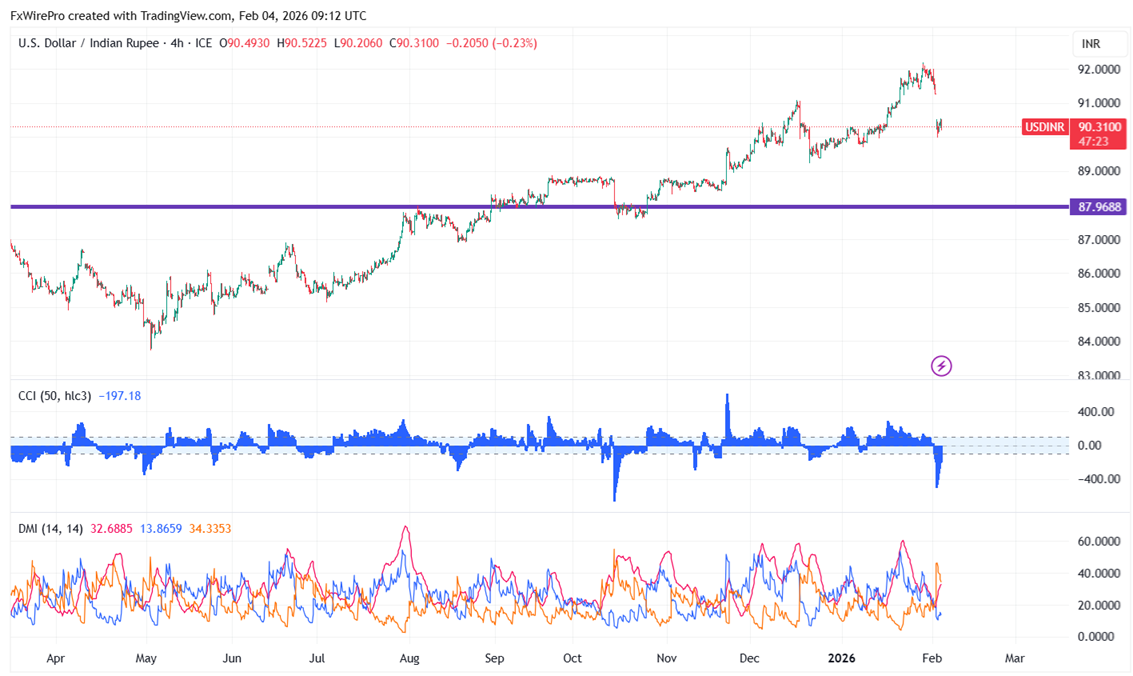
Driven by robust FII inflows and good mood, the rupee appreciated significantly more than 1% to 90.27/USD on February 3, from near-92 levels. HSBC forecasts additional profits toward 88/USD by March-end, driven by short-term undervaluation and better trade balances. Though rising US imports could stress foreign exchange reserves and cause minor devaluation risks if the import surge quickens, the net effect is positive for the rupee and helps the RBI in its inflation management. Although precise implementation timetables and staggered tariff cuts stay subject to last-minute decisions, analysts see this as a big confidence enhancer for India.
Major Support and resistance
R1- 90.50
R2-91.33
R3- 91.65
Support
S1-89.58
S2-89.20
S3-88.30







