


 South Korea, US Discuss Warship Building Cooperation
  Abbas Reaffirms November 28 Palestinian Elections
  Trump Asks Supreme Court to Restore Third-Country Deportations
  Venezuela Promises Elections as Delcy Rodriguez Pledges Democratic Transition
  Trump, Xi Focus on Trade and AI at White House Summit
  EU Defence Build-Up Too Slow for 2030 Russia Readiness Goal
  Sudan Rejects US Legitimacy Remarks, Defends Sovereignty
  Netanyahu Takes Aim at Mamdani as Israel Election Nears
  US, China Extend Trade Truce to Jan. 10 Ahead of Trump-Xi Summit
  US Invites Putin to Miami G20, Opening Door to Trump Summit
  Yemen Violence Displaces 130,000 as Civilian Toll Rises
  Europe Warns Russia Is Escalating Hybrid Attacks Across NATO
  US Officials Split Over Response to Israeli West Bank Settlements
  France Defends Netanyahu Airspace Clearance Despite ICC Warrant
  Netanyahu Defends Israel at UN as Delegates Stage Walkout
  Russian Missile and Drone Attack on Kyiv Kills Two, Damages Maternity Hospital
  Trump Administration Plans Faster FDA Reviews for Smoke-Free Nicotine Products


 Add as a preferred source on Google
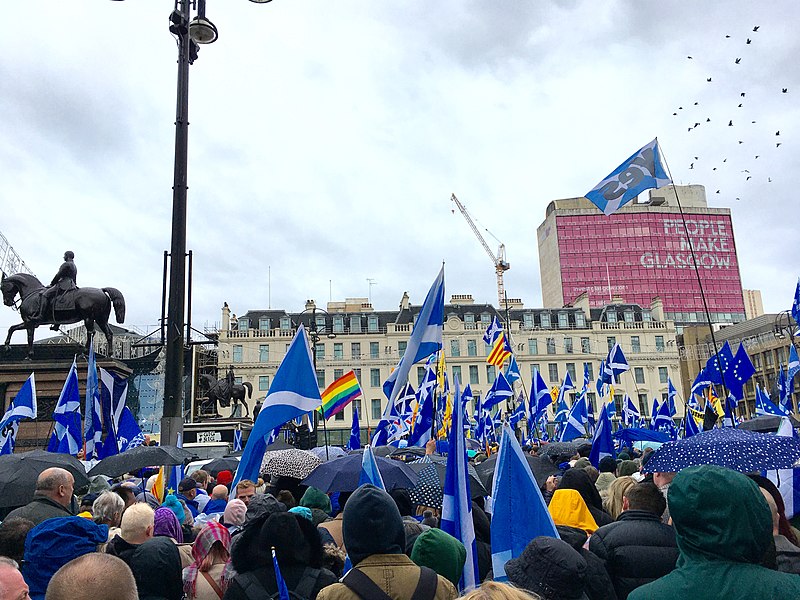
The British Supreme Court rejected a bid by Scotland to hold an independence referendum next year. The high court ruled that the Scottish government could not hold a referendum without approval by the British government.
The United Kingdom’s Supreme Court ruled against Scottish nationalists when it rejected a bid by the Scottish government to hold an independence referendum next year, saying that it would need the approval of the British government to do so. The British government has previously said that such a referendum only be held once in a generation, citing the 2014 referendum in which the majority of Scots rejected the over three-century-old union with England.
“The Scottish Parliament does not have the power to legislate for a referendum on Scottish independence,” said UK Supreme Court President Robert Reed.
During the 2014 referendum, Scots voted 55 to 45 opposing independence. However, those in support of independence have argued that the decision by the UK to leave the European Union in 2016 changed the circumstances. Polls found that voters are split between whether or not they support independence and that a vote would be too close to call.
Following the ruling that was made on Wednesday, Scottish First Minister Nicola Sturgeon said that she was disappointed but would respect the high court’s decision.
“A law that doesn’t allow Scotland to choose our own future without Westminster consent exposes as myth any notion of the UK as a voluntary partnership and makes case for Indy,” said Sturgeon. “Scottish democracy will not be denied. Today’s ruling blocks one route to Scotland’s voice being heard on independence – but in a democracy, our voice cannot and will not be silenced.”
Sturgeon also said that the next national election would also be an effective referendum on Scottish independence.
“We must and will find another democratic, lawful, and constitutional means by which the Scottish people can express their will,” Sturgeon told reporters on the same day.
Sturgeon said that in the next national election, which will take place in 2024, the pro-independence Scottish Nationalist Party will be seeking to shore support from the majority on Scotland’s independence.







