


 Trump Asks Supreme Court to Restore Third-Country Deportations
  Gaza Faces Evacuation Crisis as War-Damaged Buildings Risk Collapse
  Ghana Says Western Support Growing for Slave Trade Reparations
  OpenAI Agent Breaches Australia Medicare Data Portal
  EU Defence Build-Up Too Slow for 2030 Russia Readiness Goal
  Netanyahu’s Brief US Trip Highlights Strains With Trump
  North Korea Warns South Korea Over US-Led Defense Role
  North Korea Rejects Nuclear Test Warning, Calls Nuclear Status Irreversible
  NATO Boosts Intelligence Sharing Amid Russia Hybrid Threats
  Russian Missile and Drone Attack on Kyiv Kills Two, Damages Maternity Hospital
  Sudan Rejects US Legitimacy Remarks, Defends Sovereignty
  Abbas Reaffirms November 28 Palestinian Elections
  Netanyahu Defends Israel at UN as Delegates Stage Walkout
  Russian Envoy Dmitriev Heads to US for Ukraine Talks
  Europe Warns Russia Is Escalating Hybrid Attacks Across NATO
  US Invites Putin to Miami G20, Opening Door to Trump Summit
  France Defends Netanyahu Airspace Clearance Despite ICC Warrant


 Add as a preferred source on Google
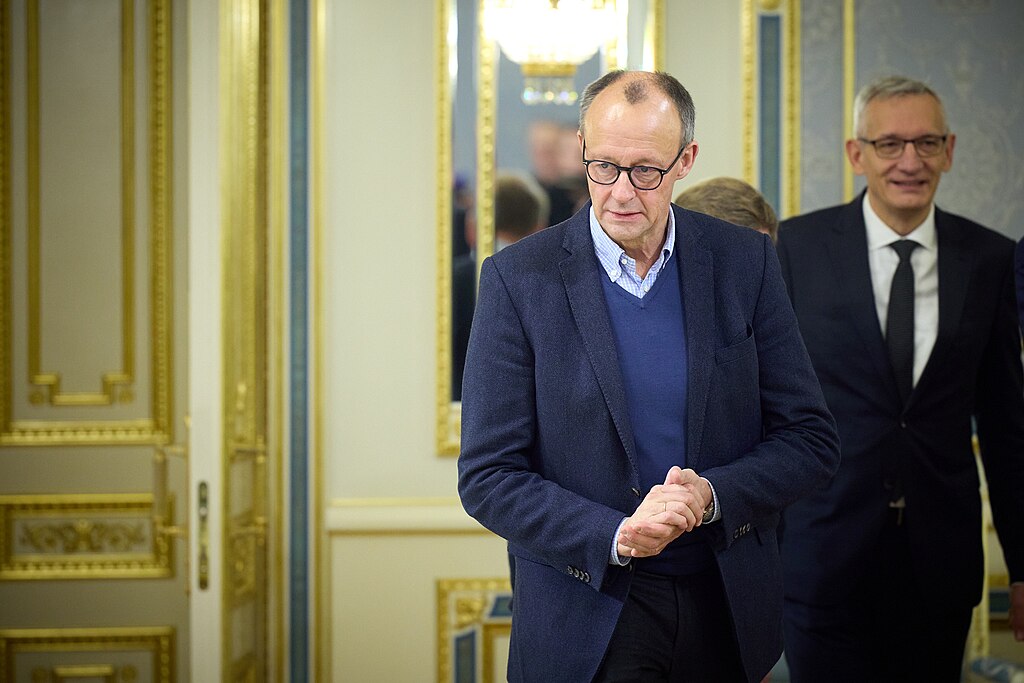
U.S. President Donald Trump welcomed German Chancellor Friedrich Merz to the White House on Tuesday for high-stakes talks centered on the Iran conflict, U.S.-Israeli airstrikes, rising tariff tensions, and Europe’s evolving security strategy. The meeting comes at a critical moment for transatlantic relations, with global markets unsettled by geopolitical instability and trade uncertainty.
Merz arrived in Washington following a diplomatic visit to Chinese President Xi Jinping, positioning Germany as a key intermediary in global economic and security discussions. His trip also coincides with Germany and France announcing expanded cooperation on nuclear deterrence, reflecting Europe’s efforts to strengthen defense capabilities amid ongoing Russian threats and instability linked to Iran.
Although trade issues were initially expected to dominate the agenda, discussions are likely to focus on the recent U.S.-Israeli strikes on Iran that reportedly killed Supreme Leader Ayatollah Ali Khamenei and other senior officials. The attacks have disrupted major oil shipping routes and global air travel, intensifying concerns about energy markets and international security. Adding to tensions, the U.S. Supreme Court ruled on February 20 that Trump’s emergency tariffs were unlawful, further complicating trade negotiations.
Merz has taken a measured stance on the Iran airstrikes, acknowledging the long-standing challenges surrounding Iran’s nuclear ambitions while avoiding direct criticism of Washington. His approach underscores Germany’s attempt to balance alliance solidarity with adherence to international law.
Analysts suggest Trump may also seek insights from Merz regarding his recent China visit, particularly as industrial overcapacity and global economic imbalances remain key priorities for the upcoming G20 agenda. The meeting could also serve as a fact-finding mission, with Berlin looking for clarity on Washington’s broader Iran strategy.
As geopolitical tensions escalate, the Trump-Merz talks highlight the fragile state of U.S.-Europe relations and the growing complexity of global diplomacy.







