


 ICE Agent Arrested in Minneapolis Over Venezuelan Man Shooting
  Gaza Faces Evacuation Crisis as War-Damaged Buildings Risk Collapse
  Trump Asks Supreme Court to Restore Third-Country Deportations
  France Defends Netanyahu Airspace Clearance Despite ICC Warrant
  US Senate Rejects Iran War Powers Resolution in 50-49 Vote
  Netanyahu Takes Aim at Mamdani as Israel Election Nears
  US, China Extend Trade Truce to Jan. 10 Ahead of Trump-Xi Summit
  US Northeast Airports Resume Operations After Telecom Outage Disrupts Thousands of Flights
  Kremlin Says No Decision Yet on Putin-Trump December Summit
  EU Defence Build-Up Too Slow for 2030 Russia Readiness Goal
  Trump Administration Removes Confederate Memorial Criticism From Arlington Website
  Pezeshkian Says US Must Choose When Iran War Ends
  Netanyahu Defends Israel at UN as Delegates Stage Walkout
  US Judge Dismisses Imran Ahmed Deportation Lawsuit
  South Korea, US Discuss Warship Building Cooperation
  North Korea Warns South Korea Over US-Led Defense Role
  DOJ Will Investigate AI-Related Crimes, Attorney General Blanche Says


 Add as a preferred source on Google
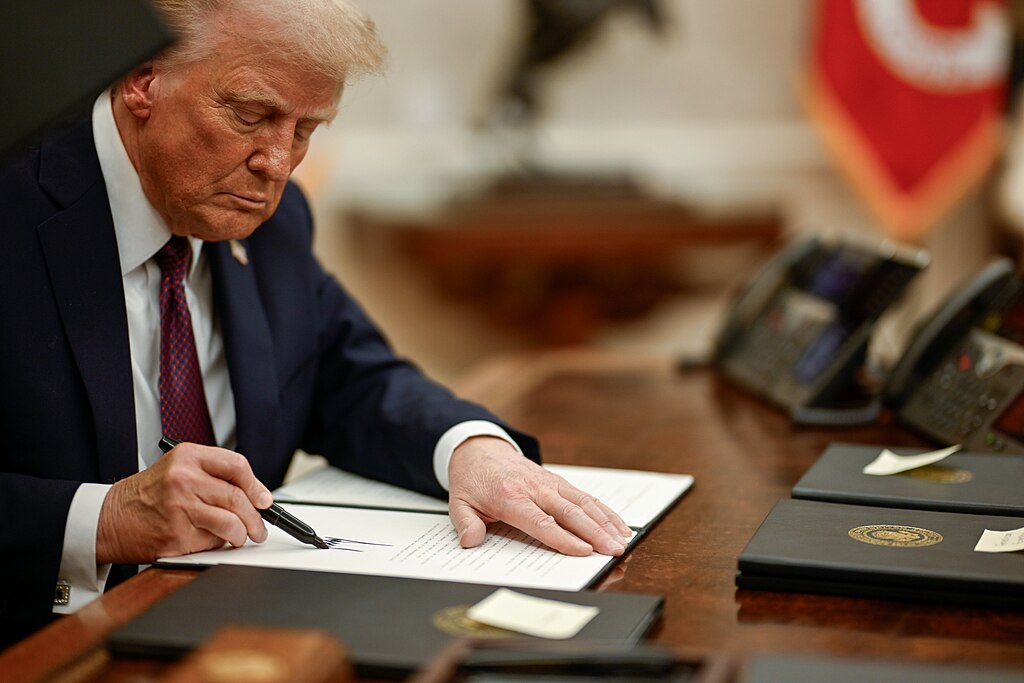
President Donald Trump signed a sweeping executive order on Wednesday aimed at tightening college accreditation standards, a move that could affect access to billions in federal student aid. The order is part of a broader push to reform higher education and hold universities accountable for what the administration calls "poor performance" and "civil rights violations."
Accreditation, while not handled directly by the federal government, is required for institutions to receive federal student loans and grants. Trump directed Education Secretary Linda McMahon to increase oversight of accrediting bodies, potentially limiting or revoking their rights if they fail to enforce high standards.
This action is one of seven education-related measures announced during an Oval Office event. Other initiatives include promoting artificial intelligence education, expanding job training for trades, and launching a new initiative to support historically Black colleges and universities (HBCUs), which includes an annual White House summit.
The administration has already frozen hundreds of millions in funding to several universities, citing inadequate responses to campus antisemitism. Harvard University is currently suing the federal government over this freeze.
Another executive order requires colleges to fully disclose large foreign donations, including the true source and intended purpose, to address growing concerns over foreign influence in U.S. education.
Additionally, Trump ordered the enforcement of laws against unlawful discrimination in admissions and discipline policies. He emphasized that student discipline should be based on behavior rather than racial quotas, taking aim at diversity, equity, and inclusion policies.
The new measures underscore the administration’s effort to reshape higher education by increasing transparency, reducing foreign influence, and emphasizing merit-based standards.







