


 Iran Vows ‘Crushing’ Response as US Talks Continue
  Macron Challenges Trump’s Gaza Peace Claims at UN
  Mexico-US Trade Talks Delayed to October as Tariff Negotiations Continue
  China Tightens Fentanyl Rules Ahead of Trump-Xi Summit
  Judge Orders Trump to Restore White House Access for CNN, MS NOW and Politico
  US Officials Split Over Response to Israeli West Bank Settlements
  Taiwan Vows to Advance US Arms Sales Ahead of Trump-Xi Meeting
  Taiwan Thanks US for Support Ahead of Trump-Xi Summit
  Trump Meets Venezuela’s Delcy Rodriguez at UN Assembly
  Gaza Faces Evacuation Crisis as War-Damaged Buildings Risk Collapse
  Sudan Rejects US Legitimacy Remarks, Defends Sovereignty
  Trump Board of Peace Unveils $2.45 Billion Gaza Recovery Plan
  Zelenskiy Warns Russia Preparing Major Attack on Ukraine
  Russian Envoy Dmitriev Heads to US for Ukraine Talks
  Trump Says ‘Freedom’ Is Coming to Cuba
  Russian Missile and Drone Attack on Kyiv Kills Two, Damages Maternity Hospital
  South Korea, US Discuss Warship Building Cooperation


 Add as a preferred source on Google
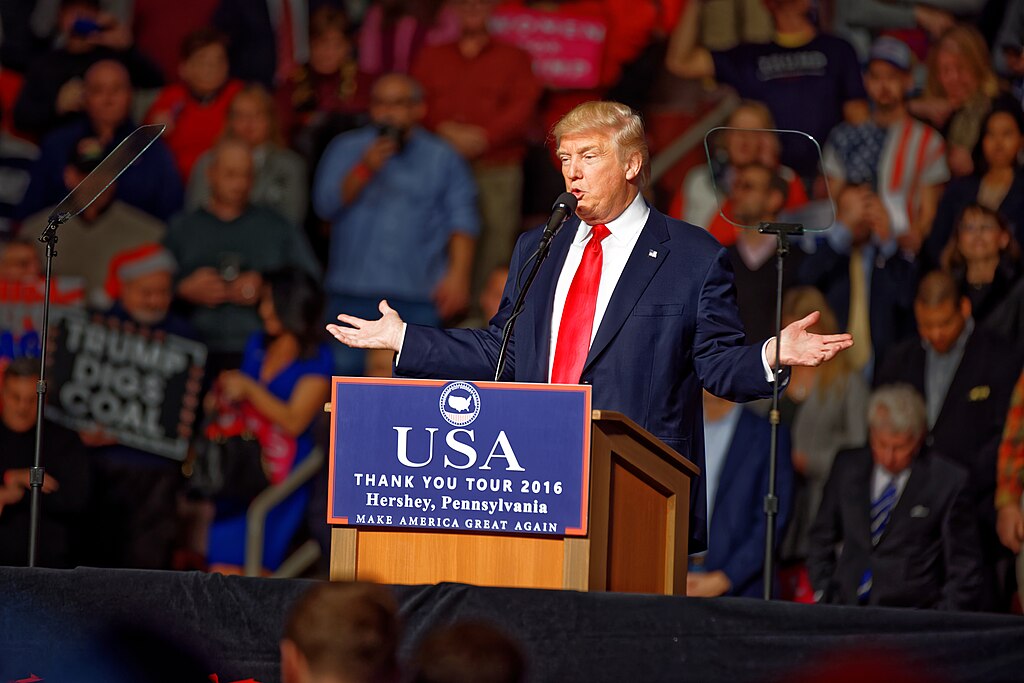
President-elect Donald Trump has announced plans to implement stringent voting requirements, including mandatory voter identification and proof of citizenship, in upcoming elections. This initiative aims to enhance election integrity and prevent voter fraud.
Proposed Election Reforms
During a recent event, Trump outlined his vision for overhauling the U.S. electoral system. He advocated for the introduction of paper ballots, single-day voting, and the elimination of mail-in ballots. Central to his proposal is the enforcement of voter ID laws and the requirement for voters to provide proof of citizenship.
Trump criticized states like California, where voter ID is not mandated, suggesting that such policies undermine election security. He stated, "We want to have paper ballots, one-day voting, voter ID, and proof of citizenship."
Legal and Practical Challenges
Implementing these proposed changes faces significant obstacles. The U.S. election system is highly decentralized, with states holding primary authority over election administration. This structure limits the federal government's capacity to unilaterally impose nationwide voting requirements.
Additionally, critics argue that such measures could disenfranchise eligible voters, particularly among marginalized communities. Research indicates that instances of noncitizen voting are exceedingly rare, calling into question the necessity of stringent proof-of-citizenship laws.
Public Reaction and Social Media Buzz
The announcement has elicited a wide range of reactions on social media platforms. Twitter user @PatriotGuard expressed support, stating, "Ensuring only citizens vote is essential for fair elections. This is a step in the right direction." Conversely, @CivilRightsAdvocate voiced concern: "These measures will suppress voter turnout and disproportionately affect minority communities."
User @ElectionLawProf noted, "Implementing nationwide voter ID and proof of citizenship requirements presents significant legal challenges given state control over elections." Meanwhile, @DemocracyWatchdog tweeted, "There's little evidence of widespread noncitizen voting; this seems like a solution in search of a problem."
On the other hand, @SecureElectionsNow warned, "Without strict voter ID laws, our election integrity remains at risk. It's time for reform." Finally, @VoterAccessNow shared, "We must balance election security with ensuring all eligible voters can exercise their rights without undue burden."
Conclusion
As the incoming administration prepares to assume office, the debate over election integrity measures, including voter ID and proof of citizenship requirements, is poised to intensify. Balancing the prevention of voter fraud with the protection of voter access remains a contentious issue, with legal, practical, and ethical considerations at the forefront of the discussion.







