


 Russian Strikes Kill Eight Across Ukraine as Energy Sites Hit
  Venezuela Promises Elections as Delcy Rodriguez Pledges Democratic Transition
  Kremlin Says No Grounds Yet for Ukraine Peace Talks
  Sudan Rejects US Legitimacy Remarks, Defends Sovereignty
  China Tightens Fentanyl Rules Ahead of Trump-Xi Summit
  Trump to Press Xi on Release of US Nuclear Expert Held in China
  Ghana Says Western Support Growing for Slave Trade Reparations
  Macron, Trump Discuss Ukraine-Russia Energy Strike Moratorium
  Russian Envoy Dmitriev Heads to US for Ukraine Talks
  Europe Warns Russia Is Escalating Hybrid Attacks Across NATO
  US Officials Split Over Response to Israeli West Bank Settlements
  Lula and Flavio Bolsonaro Tied in Brazil Runoff Poll
  Trump Says U.S.-Iran Peace Deal Near After UN Talks
  Scott Bessent Eyed as Trump’s New AI Czar
  US Invites Putin to Miami G20, Opening Door to Trump Summit
  US, China Extend Trade Truce to Jan. 10 Ahead of Trump-Xi Summit
  Trump Says ‘Freedom’ Is Coming to Cuba


 Add as a preferred source on Google
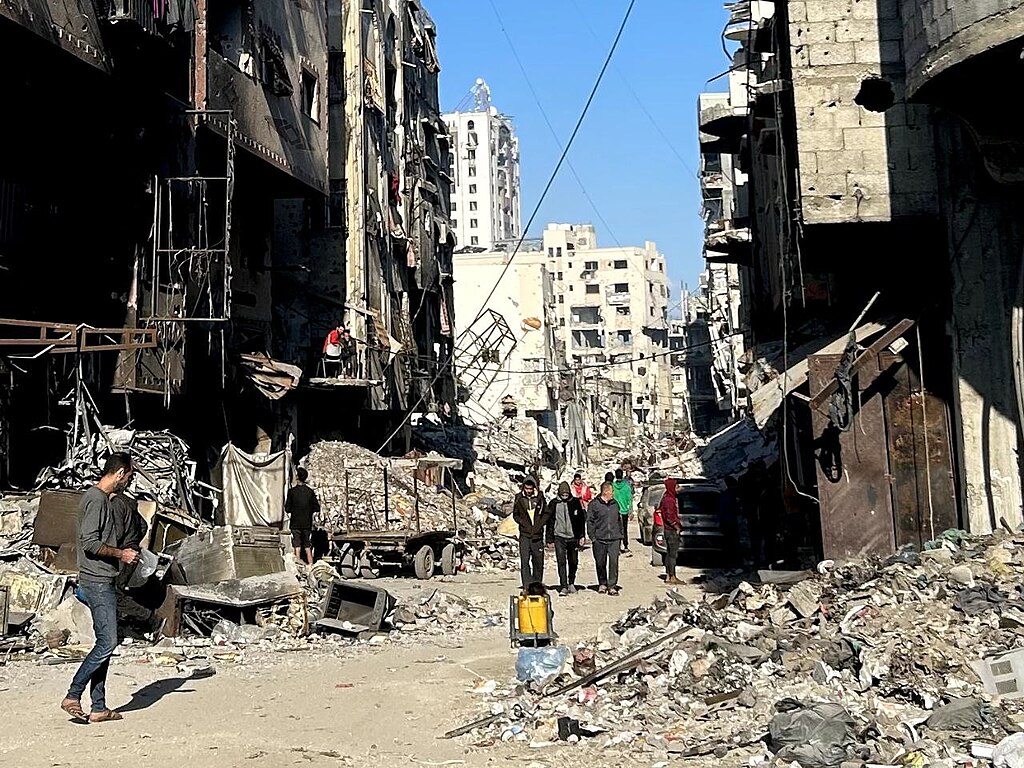
Gaza authorities are struggling to evacuate residents from hundreds of war-damaged buildings at risk of collapse, citing shortages of heavy equipment, funding and safe land for displaced families.
The danger intensified on September 16 when the Al-Saada apartment building in Gaza City’s Al-Rimal neighborhood collapsed, killing 21 people. At least 45 survivors were rescued from the rubble.
Officials say more than 2,000 buildings have been classified as potentially unsafe, although the United Nations Development Programme estimates around 400 face a serious collapse risk. With winter approaching, damaged structures could become increasingly dangerous during storms and heavy rain.
Gaza authorities announced an emergency plan on Sunday to evacuate residents from 255 of the highest-risk buildings and demolish the structures. An Egyptian-led relief organization has offered transportation to designated shelters.
However, Ismail Al-Thawabta, head of the Hamas-run Gaza government media office, said implementation faces several obstacles. Some families refuse to leave because they have nowhere else to live, while authorities lack sufficient funding, demolition machinery and suitable relocation sites.
Large-scale Gaza reconstruction has yet to begin. More than 2 million Palestinians remain concentrated in roughly a third of the enclave, with many living in tents, overcrowded shelters or damaged buildings.
Palestinian and UN officials say Israeli restrictions have contributed to shortages of heavy machinery and reconstruction materials. COGAT, the Israeli agency coordinating aid access, said heavy equipment and reconstruction supplies would not be authorized until Hamas disarms, arguing that Hamas has exploited humanitarian assistance. Hamas denies the allegation.
UNDP Gaza chief Alessandro Mrakic said rescuers were forced to search through Al-Saada’s rubble by hand because of equipment shortages. Existing machinery also requires fuel and spare parts.
Mohammad Arafa, head of the Gaza Engineers Association, said engineers believed Al-Saada suffered structural weakness after bombardment damaged concrete support pillars. The Israel Defense Forces said it had not directly struck the building during the war.
For residents, evacuation remains an agonizing choice. Many say they understand the risks but have no safe alternative.
“Where shall I go?” said Eyad Azzam, who lost his pregnant wife and 3-year-old son in the collapse. “Even in the street there’s no place.”







