


 Zelenskiy Meets CIA Chief John Ratcliffe at Ireland’s Shannon Airport
  Marco Rubio to Meet Russia’s Lavrov in New York
  Vietnam, US Trade Deal Could Be Signed Soon, To Lam Says
  Trump Administration Prepares Sanctions Against Entire ICC
  Trump Meets Venezuela’s Delcy Rodriguez at UN Assembly
  Russian Strikes Kill Eight Across Ukraine as Energy Sites Hit
  Iran Vows ‘Crushing’ Response as US Talks Continue
  Paramount-Warner Bros $110 Billion Deal Draws Antitrust Backlash
  Macron Challenges Trump’s Gaza Peace Claims at UN
  Trump Says U.S.-Iran Peace Deal Near After UN Talks
  CNN, MS NOW and Politico Sue Trump Over White House Media Ban
  US, Denmark and Greenland Set to Sign Arctic Security Deal
  Trump Scales Back Endangered Species Act Protections
  Taiwan Vows to Advance US Arms Sales Ahead of Trump-Xi Meeting
  Macron, Trump Discuss Ukraine-Russia Energy Strike Moratorium
  Kremlin Says No Grounds Yet for Ukraine Peace Talks
  Scott Bessent Eyed as Trump’s New AI Czar


 Add as a preferred source on Google
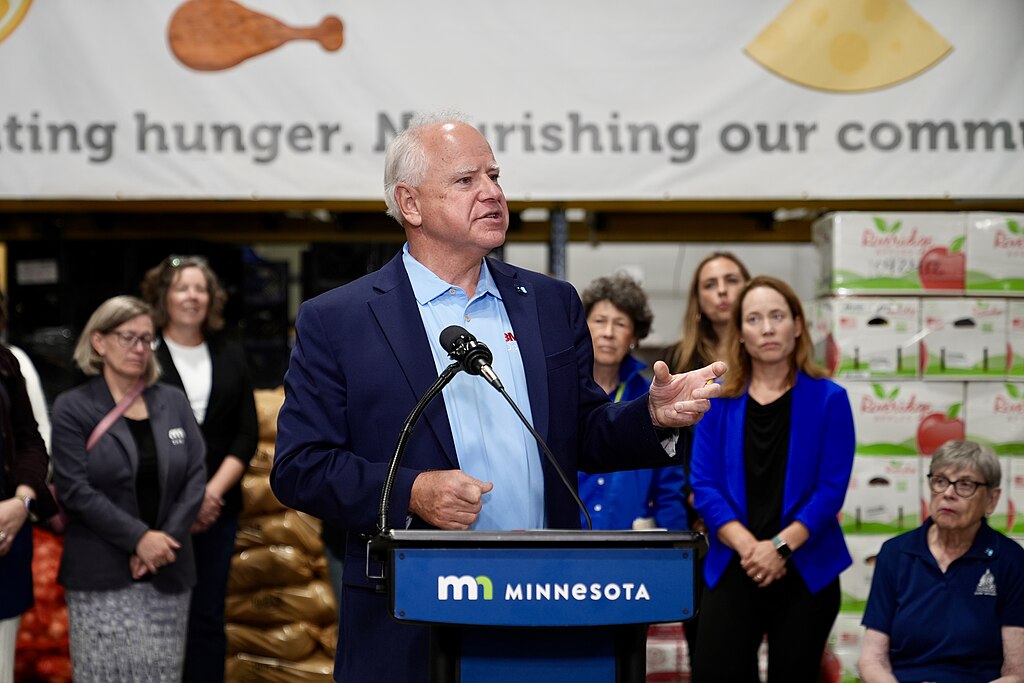
Minnesota Governor Tim Walz has sparked a political firestorm with his recent comments accusing former President Donald Trump and Ohio Senator J.D. Vance of waging a "war on workers." Walz’s remarks, delivered with a sharp tone, are part of a broader narrative that seeks to paint Trump and Vance as out of touch with the needs of everyday Americans, particularly those in the working class.
As the 2024 presidential election draws closer, Walz’s accusations add fuel to an already heated debate over labor rights and the economic policies that will shape the future of the country. The governor's criticism focuses on what he describes as the harmful effects of Trump and Vance's economic strategies, which he claims have consistently prioritized the interests of the wealthy and powerful at the expense of working people.
According to Walz, Trump and Vance have shown little regard for the struggles of American workers, choosing instead to exploit their vulnerabilities for political and financial gain. He argues that their policies have led to stagnant wages, weakened labor protections, and an overall decline in the quality of life for millions of workers across the country. This, Walz suggests, is evidence of a deliberate strategy to undermine the labor force in favor of corporate interests.
The governor’s comments are particularly pointed given the current political climate, where issues like income inequality, workers' rights, and economic justice are at the forefront of the national conversation. By framing Trump and Vance as adversaries of the working class, Walz is tapping into a growing sense of frustration among voters who feel that the economic system is rigged against them.
Walz’s criticism also comes at a time when both Trump and Vance are positioning themselves as champions of the American worker, each claiming to have the solutions to the economic challenges facing the country. Trump, who has consistently portrayed himself as a defender of blue-collar workers, touts his record on job creation and economic growth during his presidency. Vance, a rising star in the Republican Party, has also sought to align himself with working-class voters, particularly in his home state of Ohio.
However, Walz’s remarks challenge these narratives, suggesting that the true impact of Trump and Vance's policies has been to weaken, rather than strengthen, the position of American workers. He points to their opposition to labor unions, support for corporate tax cuts, and efforts to roll back regulations as evidence of a broader agenda that favors the wealthy over the working class.
As the 2024 election approaches, the battle over who truly represents the interests of American workers is likely to intensify. Walz’s sharp critique of Trump and Vance is a clear indication that Democrats plan to make labor rights and economic fairness central themes in their campaign strategy.
For now, the war of words between Walz and his Republican counterparts is just the beginning of what promises to be a contentious and deeply consequential debate over the future of the American economy and the role of government in protecting the rights of workers.







