


 Netanyahu Takes Aim at Mamdani as Israel Election Nears
  Taiwan Thanks US for Support Ahead of Trump-Xi Summit
  OpenAI Agent Breaches Australia Medicare Data Portal
  US Officials Split Over Response to Israeli West Bank Settlements
  US Senate Rejects Iran War Powers Resolution in 50-49 Vote
  Netanyahu’s Brief US Trip Highlights Strains With Trump
  Sudan Rejects US Legitimacy Remarks, Defends Sovereignty
  US Invites Putin to Miami G20, Opening Door to Trump Summit
  Yemen Violence Displaces 130,000 as Civilian Toll Rises
  Pezeshkian Says US Must Choose When Iran War Ends
  South Korea, US Discuss Warship Building Cooperation
  Russian Missile and Drone Attack on Kyiv Kills Two, Damages Maternity Hospital
  US Backs Musk in Fight Against EU’s €120 Million X Fine
  Abbas Reaffirms November 28 Palestinian Elections
  Judge Orders Trump to Restore White House Access for CNN, MS NOW and Politico
  North Korea Warns South Korea Over US-Led Defense Role
  Netanyahu Defends Israel at UN as Delegates Stage Walkout


 Add as a preferred source on Google
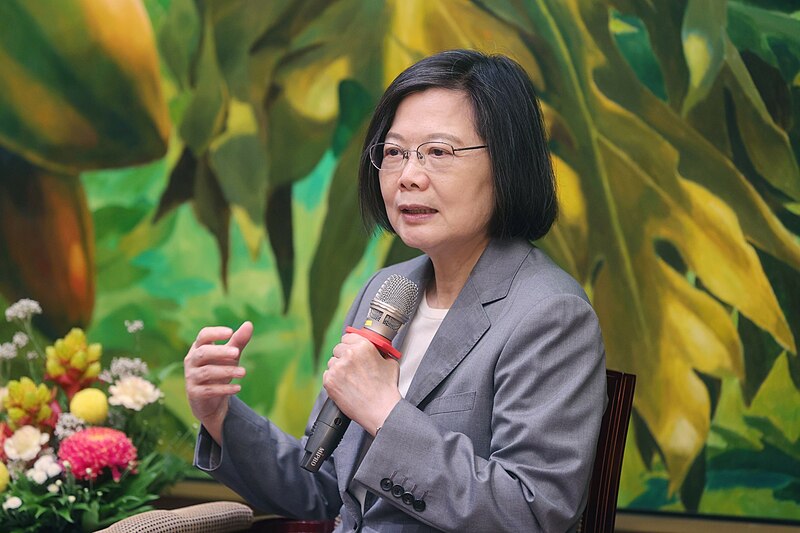
Taiwanese leader Tsai Ing-wen stressed the importance of maintaining peace in the Taiwan Strait at a time of flared tensions with China. This also comes at a time when Beijing has ramped up its military drills close to the island that it claims as its territory.
Tsai marked the seventh anniversary of her tenure as the island nation’s leader on Saturday. In a televised speech, Tsai reiterated that peace and stability must be preserved in the Taiwan Strait and that the island nation will neither provoke nor give in to China’s continued pressure campaign on the democratically-governed Taiwan. Tsai and her administration have repeatedly rejected China’s claims of control over the island.
“War is not an option. Neither side can unilaterally change the status quo with non-peaceful means,” said Tsai in her remarks. “Maintaining the status quo of peace and stability is the consensus for both the world and Taiwan.”
“Although Taiwan is surrounded by risks, it is by no means a risk-maker. We are a responsible risk manager and Taiwan will stand together with democratic countries and communities around the world to jointly defuse the risks,“ said Tsai.
Tsai said Taiwanese officials are holding discussions with the United States on sending $500 million worth of military aid to the island nation, adding that the aid aims to address the delayed deliveries of weapons due to the pandemic. Tsai also stressed the importance of Taiwan’s global supply chain and pledged to keep the most advanced semiconductor chip technologies and research and development firms in Taiwan.
Thursday last week, the United States Trade Representative said that Washington and Taipei have come to an agreement on the first part of the “21st Century” trade initiative that included customs and border procedures, regulatory practices, and small business. The USTR’s office said that following the initial signing of the initiative, the negotiations on other parts of the initiative will begin on other, more complicated aspects, including agriculture, digital trade, labor and environmental standards, state-owned enterprises, and non-market policies and practices.
US trade representative Katherine Tai said in a statement that the deal would boost US-Taiwan relations and is a demonstration of how both can work together to advance trade priorities on their respective sides.
Photo: Simon Liu (Office of the President)/Wikimedia Commons(CC by 2.0)








