


 Venezuela Promises Elections as Delcy Rodriguez Pledges Democratic Transition
  Russian Envoy Dmitriev Heads to US for Ukraine Talks
  Netanyahu Defends Israel at UN as Delegates Stage Walkout
  US Invites Putin to Miami G20, Opening Door to Trump Summit
  Russian Missile and Drone Attack on Kyiv Kills Two, Damages Maternity Hospital
  Sudan Rejects US Legitimacy Remarks, Defends Sovereignty
  Yemen Violence Displaces 130,000 as Civilian Toll Rises
  Netanyahu’s Brief US Trip Highlights Strains With Trump
  Trump Administration Plans Faster FDA Reviews for Smoke-Free Nicotine Products
  US Backs Musk in Fight Against EU’s €120 Million X Fine
  North Korea Rejects Nuclear Test Warning, Calls Nuclear Status Irreversible
  Europe Warns Russia Is Escalating Hybrid Attacks Across NATO
  US, China Extend Trade Truce to Jan. 10 Ahead of Trump-Xi Summit
  Ghana Says Western Support Growing for Slave Trade Reparations
  Trump, Xi Focus on Trade and AI at White House Summit
  EU Defence Build-Up Too Slow for 2030 Russia Readiness Goal
  US Senate Rejects Iran War Powers Resolution in 50-49 Vote


 Add as a preferred source on Google
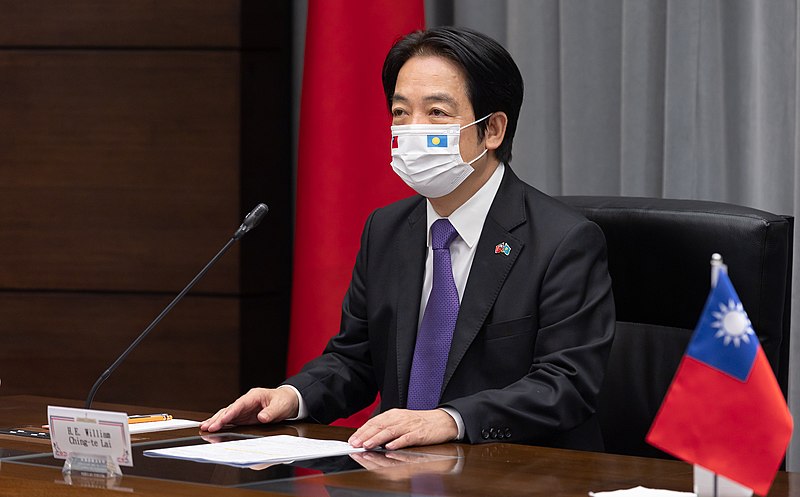
Taiwanese vice president William Lai called on the island nation’s people to “choose democracy” amidst flared tensions with China, which claims the island as its territory. Lai’s comments come a day after Beijing ended three days of military drills close to Taiwan.
On Wednesday, Lai, who was formally nominated by the ruling Democratic Progressive Party as its presidential candidate, said in his first speech since receiving the nomination that the people have a choice between democracy and returning to China’s so-called “One China” principle. Lai was referring to President Tsai Ing-wen’s predecessor Ma Jing-you, who is part of the opposition Kuomintang. Ma visited China at the same time Tsai was in the United States and met with US House Speaker Kevin McCarthy.
“Former President Ma walked back into the framework of the ‘One China’ principle, whereas President Tsai is on the democratic path,” said Lai.
“These will be the two completely different choices the country will face after 2024, so the 2024 election will decide Taiwan’s direction – on the continuation of a democratic system, the next generation’s happiness, as well as peace and stability in the Indo-Pacific,” said Lai.
Tsai drew China’s ire in her transit to the US last week and her meeting with McCarthy in Los Angeles. Beijing conducted three days of drills, including combat training exercises, in an effort to tout its military capability to take control of China by force.
During Ma’s trip to China, the former Taiwanese leader said Tsai’s administration was leading the island nation into danger and forcing Taiwan to choose “between peace and war.” Tsai and her administration have repeatedly rejected China’s sovereignty claims, saying that only the people of the democratically governed island can decide.
Tsai has since condemned China’s drills near the island since her trip, as despite the drills having ended, the Taiwanese defense ministry said eight Chinese military vessels are still transiting close to the island. Tsai has since defended her transits to the US, reiterating that this was a “long-term practice” and expected by the Taiwanese people.
Tsai said China has used these transits to stage military drills to “cause instability” in the region, calling the drills “irresponsible” for a major country.







