


 Kremlin Says No Decision Yet on Putin-Trump December Summit
  EU Defence Build-Up Too Slow for 2030 Russia Readiness Goal
  Yemen Violence Displaces 130,000 as Civilian Toll Rises
  Taiwan Thanks US for Support Ahead of Trump-Xi Summit
  Pezeshkian Says US Must Choose When Iran War Ends
  Ghana Says Western Support Growing for Slave Trade Reparations
  Netanyahu’s Brief US Trip Highlights Strains With Trump
  US Backs Musk in Fight Against EU’s €120 Million X Fine
  Gaza Faces Evacuation Crisis as War-Damaged Buildings Risk Collapse
  Mexico-US Trade Talks Delayed to October as Tariff Negotiations Continue
  Trump Asks Supreme Court to Restore Third-Country Deportations
  Trump, Xi Focus on Trade and AI at White House Summit
  North Korea Warns South Korea Over US-Led Defense Role
  South Korea, US Discuss Warship Building Cooperation
  North Korea Rejects Nuclear Test Warning, Calls Nuclear Status Irreversible
  NATO Boosts Intelligence Sharing Amid Russia Hybrid Threats
  Russian Envoy Dmitriev Heads to US for Ukraine Talks


 Add as a preferred source on Google
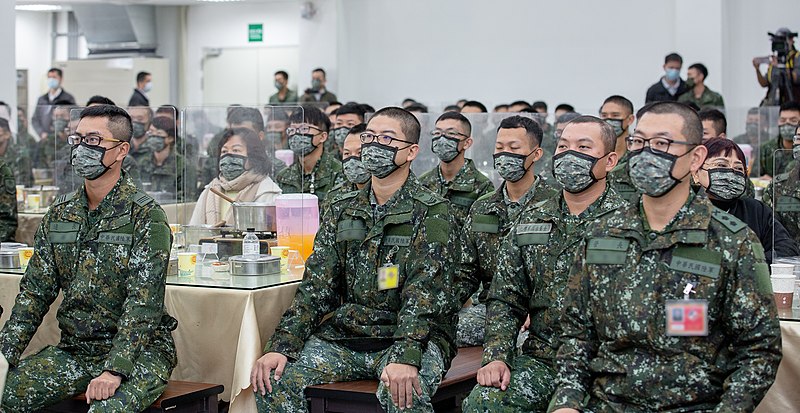
The Taiwanese defense ministry announced that the island’s annual military drills would take note of China’s recent military drills near Taiwan and will focus on breaking a potential blockade. The announcement of the upcoming exercises comes as a senior Taiwanese official said Taipei now has a “Five Eyes” intelligence link.
On Wednesday, the Taiwanese defense ministry said its “Han Kuang” military drills will be divided into two parts and take place from May 15 to 19 and from July 24 to 28. The drills in May will be focused on tabletop exercises, while the July drills will focus on the mobilization of forces and live-fire exercises. The main focus would be on combat forces’ “preservation” and “maritime interception,” according to the ministry.
This would include the use of civilian airports, dispersing air assets, and disguising forces on the ground. The naval element of the drills will combine air, sea, and land forces to attack enemy forces and amphibious assault ships and to protect sea lanes and counter blockade efforts, the ministry said.
“Of course, our drills are based on the threat of the communists invading Taiwan and its recent military exercises around Taiwan,” said the defense ministry’s combat planning chief, General Lin Wen-Huang, during a news conference.
Taking questions from the Taiwanese parliament on the same day, the Taiwanese National Security Bureau’s director-general Tsai Ming-Yen said the agency had upgraded its computers to exchange real-time intelligence with the “Five Eyes” alliance made up of the United States, Canada, New Zealand, Australia, and the United Kingdom.
“We can connect with the ‘Five Eyes’ alliance through a confidential system,” said Tsai without revealing further details.
China views Taiwan as its territory and has not ruled out using military force to bring the democratically governed island under its control. Many countries, such as the United States, have opposed a unilateral change in the status quo.
Meanwhile, British foreign minister James Cleverly has urged Beijing to be more transparent with its military buildup, described as the biggest “in peacetime history,” while warning that keeping its military activities under secrecy would risk a “tragic miscalculation.”
In his keynote address at a Mansion House banquet in London, Cleverly cited that from 2014 to 2018, China launched new warships exceeding the number of the British Royal Navy’s active fleet and that Beijing was establishing military outposts in the contested South China Sea and beyond. Cleverly said China must be more open about the “doctrine and intent behind its military expansion.”







