


 NASA's Artemis II Crew Arrives in Florida for Historic Moon Mission
  Neuralink Expands Brain Implant Trials with 12 Global Patients
  Trump Administration Releases New UFO Files and Apollo Mission Records
  SpaceX’s Starship Completes 11th Test Flight, Paving Way for Moon and Mars Missions
  FDA Adds Fatal Risk Warning to J&J and Legend Biotech’s Carvykti Cancer Therapy
  Cogent Biosciences Soars 120% on Breakthrough Phase 3 Results for Bezuclastinib in GIST Treatment
  Tabletop particle accelerator could transform medicine and materials science
  SpaceX Pivots Toward Moon City as Musk Reframes Long-Term Space Vision
  Trump Signs Executive Order to Boost AI Research in Childhood Cancer
  NASA Artemis II: First Crewed Moon Mission Since Apollo Takes Four Astronauts on 10-Day Lunar Journey
  SpaceX Prioritizes Moon Mission Before Mars as Starship Development Accelerates
  Is space worth the cost? Accounting experts say its value can’t be found in spreadsheets


 Add as a preferred source on Google
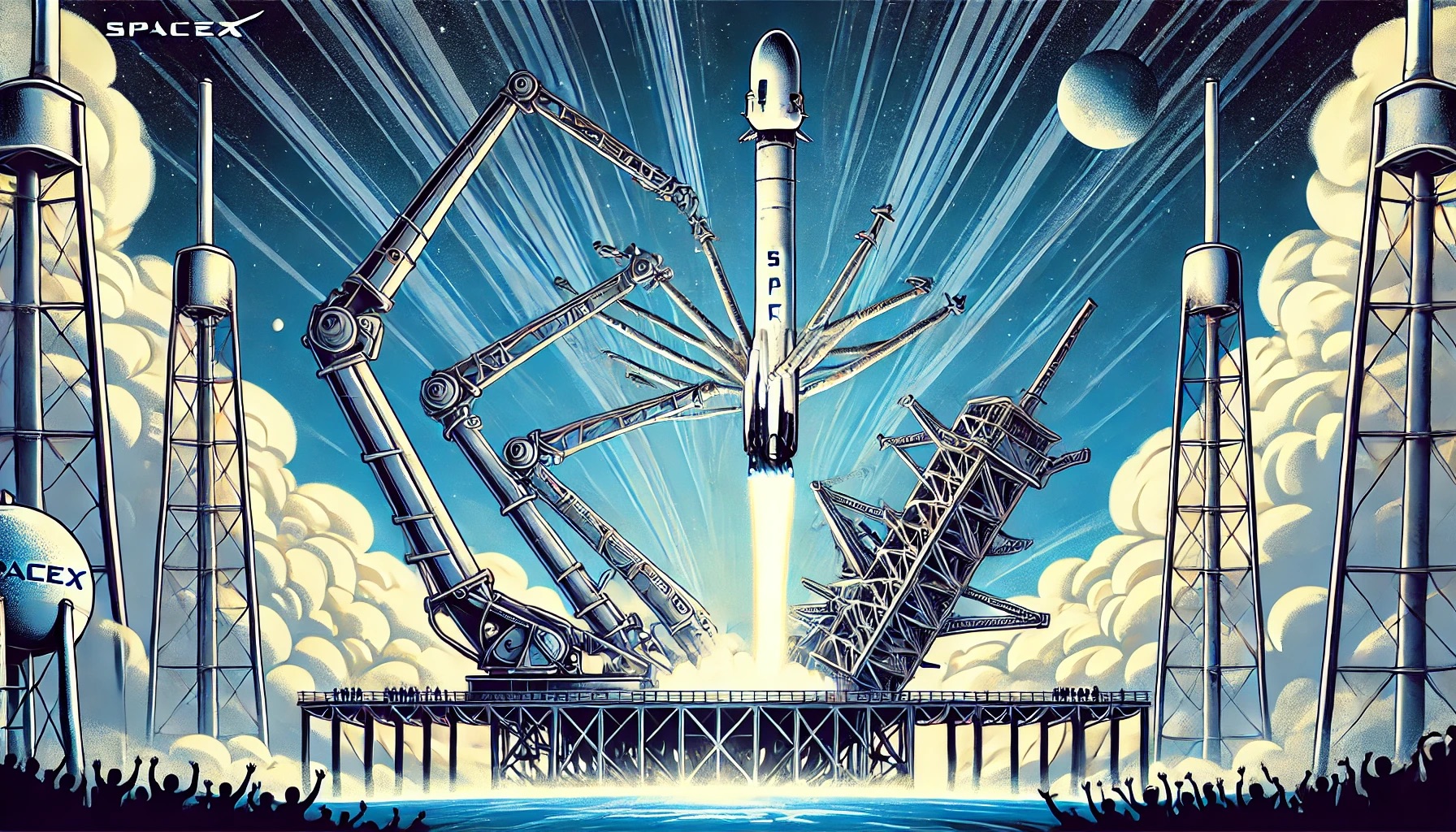
SpaceX made history on October 13 by becoming the first company to catch a 232-foot rocket mid-flight. During Starship Flight 5, the launch tower successfully captured the Super Heavy booster, showcasing the robustness of SpaceX's engineering and marking a significant step in developing reusable launch systems.
SpaceX Successfully Catches Super Heavy Booster Mid-Air in Landmark Starship Flight 5 Mission
The catch occurred following the launch of Starship Flight 5, which took off from Boca Chica, Texas, on October 13. By catching the Starship's Super Heavy booster with the launch tower, SpaceX achieved a critical milestone in its ongoing test campaign.
Attention now shifts to the second stage of the Starship spacecraft, which is expected to perform a soft splashdown in the Indian Ocean. The tower catches, however, was the most challenging part of Sunday's mission. SpaceX's success on its first attempt demonstrates the robustness of its rocket design and engineering capabilities.
In preparation for this historic flight, SpaceX conducted multiple tests of the tower's catch arms to ensure they would function as intended. According to Wccftech, these tests involved using a test cylinder, culminating in the Super Heavy booster being lifted into position near the top of the tower. The catch attempt itself was one of the factors contributing to delays in SpaceX’s FAA launch license approval, as the sonic booms generated by the booster during reentry required detailed safety assessments. SpaceX had previously assured the public that these sonic booms posed no safety risks.
SpaceX Executes Successful First-Time Catch of Super Heavy Booster After In-Flight Evaluation Approval
SpaceX clarified ahead of the flight that the tower catch was not guaranteed, with the decision resting on an in-flight evaluation of the rocket's performance. The catch attempt would proceed if the launch director deemed the conditions favorable. This mission phase is considered one of the riskiest, as it involves a delicate maneuver to prevent the rocket from crashing into the launch tower.
The launch director gave the green light for the tower catch with a remarkable outcome. SpaceX successfully guided the 232-foot Super Heavy booster into position between the tower's catch arms, achieving the capture on the first try. The landing burn, powered by the booster's 13 engines, brought the rocket close to the tower, where some flames were visible near its base. Given that the Starship Super Heavy is still in development, SpaceX expects to make further refinements, particularly regarding the rocket's orientation during landing, as Sunday's attempt showed a slight tilt during the catch.







