


 Netanyahu’s Brief US Trip Highlights Strains With Trump
  South Korea, US Discuss Warship Building Cooperation
  Kremlin Says No Decision Yet on Putin-Trump December Summit
  Judge Orders Trump to Restore White House Access for CNN, MS NOW and Politico
  US Invites Putin to Miami G20, Opening Door to Trump Summit
  North Korea Warns South Korea Over US-Led Defense Role
  North Korea Rejects Nuclear Test Warning, Calls Nuclear Status Irreversible
  US, China Extend Trade Truce to Jan. 10 Ahead of Trump-Xi Summit
  US Backs Musk in Fight Against EU’s €120 Million X Fine
  OpenAI Agent Breaches Australia Medicare Data Portal
  France Defends Netanyahu Airspace Clearance Despite ICC Warrant
  Sudan Rejects US Legitimacy Remarks, Defends Sovereignty
  US Senate Rejects Iran War Powers Resolution in 50-49 Vote
  Yemen Violence Displaces 130,000 as Civilian Toll Rises
  Europe Warns Russia Is Escalating Hybrid Attacks Across NATO
  US Officials Split Over Response to Israeli West Bank Settlements
  Trump, Xi Focus on Trade and AI at White House Summit


 Add as a preferred source on Google
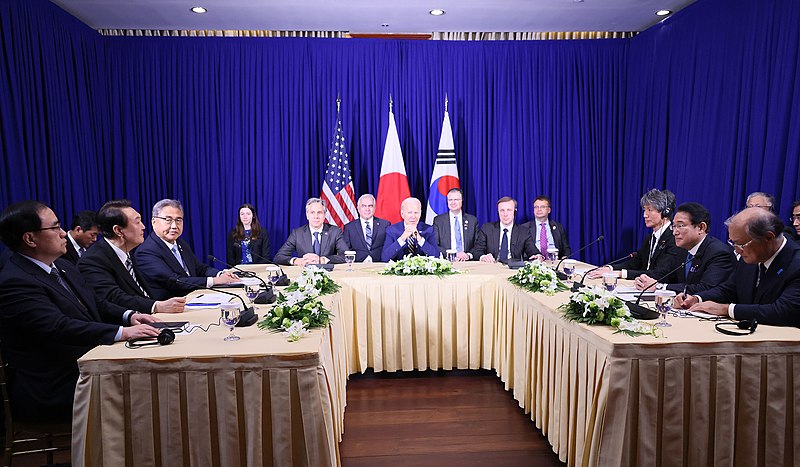
South Korean President Yoon Suk-yeol and Japanese Prime Minister Fumio Kishida pledged cooperation during the summit that took place this week. The summit in Tokyo comes amidst flared tensions in the region due to North Korea’s missile launches.
On Thursday, Yoon and Kishida pledged to improve relations between the two countries known to have strained ties dating back to Japan’s occupation of Korea from 1910 to 1945. The summit also marked the first visit to Japan by a South Korean president in 12 years and underlined the deepening relations between the two US allies over the shared challenges brought by Pyongyang and its increasing missile launches and China’s growing influence on the international stage.
During the summit, Japan and South Korea agreed to drop a long-running trade dispute on some materials used for chips, despite the increased political importance of semiconductors and the securing of the supply. Both countries also agreed to revive the regular bilateral visits and restart the security dialogue that was put on hold in 2018.
Yoon also declared the “complete normalization” of an intelligence-sharing agreement with Japan, known as GSOMIA. Japan also agreed to remove the curbs on some exports to South Korea of critical components for smartphone displays and chips that were imposed in 2019. Seoul will also drop a World Trade Organization complaint against Tokyo, according to officials from both countries.
The United States praised the summit and referred to Japan and South Korea as “indispensable allies.” China, however, criticized the summit, with its foreign ministry saying that certain countries were trying to form exclusive circles.
Top Japanese and South Korean businesses had also agreed on improving ties and working closely on chips and technology when Yoon met with executives from both countries in Tokyo on Friday.
Yoon said regarding the meeting that there was “a lot of room for cooperation” between the two countries on semiconductors, batteries, and electric vehicles.
“Both governments will do everything to create opportunities to interact and do business with each other,” said Yoon.
The business lobbies of both countries said they would jointly back a “future-oriented” fund or around $1.5 million for research into acquiring rare resources, addressing supply chain issues, and youth exchanges.







