


 France Defends Netanyahu Airspace Clearance Despite ICC Warrant
  OpenAI Agent Breaches Australia Medicare Data Portal
  North Korea Warns South Korea Over US-Led Defense Role
  Taiwan Thanks US for Support Ahead of Trump-Xi Summit
  Russian Envoy Dmitriev Heads to US for Ukraine Talks
  Gaza Faces Evacuation Crisis as War-Damaged Buildings Risk Collapse
  US Invites Putin to Miami G20, Opening Door to Trump Summit
  EU Defence Build-Up Too Slow for 2030 Russia Readiness Goal
  Europe Warns Russia Is Escalating Hybrid Attacks Across NATO
  Netanyahu Takes Aim at Mamdani as Israel Election Nears
  Netanyahu’s Brief US Trip Highlights Strains With Trump
  US, China Extend Trade Truce to Jan. 10 Ahead of Trump-Xi Summit
  Mexico-US Trade Talks Delayed to October as Tariff Negotiations Continue
  Netanyahu Defends Israel at UN as Delegates Stage Walkout
  US Backs Musk in Fight Against EU’s €120 Million X Fine
  South Korea, US Discuss Warship Building Cooperation
  Yemen Violence Displaces 130,000 as Civilian Toll Rises


 Add as a preferred source on Google
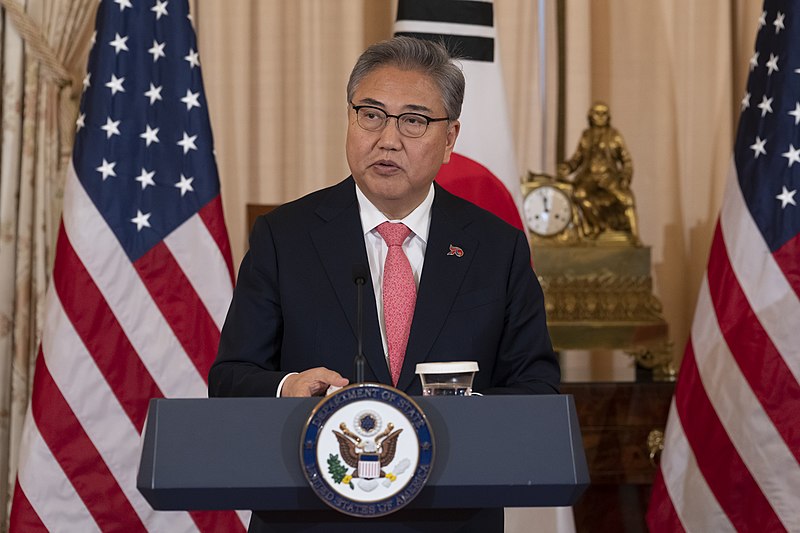
South Korean foreign minister Park Jin touted the “extended deterrence” of the US and South Korea surrounding North Korea. This comes as South Korea has sought to receive assurances from Washington over extended deterrence in the midst of concerns over Pyongyang’s continuing development of its nuclear programs.
During a joint news conference following a meeting with the secretary of state Antony Blinken at the State Department in Washington, Park said South Korea and the United States would continue their “watertight coordination” in order to ensure peace in the Korean peninsula.
“We are committed to strengthening extended deterrence while maintaining a robust combined defense posture. Any provocations by North Korea will be met with a firm and united response,” said Park, whose meeting with Blinken follows a visit to Seoul by US defense secretary Lloyd Austin.
During the visit to South Korea, Austin pledged to expand military drills and boost nuclear deterrence planning to counter North Korea’s weapons development program and prevent an open military conflict from happening.
South Korea has also sought to hold talks with the US over its Inflation Reduction Act, which does not include electric vehicles made outside North America in the tax credits in the US.
“We will also work together to ensure that the Inflation Reduction Act is implemented in ways that address Korean companies’ concerns and benefit both our businesses and industries,” said Park, adding that Seoul will also explore potential cooperation with Washington under the CHIPS and Science Act, the US law that would boost semiconductor production in the country and research with a view to competition with China.
On Monday, the South Korean military said it spotted a North Korean balloon over its airspace but later determined that the balloon did not pose a threat. The balloon entered South Korean airspace on Sunday, according to the defense ministry in a statement, adding that it has taken “measures” regarding the balloon, which left the airspace hours later.
Officials believe that it was a weather balloon rather than a balloon intended for surveillance activities, according to South Korea’s Yonhap news agency, citing an official familiar with the matter.







