


 Abbas Reaffirms November 28 Palestinian Elections
  Russian Missile and Drone Attack on Kyiv Kills Two, Damages Maternity Hospital
  Europe Warns Russia Is Escalating Hybrid Attacks Across NATO
  Venezuela Promises Elections as Delcy Rodriguez Pledges Democratic Transition
  Mexico-US Trade Talks Delayed to October as Tariff Negotiations Continue
  North Korea Rejects Nuclear Test Warning, Calls Nuclear Status Irreversible
  NATO Boosts Intelligence Sharing Amid Russia Hybrid Threats
  Netanyahu Takes Aim at Mamdani as Israel Election Nears
  US, China Extend Trade Truce to Jan. 10 Ahead of Trump-Xi Summit
  Judge Orders Trump to Restore White House Access for CNN, MS NOW and Politico
  France Defends Netanyahu Airspace Clearance Despite ICC Warrant
  Ghana Says Western Support Growing for Slave Trade Reparations
  OpenAI Agent Breaches Australia Medicare Data Portal
  Gaza Faces Evacuation Crisis as War-Damaged Buildings Risk Collapse
  Netanyahu’s Brief US Trip Highlights Strains With Trump
  Taiwan Thanks US for Support Ahead of Trump-Xi Summit
  Kremlin Says No Decision Yet on Putin-Trump December Summit


 Add as a preferred source on Google
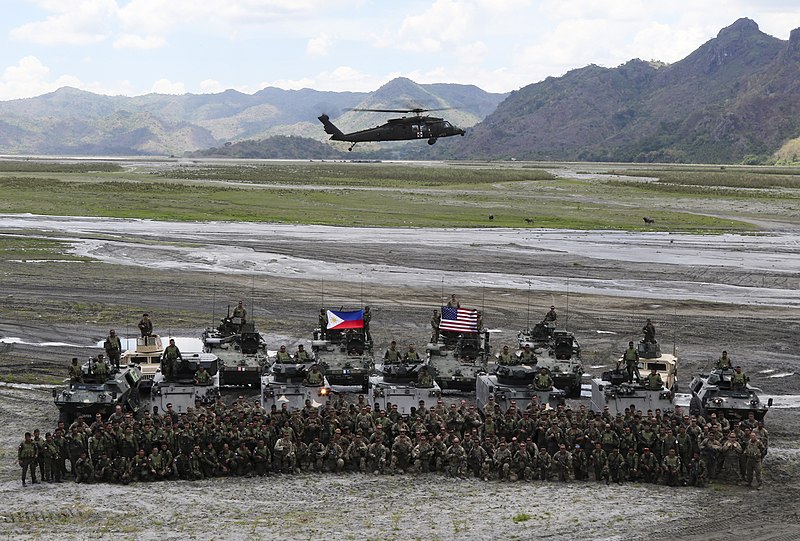
The United States and the Philippines are set to announce new military sites as soon as possible under the Enhanced Defense Cooperation Agreement. This follows Philippine President Ferdinand Marcos Jr.’s authorization to give the US access to four additional military bases in the country amidst growing threats posed by China in the South China Sea.
On Monday, speaking at the Basa Air Base in Manila, US Air Force Secretary Frank Kendall said the defense agreements between the US and the Philippines were “not focused on any particular issue.” Marcos Jr. last month granted Washington access to four additional military bases under the agreement, on top of five existing military bases agreed upon during the 2014 agreement.
Under EDCA, the US would have access to Philippine bases for joint training, prepositioning of military equipment, and building facilities such as runways, fuel storage, and military housing. The agreement does not mean that there would be a permanent US presence.
Manila has yet to publicly reveal which sites the US would be given access to. A former military chief said the US asked for access to military bases in Isabela, Zambales, and Cagayan, which are all on the island of Luzon and face north toward Taiwan, with the island of Palawan in the southwest. Palawan is near the disputed Spratly islands in the South China Sea.
Philippine defense chief Carlito Galvez said in a joint news conference with Kendall that the leaders of the local governments at the potential EDCA sites had supported Manila’s decision to give the US more access to the bases.
“Moving forward, we hope the US will consider more EDCA projects,” said Galvez.
The Philippines is one of the countries angered by China’s increasing assertions of sovereignty over the majority of the South China Sea. An international tribunal in 2016 ruled that Beijing’s so-called “historic” claims over the waters have no basis under international law, which China has since rejected.
Back in February, Marcos Jr. told the country’s military to focus on protecting the Philippines’ territorial integrity following his summoning of the Chinese ambassador to Manila to protest against the Chinese coastguard’s use of a military-grade laser to blind crew members of a Philippine patrol ship in the disputed waters.







