


 NATO Boosts Intelligence Sharing Amid Russia Hybrid Threats
  North Korea Rejects Nuclear Test Warning, Calls Nuclear Status Irreversible
  Gaza Faces Evacuation Crisis as War-Damaged Buildings Risk Collapse
  Trump Administration Plans Faster FDA Reviews for Smoke-Free Nicotine Products
  Russian Missile and Drone Attack on Kyiv Kills Two, Damages Maternity Hospital
  Judge Orders Trump to Restore White House Access for CNN, MS NOW and Politico
  Sudan Rejects US Legitimacy Remarks, Defends Sovereignty
  US Invites Putin to Miami G20, Opening Door to Trump Summit
  Taiwan Thanks US for Support Ahead of Trump-Xi Summit
  Netanyahu Takes Aim at Mamdani as Israel Election Nears
  Netanyahu’s Brief US Trip Highlights Strains With Trump
  Ghana Says Western Support Growing for Slave Trade Reparations
  US Senate Rejects Iran War Powers Resolution in 50-49 Vote
  Kremlin Says No Decision Yet on Putin-Trump December Summit
  France Defends Netanyahu Airspace Clearance Despite ICC Warrant
  Abbas Reaffirms November 28 Palestinian Elections
  US Officials Split Over Response to Israeli West Bank Settlements


 Add as a preferred source on Google
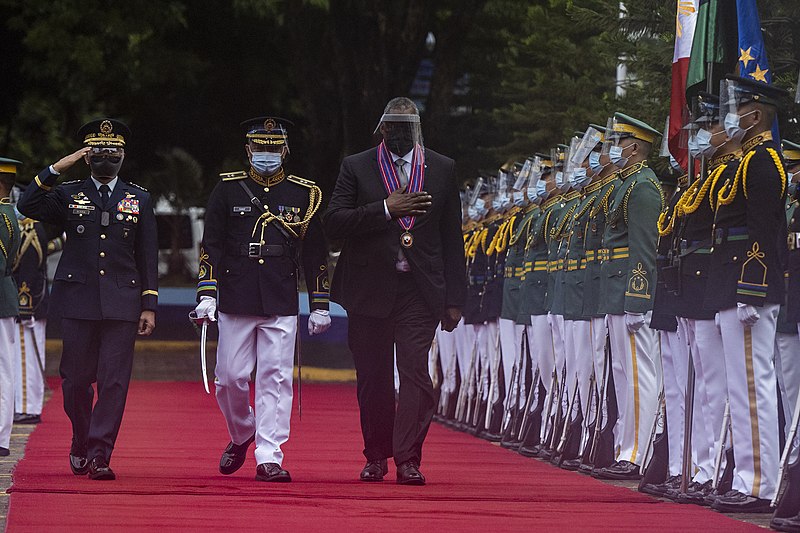
The Philippines and the United States are set to hold their largest joint military drills this year. The announcement of the drills comes amidst growing tensions with China in the highly disputed South China Sea.
Philippine army chief Lt. Gen. Romeo Brawner told reporters on Wednesday that Manila and Washington will be having what would be the largest joint military exercise since 2015. The joint military drills between the Philippines and the US highlight improved relations under Philippine President Ferdinand Marcos Jr.’s administration.
The announcement of the drills also comes amidst growing tensions between the Philippines and China, with Manila condemning Beijing’s “aggressive” actions in the disputed body of water, including using a “military-grade laser” to harass a Philippine vessel this month.
Brawner told reporters that the annual “Balikatan” military drills would take place in the year's second quarter and include more troops than last year’s 8,900.
“The exercises will involve a myriad of activities not just focused on developing the warfighting capability of both armed forces, but also of the other non-traditional roles such as humanitarian assistance and disaster response,” said the army chief.
“All of these exercises that we are doing are in response to all types of threats that we may be facing in the future, both man-made and natural,” said Brawner.
Marcos summoned the Chinese ambassador to relay concerns over the laser incident on February 6 as well as concerns over Beijing’s increasing activities in the South China Sea. China claims the majority of the body of water as its territory angering neighboring countries with overlapping claims to the waterway. The Chinese foreign ministry insisted that the behavior of its coast guard in using a laser on the Philippine vessel was legal.
Pentagon spokesman Brigadier General Patrick Ryder said Washington will “redouble its efforts with our Philippine ally” to boost the Philippine military and its coast guard’s defense capabilities in part of the countries’ cooperation to maintain the “rules-based international order.”
Earlier this week, Marcos said he did not see a reason why the Philippines should not have a Visiting Forces Agreement with Japan following his recent visit to Tokyo, especially if it would boost maritime security and ensure more protection for Filipino fishermen.







