


 Europe Warns Russia Is Escalating Hybrid Attacks Across NATO
  Kremlin Says No Decision Yet on Putin-Trump December Summit
  US Senate Rejects Iran War Powers Resolution in 50-49 Vote
  South Korea, US Discuss Warship Building Cooperation
  Trump, Xi Focus on Trade and AI at White House Summit
  EU Defence Build-Up Too Slow for 2030 Russia Readiness Goal
  Gaza Faces Evacuation Crisis as War-Damaged Buildings Risk Collapse
  US Invites Putin to Miami G20, Opening Door to Trump Summit
  Taiwan Thanks US for Support Ahead of Trump-Xi Summit
  US Officials Split Over Response to Israeli West Bank Settlements
  Mexico-US Trade Talks Delayed to October as Tariff Negotiations Continue
  North Korea Rejects Nuclear Test Warning, Calls Nuclear Status Irreversible
  US, China Extend Trade Truce to Jan. 10 Ahead of Trump-Xi Summit
  Netanyahu Takes Aim at Mamdani as Israel Election Nears
  US Backs Musk in Fight Against EU’s €120 Million X Fine
  Russian Missile and Drone Attack on Kyiv Kills Two, Damages Maternity Hospital
  France Defends Netanyahu Airspace Clearance Despite ICC Warrant


 Add as a preferred source on Google
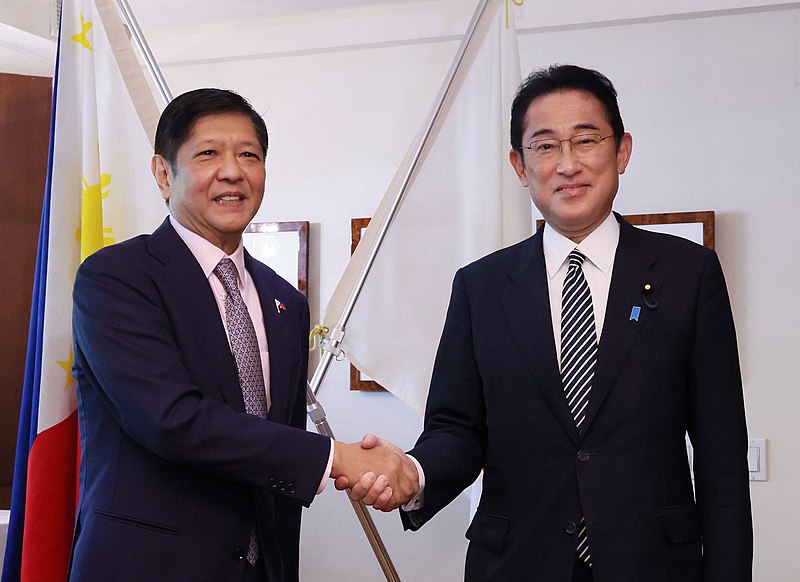
Japan and the Philippines pledged to strengthen security ties amid shared concerns regarding China and tensions in the region. Both countries also signed an agreement that would allow their armed forces to work together on disaster relief efforts.
On Thursday, Japanese Prime Minister Fumio Kishida and Philippine President Ferdinand Marcos Jr. had a bilateral meeting in Tokyo, where both leaders pledged closer security ties and signed an agreement allowing the armed forces of both countries to work together on disaster relief operations. The agreement is seen as a step towards a broader deal that would allow Japan and the Philippines to deploy each other’s respective forces on each other’s territories.
“In this year of complex international situations, Japan attaches great importance to cooperation with the Philippines,” said Kishida in his opening remarks during his meeting with Marcos. Both leaders later agreed on establishing a framework that would “strengthen and smooth the process of holding joint exercises.”
The most recent joint exercise Japan held with the Philippines was with the United States back in October. The disaster relief agreement is believed to be a possible prerequisite to establishing a visiting forces agreement that would allow Japan to deploy its forces to the Philippines easily. Tokyo already has such agreements with Australia and the United Kingdom.
A Japanese military presence in the Philippines would also help counter Chinese influence in the region, especially in the South China Sea, which Bejing claims control over the majority of the waters. China’s claims drew the ire of surrounding nations that have overlapping claims, including Manila.
“After our meeting, I can confidently say that our strategic partnership is stronger than ever as we navigate together the rough waters buffeting our region,” said Marcos, adding that he agreed to cooperate more closely with Japan on matters including defense cooperation and maritime security.
Earlier this week, the head of the Philippine coast guard said it has ramped up its presence in the waters by deploying more vessels while conducting more patrols to better protect the country’s maritime territory and its fishermen. PCG Commandant Admiral Artemio Abu said in an interview that the PCG acquisition of more advanced ships has allowed the coast guard to increase the number and duration of patrols in the South China Sea.







