


 Trump Touts $5,000 Checks if Republicans Win Congress
  Houthi Red Sea Gains Strengthen Iran’s Leverage Over Gulf States
  China’s Global Times Slams Anthropic CEO’s AI Slowdown Plan as ‘Cold War’ Strategy
  US Confirms Weapons in Orbit as Space Tensions Rise
  Philippines Holds Historic Bangsamoro Election Amid Tight Security
  What is Zionism? The different meanings of a contested term
  Europe can’t achieve space sovereignty alone. Here’s why
  Trump Open to Chinese Automakers Building Cars in US
  Banking scandal rocks Brazil’s politics and the country’s presidential election in October
  Ukraine Tests New Anti-Drone Weapon After Successful Shahed Intercept
  Mahmoud Khalil Sues Columbia Over Alleged Pro-Palestinian Harassment
  Houthis Escalate Saudi Attacks as Red Sea Oil Risks Grow
  U.S. Imposes New Visa Restrictions Over South Africa Policies
  Ovechkin Faces Scrutiny Over United Russia Campaign Video
  Sweden Election: Centre-Left Holds Narrow Lead
  UK PM Andy Burnham Set for First Trump Meeting in New York


 Add as a preferred source on Google
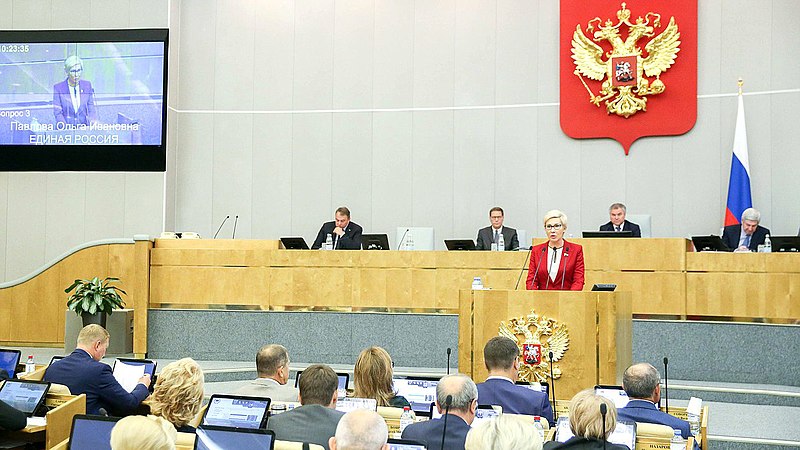
The potential amendments to Russia’s citizenship laws would reportedly strip the acquired citizenship of those who commit treason and those who discredit the war that Moscow refers to as a “special military operation.” This marks the latest in the Russian parliament’s efforts to silence dissidents and the latest efforts in censorship.
Russian media reported on Wednesday that the proposed amendments to the country’s citizenship law would strip the acquired citizenship of individuals over “treason, discrediting the special military operation,” according to the first deputy chairman of the Russian parliamentary committee on Commonwealth of Independent States affairs Konstantin Zatulin. The proposed amendments were already submitted to the committee.
This follows Tuesday’s move by the Russian lower house of parliament, the State Duma, which voted to approve an amendment that would punish those who are found guilty of discrediting the “volunteer” groups fighting on the ground in Ukraine. The Kremlin has said the majority of Russians support its invasion of Ukraine, along with opinion polls that support the assertion.
However, hundreds of thousands of Russians have fled the country out of opposing the war and out of fear of getting conscripted. Those who remain may risk getting detained for discrediting the Russian military. Such actions can be punished for up to five years in prison.
Since its invasion of Ukraine in February last year, Moscow has passed sweeping wartime laws that aimed to silence critics of the war.
Meanwhile, United States defense secretary Lloyd Austin spoke with his Russian counterpart after the downing of a US drone in the Black Sea, which Washington alleges was done by Moscow. Austin told reporters on Wednesday that he spoke with Russian defense minister Sergei Shoigu but did not reveal further details on the conversation following the incident.
This would also mark the first time US and Russian military assets have made contact since the invasion and has also fueled concerns of a potential escalation. However, during a news conference, Austin said the US takes “any potential for escalation very seriously and that’s why I believe it’s important to keep the lines of communication open.”
“As I’ve said repeatedly, it’s important that great powers be models of transparency and communication and the United States will continue to fly and to operate wherever international law allows,” said Austin. “It is incumbent that Russia to operate its military aircraft in a safe and professional manner.”







