


 Who should own the knowledge that underpins AI technology?
  Trump Plans Federal AI Force and AI Czar
  SoftBank Launches $11 Billion Bond Sale to Fund OpenAI Investment
  France Urges Faster AI Push Despite Safety Risks
  Rosenblatt Starts Nokia at Buy on AI Networking Growth
  DOJ Will Investigate AI-Related Crimes, Attorney General Blanche Says
  NASA, Boeing Discuss Expanding Starliner Missions
  Microsoft Stock Upgraded as Stifel Sees Stronger Azure Growth
  US Northeast Airports Resume Operations After Telecom Outage Disrupts Thousands of Flights
  MediaTek Unveils 2nm Dimensity 9600 Pro AI Chip
  Apple Pay Set for India Launch With Axis Bank
  China Reviews Broadcom Switch Use in State Data Centres
  Cathie Wood Backs AI Slowdown as Safety Concerns Grow
  Qualcomm Gains on $60B Amazon AI Chip Deal
  Guterres Urges Stronger Global AI Safeguards Ahead of UN Assembly
  AI is supercharging money scams – here’s what you can do to protect yourself
  Scott Bessent Eyed as Trump’s New AI Czar


 Add as a preferred source on Google
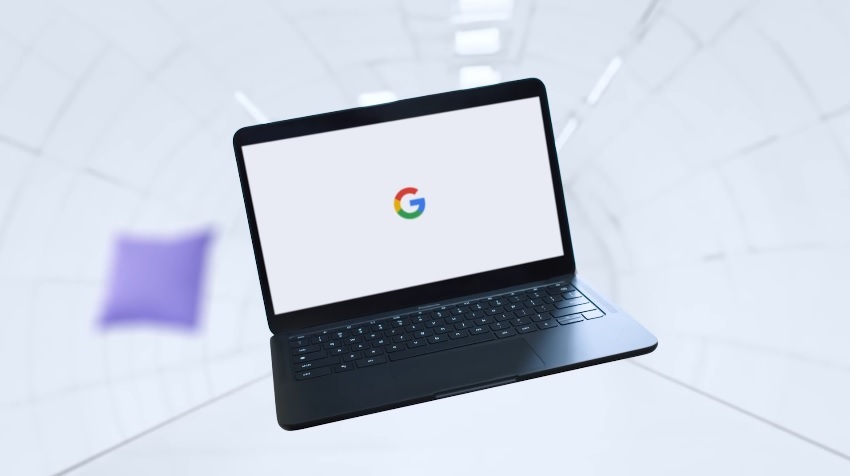
Chromebook fans with bigger budgets have been looking forward to the announcement of Pixelbook 2. After two years since the first model came out, Google is still mum on its plans for its next 4-in-1 laptop/tablet hybrid.
However, Chrome OS lovers are not exactly clueless about the possibilities for Google’s next offering. There have been leaks and rumors throughout 2019 that suggested the company could be working on a Qualcomm-powered Chromebook.
Pixelbook 2 specs rumors: Will Google consider releasing both Intel and Qualcomm models?
It should be noted, though, that both the Pixelbook and Pixelbook Go exclusively shipped with Intel processors. But even Qualcomm remained relatively silent about its efforts to venture into the Chromebook business until early 2018.
Unfortunately, there is no official word yet if Google would be releasing a Pixelbook with a Snapdragon chipset. But, in general, there have been some hints that efforts to produce a Snapdragon-powered device with Chrome OS have at least started.
Chrome Unboxed also reported last month that Qualcomm is continuously working on its long-time rumored “Cheza” Chromebook. Once this device sees the light of day, it might not be a stretch for other manufacturers such as Google to include a Snapdragon Chromebook in its product lineup. So there remains a tiny chance for it to come true through the release of Pixelbook 2. On the other hand, what Google fans can certainly bet on is for Pixelbook 2 to have the latest generation of Intel Core processor at the time of its unveiling.
Pixelbook Go vs. Pixelbook: What’s changed?
Google is keen on drawing the line between the still unannounced Pixelbook 2 and the Pixelbook Go that launched last fall. The latter has all the upgrades needed on the 2017 Pixelbook, such as the newer Intel chips, better camera, longer-lasting battery, larger screen, and a 4K display.
Google insisted that Pixelbook Go was meant to be a cheaper offering, thus, it cannot be called Pixelbook 2. That is true in some capacity since the base configuration of the Pixelbook Go costs $649. But ordering a model with higher RAM, processor, and display specifications could easily bring the price beyond the $1,000 mark.







