


 US Waives Egypt Military Aid Conditions Over Iran War Role
  California Leads Lawsuit Over Trump’s $810 Million Funding Cuts
  Tsai Ing-wen to Visit US for Stanford Security Conference
  Ukraine Deploys FP-7 Ballistic Missile in Combat for First Time
  Wicker Urges US to Uphold Taiwan Security Commitments
  Trump Demands Powell Resign Over Fed Renovation Cost Overruns
  Pentagon Launches Autonomous Warfare Command
  Flydubai Co-Pilot Tried to Crash Israel-Bound Jet, Netanyahu Says
  US Alcohol Ban Exposes Canada’s Internal Trade Barriers
  South Korea Warns Ukraine Over North Korean POW Dispute
  Brazil Presidential Debate Canceled as Lula, Bolsonaro Skip Event
  US Officials See China Taiwan Invasion Before 2028 as Less Likely
  Trump Praises Boeing 737 Max After Flydubai Crash Attempt
  Netanyahu Says Israel May Join Flydubai Crash Attempt Probe
  Marco Rubio to Visit Iceland, Greece and Portugal
  Israeli Settler Attack in West Bank Kills Palestinian
  US Appeals Court Keeps Trump IRS Case Sanctions in Place


 Add as a preferred source on Google
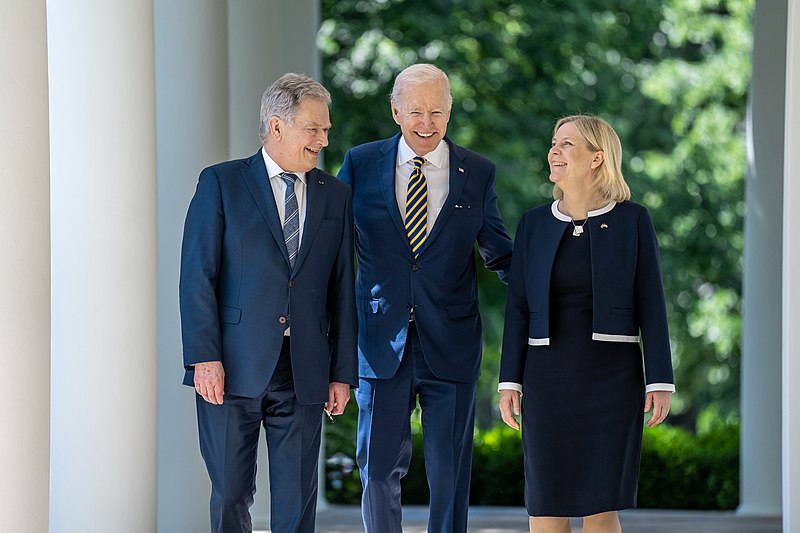
The NATO alliance is set to expand with the applications for accession by Finland and Sweden. The prime ministers of both countries sought to put on a united front by pledging to join the alliance together.
The Swedish and Finnish prime ministers said Friday last week that they will join the NATO alliance at the same time. The pledge comes as one member country, Turkey, raised concerns about their applications. Turkey has objected to the applications of the two countries as it accused them of harboring groups it deems as terrorists.
Finnish Prime Minister Sanna Marin said Turkish President Tayyip Erdogan had more concerns about her Swedish counterpart than Finland. However, Marin said that she would not leave Sweden behind in the process of accession to the alliance. Erdogan said in early October that he was still opposed to Sweden’s bid to join.
“It is very important for us, of course, that Finland and Sweden join NATO hand in hand,” Marin told reporters at a joint press conference in Helsinki. Both countries filed a joint application as a result of Russia’s invasion of Ukraine in February.
“We have been taking every step so far, hand in hand and none of us have any other ambition,” said Swedish Prime Minister Ulf Kristersson, who recently took office the week before. Kristersson also acknowledged Erdogan’s concerns and said they would be meeting soon.
“It’s completely legitimate that Turkey gets confirmation that Sweden is doing what Sweden has committed to do within the framework of the agreement,” Kristersson added.
Earlier in October, NATO Secretary-General Jens Stoltenberg said that the circumstances that the alliance might have to resort to using nuclear weapons are “extremely remote.” Stoltenberg added that there would also be “severe consequences” should Russia resort to nuclear weapons on Ukraine.
While Stoltenberg did not elaborate on the details as to how the alliance may respond to Russia’s potential use of nuclear weapons on Ukraine, the NATO chief said using such weapons would drastically change the nature of the war, and that “a very important line has been crossed.”
Stoltenberg stressed that the purpose of NATO’s nuclear deterrent was to preserve peace and prevent coercion against the allies, which is why the circumstances in which the alliance would use nuclear weapons would be “extremely remote.”







