


 Eli Lilly’s Inluriyo Gains FDA Approval for Advanced Breast Cancer Treatment
  Cogent Biosciences Soars 120% on Breakthrough Phase 3 Results for Bezuclastinib in GIST Treatment
  Trump and Merck KGaA Partner to Slash IVF Drug Costs and Expand Fertility Coverage
  SpaceX Prioritizes Moon Mission Before Mars as Starship Development Accelerates
  NASA Partners with Katalyst to Save Swift Observatory with Innovative Docking Mission
  Neuralink Expands Brain Implant Trials with 12 Global Patients
  SpaceX’s Starship Completes 11th Test Flight, Paving Way for Moon and Mars Missions
  Blue Origin’s New Glenn Achieves Breakthrough Success With First NASA Mission
  Is space worth the cost? Accounting experts say its value can’t be found in spreadsheets
  Blue Origin New Glenn Explosion Could Delay Launch Operations Until 2028
  Trump Administration Releases New UFO Files and Apollo Mission Records
  FDA Pilot Program Eases Rules for Nicotine Pouch Makers
  SpaceX Pivots Toward Moon City as Musk Reframes Long-Term Space Vision


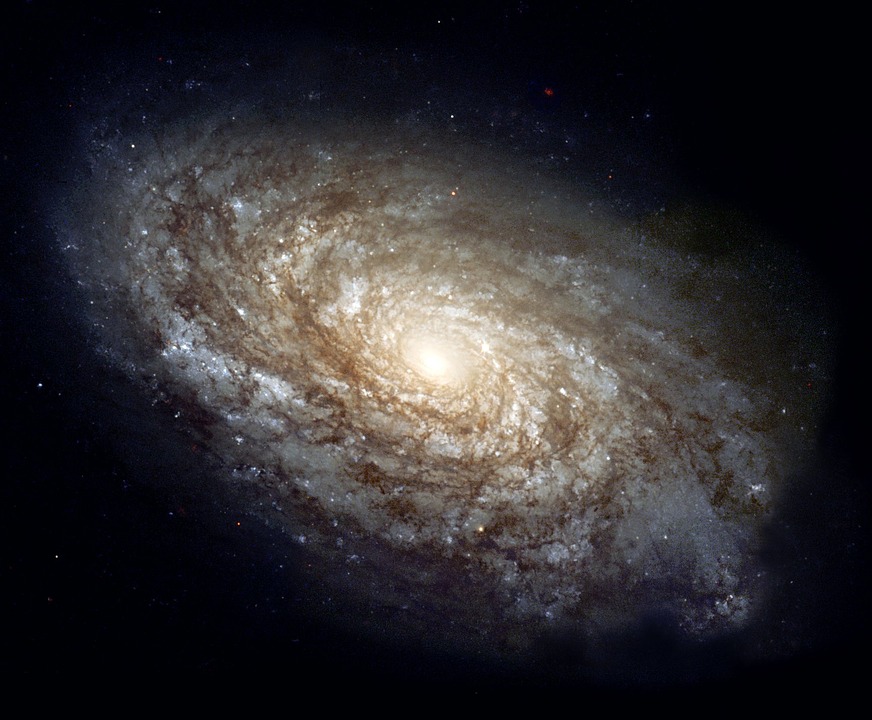
The Hubble Space Telescope continues exploring deep space, snapping photographs of unusual or fascinating phenomena that occur. One of its recent findings is a multi-armed galaxy, located millions of light-years away from Earth.
Express reports that NASA released an image taken by the Hubble of the galaxy located 95 million light-years away from Earth. The galaxy, also known as NGC 2273, is described to have spirals of stars within the spirals of stars with a black hole at its core. “At first glance, the subject of this NASA/ESA Hubble Space Telescope image looks to be a simple spiral galaxy, with two pinwheeling arms emerging from a central bar of stars and material that cuts through the galactic center...In fact, there are rings within these spiral arms, too: spirals within a spiral,” said the agency in a statement.
NASA went on to explain that this kind of formation is also known as a “multiring structure.” This feature is also what makes galaxy NGC 2273 so unusual and distinct. The agency also referred to this galaxy as a “Seyfert galaxy,” which is a galaxy with an incredibly bright core. At the core of this galaxy is a supermassive black hole which glows brightly enough to even overpower an entire galaxy such as the Milky Way.
This year marks the 30th and last year of the Hubble Space Telescope since its launch in 1990. By 2021, the Hubble will be replaced by the James Webb Space Telescope.
Previously, NASA also released an image of a whirlpool galaxy taken by the Hubble, but the team found that it was not the only space object present as they found a smaller galaxy known as NGC 5195 next to it, making the two galaxies look like they were engaged in a tug-of-war. But upon closer examination provided by the detail from the image shows that there was some space between the two.
“Galaxy Messier 51 (M51) also designated NGC 5195, is nicknamed the Whirlpool because of its prominent swirling structure. Its two curving arms, a hallmark of so-called grand-design spiral galaxies, are home to young stars while its yellow core is where older stars reside,” said the agency in a release.







