


 NASA and Roscosmos Chiefs Meet in Florida to Discuss Moon and ISS Cooperation
  FDA Pilot Program Eases Rules for Nicotine Pouch Makers
  Trump Administration Releases New UFO Files and Apollo Mission Records
  China vs. NASA: The New Moon Race and What's at Stake by 2030
  SpaceX Pivots Toward Moon City as Musk Reframes Long-Term Space Vision
  SpaceX Prioritizes Moon Mission Before Mars as Starship Development Accelerates
  Trump Signs Executive Order to Boost AI Research in Childhood Cancer
  Cogent Biosciences Soars 120% on Breakthrough Phase 3 Results for Bezuclastinib in GIST Treatment
  Tabletop particle accelerator could transform medicine and materials science
  Blue Origin New Glenn Explosion Could Delay Launch Operations Until 2028
  Trump and Merck KGaA Partner to Slash IVF Drug Costs and Expand Fertility Coverage
  SpaceX’s Starship Completes 11th Test Flight, Paving Way for Moon and Mars Missions
  Blue Origin’s New Glenn Achieves Breakthrough Success With First NASA Mission


 Add as a preferred source on Google
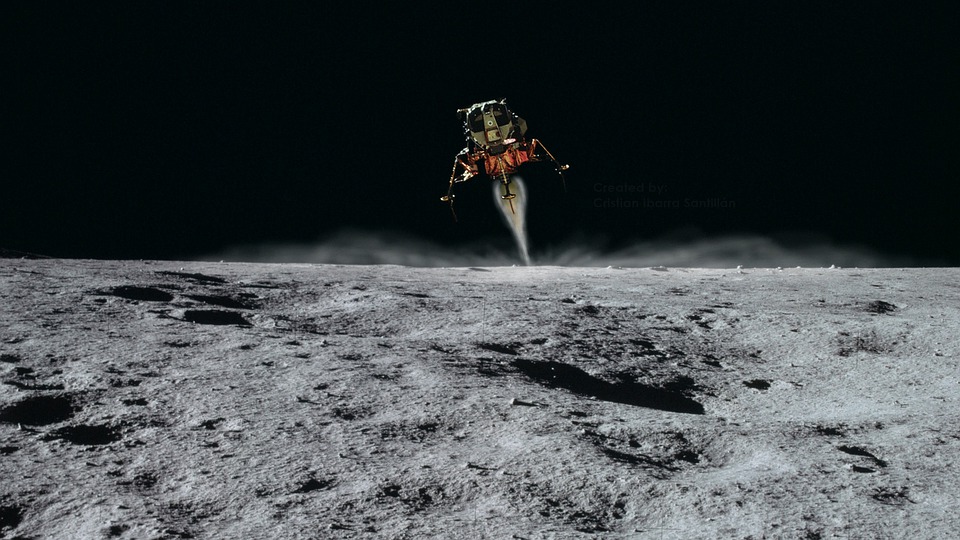
Last week was the 51st anniversary of the historic Apollo 11 mission, where the world witnessed not only the end of the Space Race, but also the first men who set foot on the surface of the Moon. In a recent interview, Apollo 11 scientist Professor Farouk El-Baz recalled how NASA raised the concern about the Eagle lunar lander’s touchdown on the lunar surface.
Speaking to Express, Professor El-Baz, who was the leading geologist during the mission, shared how there was some debate among groups of scientists on where should astronauts Neil Armstrong and Buzz Aldrin land, which would ultimately become Tranquility Base. He shared that the engineers set guidelines in choosing where to land and that it had to be a zone five degrees north of the equator, five degrees south, and 45 degrees each east and west.
The reason for this was because this spot would be the easiest place to land. However, Professor El-Baz recalled, that exact zone appeared to have the dark-looking rock on the Moon known as marea, the Italian word for sea, named by Galileo, which was also assumed to be a volcanic rock at the time.
“Then some other scientist would come along and say ‘not at all, this is very dense material and landing on it will be very difficult’ they feared the spacecraft would collapse on impact. They believed it would be so attracted to the surface, but others would say that since it is volcanic rock then it would be powdered on impact and there would be a huge layer of powder on top,” shared Professor El-Baz.
However, he said he was able to convince his colleagues by explaining that because there are craters on the Moon, it was a rock, and thus it was hard enough for the lander to land on.
Professor El-Baz also revealed that he instructed Armstrong and Aldrin to complete this secondary mission while they were on the Moon. The secondary mission was going to play a big part in future space missions. He shared that he trained the two astronauts to take photos of areas on the Moon that NASA referred to as “targets of opportunity.”
However, because the astronauts that would be part of the mission had a very packed schedule, they were given very limited time to go over the science. Professor El-Baz also revealed that it was the reason why Armstrong ran back at the last minute to take photos and note the thickness of the soil on the surface of the moon.







