


 SpaceX Pivots Toward Moon City as Musk Reframes Long-Term Space Vision
  Blue Origin’s New Glenn Achieves Breakthrough Success With First NASA Mission
  SpaceX Prioritizes Moon Mission Before Mars as Starship Development Accelerates
  Is space worth the cost? Accounting experts say its value can’t be found in spreadsheets
  NASA and Roscosmos Chiefs Meet in Florida to Discuss Moon and ISS Cooperation
  FDA Adds Fatal Risk Warning to J&J and Legend Biotech’s Carvykti Cancer Therapy
  Eli Lilly’s Inluriyo Gains FDA Approval for Advanced Breast Cancer Treatment
  Trump Administration Releases New UFO Files and Apollo Mission Records
  SpaceX’s Starship Completes 11th Test Flight, Paving Way for Moon and Mars Missions
  Blue Origin New Glenn Rocket Explodes During Launch Pad Test, Delaying Space Ambitions
  China vs. NASA: The New Moon Race and What's at Stake by 2030
  Trump and Merck KGaA Partner to Slash IVF Drug Costs and Expand Fertility Coverage
  SpaceX Delays Starship V3 Launch Ahead of Potential Record IPO
  Cogent Biosciences Soars 120% on Breakthrough Phase 3 Results for Bezuclastinib in GIST Treatment


 Add as a preferred source on Google
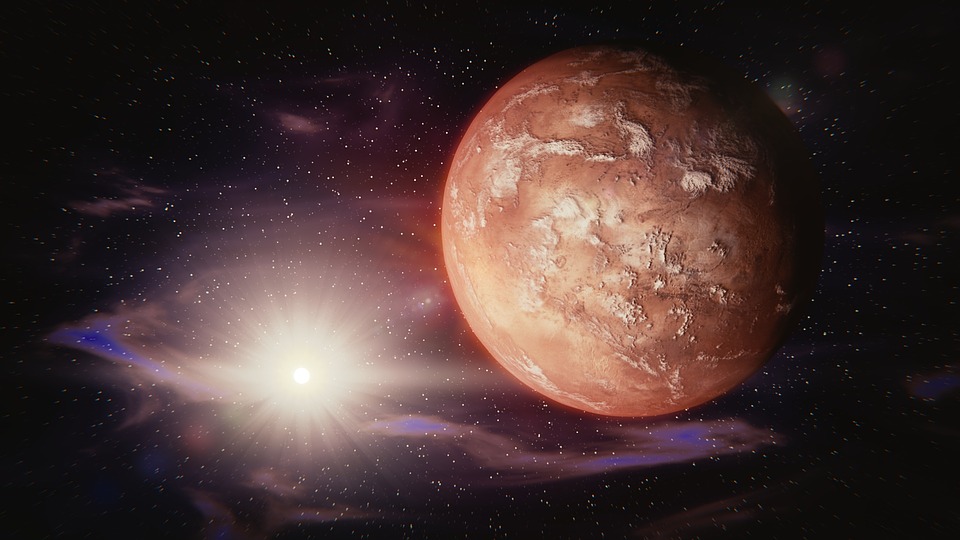
NASA is in the process of preparing for its upcoming Mars missions, with other space agencies hoping to do the same and make a touchdown on the red planet. The agency’s administrator Jim Bridenstine revealed that NASA will be sending the first people to Mars by the end of the decade.
Bridenstine announced the upcoming manned Mars mission at an event at the Space Foundation early this week, coinciding with the 51st anniversary of the historic Apollo 11 mission. Bridenstine explained how the upcoming Artemis mission, which will put humans on the moon again after many years, will be the stepping-stone for the mission to Mars. “We have a big agenda to return to the Moon by 2024, and to do so sustainably by the end of the decade,” said the administrator.
The NASA chief also reiterated that the agency is determined to send the first humans to Mars. By the year 2028, NASA hopes to establish a firm presence on the Moon, for astronauts to learn more about living outside Earth. Other similar missions like the Mars Perseverance Rover will also help humans understand Mars a little better.
“Among the investigations onboard, the rover will carry two that will support future crewed missions onto the fourth planet -- one to produce oxygen from the Martian atmosphere and another to aid in the development of weather forecasting,” said Bridenstine, who added that the Mars mission will also involve navigation of the red planet’s terrain and how a potential spacesuit can be affected by the environment on Mars. “We anticipate sending humans to the fourth planet as early as the 2030s.”
Aside from exploring Mars, there is also the search for possible life forms, and according to expert Francisco Diego of UCL, there was once some proof of atmospheric pressure on the red planet. This kind of pressure was needed in order to preserve the water on the planet’s surface.
Speaking to Sky News, Diego explained that because there was once water on Mars, the astronauts who will be going on the future manned mission to the red planet will most likely found microfossils suggesting primitive life once thrived on Mars.







