


 NASA Resumes Cygnus XL Cargo Docking with Space Station After Software Fix
  China vs. NASA: The New Moon Race and What's at Stake by 2030
  Trump Administration to Launch Autism Initiatives Targeting Acetaminophen Use and New Treatment Options
  Blue Origin New Glenn Rocket Explodes During Launch Pad Test, Delaying Space Ambitions
  Trump Signs Executive Order to Boost AI Research in Childhood Cancer
  SpaceX’s Starship Completes 11th Test Flight, Paving Way for Moon and Mars Missions
  Is space worth the cost? Accounting experts say its value can’t be found in spreadsheets
  SpaceX Prioritizes Moon Mission Before Mars as Starship Development Accelerates
  Trump and Merck KGaA Partner to Slash IVF Drug Costs and Expand Fertility Coverage
  Cogent Biosciences Soars 120% on Breakthrough Phase 3 Results for Bezuclastinib in GIST Treatment
  Blue Origin’s New Glenn Achieves Breakthrough Success With First NASA Mission


 Add as a preferred source on Google
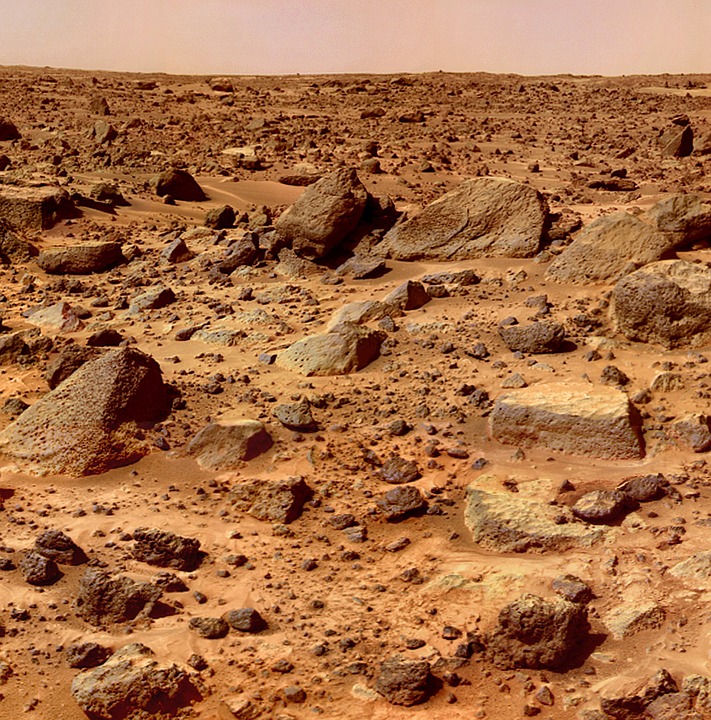
NASA’s Perseverance Rover successfully launched into space today with the rover playing a big part in the preparation for future Mars missions. However, as the rover’s objective is to search the Red Planet for signs of life, one scientist has revealed the major roadblock that would keep scientists from determining whether or not there was once life on Mars.
Express reports Natural History Museum Planetary Scientist Professor Caroline Smith revealed to Times Radio that there is a challenge to overcome when the Perseverance touches down on Mars in 2021. Professor Smith explained that the only way to determine if there was once life on Mars is to bring Martian samples home, where the technology on Earth could be able to do the analysis.
“One of the issues that we have is we may well find some very interesting chemical and physical signatures within those rocks that could indicate that there was once life on Mars in the past where the crater is now. The problem is we will only be able to make that conclusive result to say that there was definitely evidence of life there with the right chemistry and the right textures when we bring those samples back to Earth,” explained Professor Smith.
Ms. Smith added that astronomers will have to make use of the instrumentation here on Earth to arrive to that conclusion. She noted that this is only the first step of a very ambitious but feasible Mars sample return campaign.
When asked what she expects to see among the samples, Professor Smith responded that she expects biological or biohazard tests would be done on the samples with various protocols in order to see if there is anything potentially harmful or toxic to Earth.
As to where the Perseverance Rover may be able to find these signs of life on Mars in its Mars mission, a study reveals that the best place to look is under the Red Planet’s dusty surface. According to NYU Abu Dhabi Center for Space Science astrophysicist Dimitra Atri, the subsurface is the best place for the rover to search for microorganisms.
This is because there are still traces of water under the surface and that it is protected from solar radiation as Mars has a barely-there atmosphere, making exposure to solar radiation lethal.







