


 NASA's Artemis II Mission: First Crewed Lunar Journey Since Apollo
  Trump Administration to Launch Autism Initiatives Targeting Acetaminophen Use and New Treatment Options
  Is space worth the cost? Accounting experts say its value can’t be found in spreadsheets
  Blue Origin New Glenn Explosion Could Delay Launch Operations Until 2028
  Eli Lilly’s Inluriyo Gains FDA Approval for Advanced Breast Cancer Treatment
  SpaceX’s Starship Completes 11th Test Flight, Paving Way for Moon and Mars Missions
  FDA Adds Fatal Risk Warning to J&J and Legend Biotech’s Carvykti Cancer Therapy
  Trump Administration Releases New UFO Files and Apollo Mission Records
  Trump and Merck KGaA Partner to Slash IVF Drug Costs and Expand Fertility Coverage
  Neuralink Expands Brain Implant Trials with 12 Global Patients
  China vs. NASA: The New Moon Race and What's at Stake by 2030
  Cogent Biosciences Soars 120% on Breakthrough Phase 3 Results for Bezuclastinib in GIST Treatment


 Add as a preferred source on Google
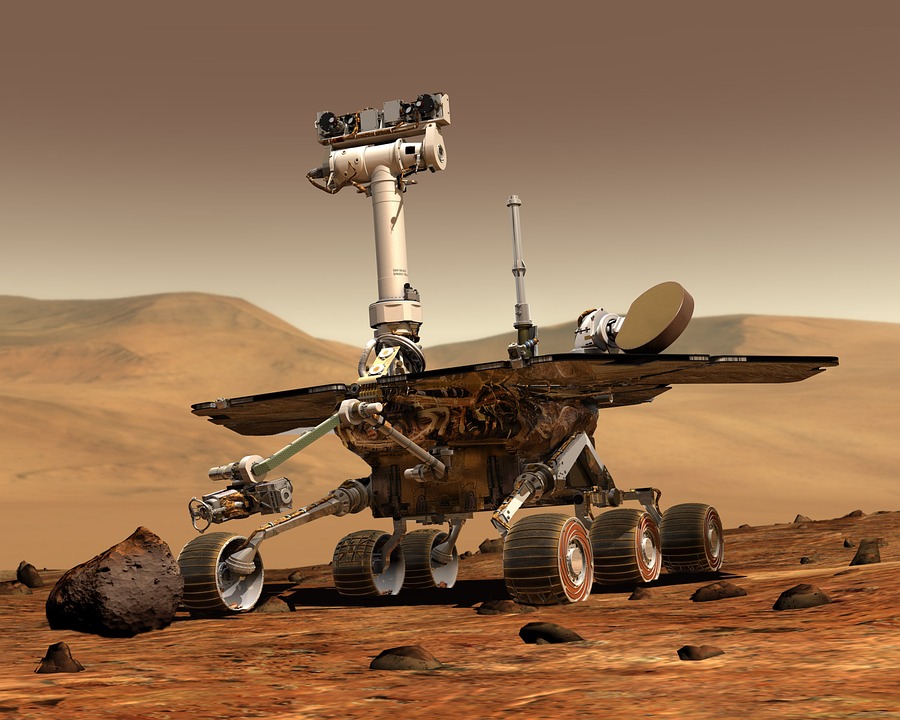
Now that humans have been able to set foot on the Moon, NASA and other space agencies have now set its sights on the Red Planet itself. Today marks the launch of the agency’s Perseverance Rover, and scientists have said that this Mars rover will play a big part in the future Mars missions.
The Mars 2020 mission, also known as the launching of NASA’s Perseverance Rover onto the surface of the Red Planet will be taking place today. Its main mission upon reaching the destination is to search for possible signs of life, and according to scientists, the Rover will also help lay the groundwork for astronauts to be able to set foot on the surface.
As to how Perseverance will help pave the way for astronauts in the future Mars missions, it is because it will test a process that will create oxygen from carbon dioxide. Mars’ atmosphere is found to have a lot of carbon dioxide, and the rover will make use of the Mars Oxygen In-Situ Resource Utilization Experiment or MOXIE for short. This experiment is to find out how astronauts can produce oxygen from the Martian atmosphere to be able to breathe and as a propellant.
This will play a very vital role in human exploration on Mars. According to Purdue University Planetary Science Associate Professor Briony Hogan and Western Washington University Planetary Science Associate Professor Melissa Rice in a piece they wrote for The Conversation, “Perseverance will help prepare for future human missions to Mars. One of the many challenges for astronauts will be the packing list for a two-year roundtrip journey, which includes air, water, and rocket fuel to get home. If these resources could be harvested on Mars, human missions could become more feasible.”
For those who want to witness NASA launch the Perseverance Rover today, July 30, the launch window for the rover will be at 7:50 a.m. EDT or 4:50 a.m. PDT. The window will be between 30 minutes to two hours, with an opportunity to launch every five minutes. The rover will be on a United Launch Alliance Atlas V Rocket. Perseverance is expected to arrive on the Red Planet by February 2021.
Space enthusiasts can view the launch on NASA TV, and will also be streamed on Youtube.







