


 Lula and Flavio Bolsonaro Tied in Brazil Runoff Poll
  Macron Challenges Trump’s Gaza Peace Claims at UN
  Trump to Press Xi on Release of US Nuclear Expert Held in China
  Trump Administration Plans Faster FDA Reviews for Smoke-Free Nicotine Products
  Trump Says U.S.-Iran Peace Deal Near After UN Talks
  Gaza Faces Evacuation Crisis as War-Damaged Buildings Risk Collapse
  Scott Bessent Eyed as Trump’s New AI Czar
  Europe Warns Russia Is Escalating Hybrid Attacks Across NATO
  Russian Strikes Kill Eight Across Ukraine as Energy Sites Hit
  Kremlin Says No Grounds Yet for Ukraine Peace Talks
  Ghana Says Western Support Growing for Slave Trade Reparations
  Trump Says ‘Freedom’ Is Coming to Cuba
  Trump Meets Venezuela’s Delcy Rodriguez at UN Assembly
  Taiwan Vows to Advance US Arms Sales Ahead of Trump-Xi Meeting
  Zelenskiy Warns Russia Preparing Major Attack on Ukraine
  Canada Unveils Bill to Fast-Track Major Resource Projects
  Marco Rubio to Meet Russia’s Lavrov in New York


 Add as a preferred source on Google
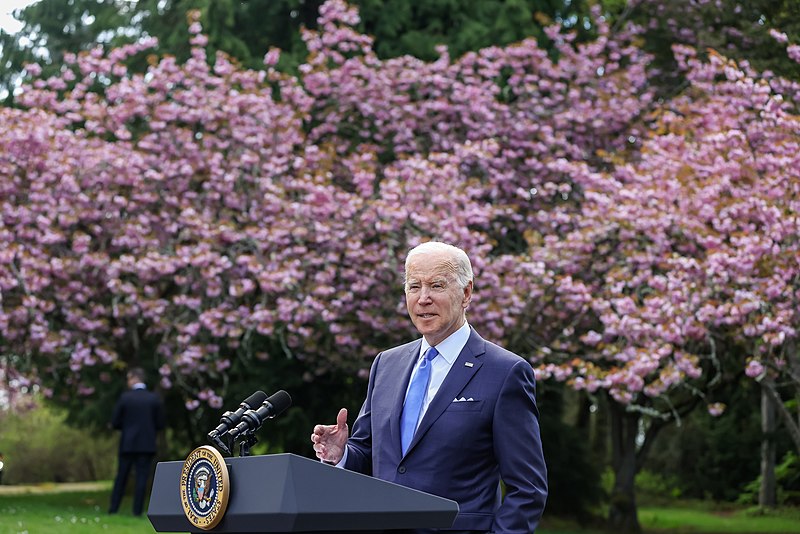
US President Joe Biden received praise from activists this week in his move to expand clean energy technology. This follows Biden’s use of national security powers to expand the production of solar panels and waive tariffs on panels imported from four Southeast Asian countries.
Biden invoked the Defense Production Act this week to ramp up the production of solar panels in the country. Aside from solar panels, the production of building insulation, transformers for power grids, and heat pumps were also included in Biden’s invoking of the cold war-era law.
Biden also waived tariffs on solar panel imports from four Southeast Asian countries for two years.
Environmentalists praised the US leader for using his presidential powers to take action on the growing climate change crisis. Biden has been facing criticism from activists for failing to pass major climate legislation as well as calling for increased oil production to lower gasoline prices that have increased in the midst of the ongoing war in Ukraine.
“We are in a climate emergency, an emergency we can only confront when our government steps up and launches a second-world-war scale mobilization to justly transition to renewable energy,” said Sunrise Movement executive director Varshini Prakash. “This is a great step by the administration and we urgently hope to see even more significant executive actions follow.”
While Biden did not declare a climate emergency or declare a phase-out of fossil fuels, the administration said that using national security powers to build a “stronger clean energy arsenal” was a sign of “bold action to build an American-made clean energy future.”
In other related news, Biden is also leading the West in its response to Russia’s invasion of Ukraine. In a report by CNN, Biden’s Director of National Intelligence Avril Haines revealed that the US leader declassified intelligence about Russia’s plans to invade Ukraine to convince allies and partners who appeared to be skeptical about the claims.
“When we explained to our policymakers and our policymakers went to their interlocutors, they found that there was a fair amount of skepticism about it,” Haines said during a cybersecurity conference Monday.
“As a consequence, the President came back to us and said, ‘You need to go out and share as much as you possibly can and ensure that folks see what it is that you’re seeing so that we can engage again and perhaps have more productive conversations about how to plan for essentially the potential of a Russian invasion,’” said Haines.







