


 Europe Warns Russia Is Escalating Hybrid Attacks Across NATO
  US Officials Split Over Response to Israeli West Bank Settlements
  Russian Strikes Kill Eight Across Ukraine as Energy Sites Hit
  Scott Bessent Eyed as Trump’s New AI Czar
  Sudan Rejects US Legitimacy Remarks, Defends Sovereignty
  US Invites Putin to Miami G20, Opening Door to Trump Summit
  Lula and Flavio Bolsonaro Tied in Brazil Runoff Poll
  Trump Says U.S.-Iran Peace Deal Near After UN Talks
  Macron Challenges Trump’s Gaza Peace Claims at UN
  US, China Extend Trade Truce to Jan. 10 Ahead of Trump-Xi Summit
  Trump Board of Peace Unveils $2.45 Billion Gaza Recovery Plan
  Trump Meets Venezuela’s Delcy Rodriguez at UN Assembly
  Gaza Faces Evacuation Crisis as War-Damaged Buildings Risk Collapse
  Zelenskiy Warns Russia Preparing Major Attack on Ukraine
  Russian Envoy Dmitriev Heads to US for Ukraine Talks
  Trump Says ‘Freedom’ Is Coming to Cuba
  Canada Unveils Bill to Fast-Track Major Resource Projects


 Add as a preferred source on Google
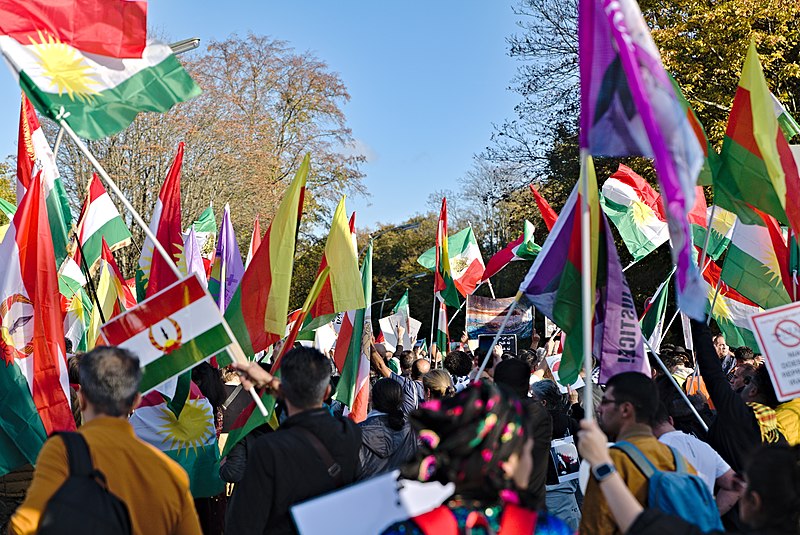
Iranian authorities have sought to crack down on the widespread unrest that has taken place since September. Security forces ramped up their crackdown on protests in a Kurdish region, killing four, according to human rights groups.
Iranian security forces have ramped up their crackdown in the Kurdish region of Mahabad over the weekend. Rights groups, as well as posts circulating on social media, said that four people participating in the protests were killed. Videos that were taken and posted on social media showed military vehicles with heavily armed troops allegedly in the western city.
The Norway-based human rights group Hengaw said that military helicopters that had members of the Islamic Revolutionary Guards on board were deployed to further suppress the protests in the predominantly Sunni Muslim city. The rights group said at least four demonstrators were killed.
Iranian state media issued a statement which confirmed the plans by the IRGC in “strengthening” their forces in the northwestern Kurdish region to confront “terrorist separatist groups.”
Widespread protests were sparked in September following the death of Kurdish-Iranian woman Mahsa Amini in the custody of the Islamic Republic’s morality police. Amini died three days after her arrest over allegedly flouting the Islamic Republic’s dress code for women.
Tehran has blamed Amini’s death on pre-existing medical conditions, which Amini’s family and eyewitness accounts have refuted. Tehran has also sought to blame its foreign adversaries, especially the United States, for the unrest, accusing them of trying to destabilize the Islamic Republic.
Prominent Sunni Muslim cleric Molavi Abdolhamid, who has become a dissenting voice in the predominantly Shi’ite Muslim-ruled government, called on the security forces to stop opening fire at demonstrators in Mahabad.
Women and students have led the widespread protests in the biggest show of opposition to the country’s clerical rulers since the 1979 Revolution.
The Iranian World Cup team also signalled its support for the protests by refusing to sing the country’s national anthem. The refusal to sing the national anthem came amidst criticism from fans, accusing the team of siding with authorities.
The Iranian team, also known as Team Melli, has been speculated on whether they would use the World Cup as a platform to voice their support for the protesters.







