


 Central Banks Eye Gold, Reduce Dollar Exposure as AI Adoption Accelerates: OMFIF Survey
  RBA Minutes Signal Australia Central Bank Remains Ready to Raise Interest Rates if Inflation Persists
  Argentina Economy Shrinks 1.5% in April, Recovery Under Milei Loses Momentum
  Asian Currencies Slip as Dollar Holds Firm, Yen Near Four-Decade Low Ahead of Fed, Jobs Data
  Canada Grants C$7 Million to Greenland Molybdenum Mine to Strengthen Critical Minerals Supply
  Indonesia Plans Higher Asset Yields to Boost Rupiah and Restore Investor Confidence
  ECB Set to Raise Interest Rates as Energy Shock Fuels Eurozone Inflation Concerns
  BOJ Raises Interest Rates to 1% as Inflation Pressures Persist
  Asian Currencies Stay Range-Bound as Investors Eye China Data, RBNZ Outlook and U.S.-Iran Ceasefire
  Fed Chair Kevin Warsh Signals Policy Overhaul as Hawkish Rate Outlook Rattles Markets
  U.S. Stocks End Q2 Higher as Strong Jobs Data and AI Rally Lift Wall Street
  BOJ Raises Interest Rates to 31-Year High, Signals Strong Focus on Inflation Risks
  UN Chief Urges Nations to Close $100 Million UNRWA Funding Gap
  Oil Prices Rise as U.S.-Iran Talks Keep Geopolitical Risks in Focus


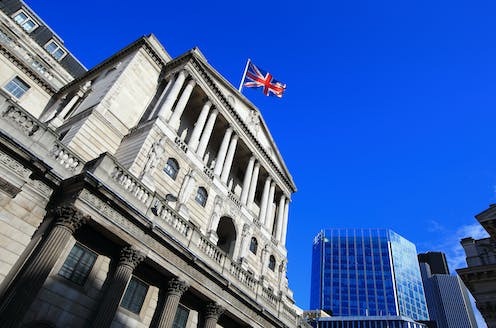

The European Central Bank (ECB) has raised its three key interest rates by 0.25% to their highest levels in more than 20 years. The ECB’s “main refinancing rate” which dictates the cost of borrowing across much of Europe, including for people with tracker mortgages in Ireland, will rise from 3.75% to 4% in June 2023. The governor of the Central Bank of Ireland has already said another increase next month is “probable”.
When making decisions about interest rate changes, central bank officials keep a close eye on price inflation figures because they use rate changes to slow the flow of money into the economy. This is supposed to control rising prices by curbing demand for goods and services. Budgets are tighter so people buy less, or so the theory goes.
ECB president Christine Lagarde warned in early June that “price pressures remain strong … underlying inflationary pressures remain high … and there is no clear evidence that underlying inflation has peaked”. And UK chancellor Jeremy Hunt recently said there is “no alternative” to using rate hikes to control the UK’s “number one challenge” right now: inflation.
Economic experts, as well as financial market participants, are also betting that the UK will continue to raise interest rates this year to try to beat back inflation. Major mortgage lenders have been pulling their deals with the lowest rates in anticipation of these base rate hikes, which will raise the cost of borrowing even further.
As well as increases in mortgage repayments, rapidly rising inflation has exacerbated a cost of living crisis in the UK that has seen people struggle to heat their homes over the past year. Food prices have also shot up relative to other countries in Europe, adding to these financial concerns.
Even more worryingly, a recent trend in the inflation figures for the UK and Ireland indicates these high prices may have become embedded in both economies. This means that, rather than quickly falling back to “normal” levels, recent high price levels might become permanent.
Inflation pressures
As in many other countries, inflation rose substantially in Ireland during 2021 and 2022 and has remained high so far in 2023. Having fallen to 0% during the COVID pandemic, Ireland’s main rate of consumer price inflation (CPI) – the headline rate – began to rise in mid-2021, reaching 5.5% by the end of 2021, followed by a peak of 9.2% in October 2022.
Inflation has decreased somewhat since then, falling to 6.6% in the year to May 2023 in Ireland. But while this headline inflation rate has fallen back somewhat, consumer prices are still rising well above the ECB’s 2% inflation target.
In addition to this headline rate, economists and central bankers often look at what’s called the “core” inflation rate. This is a measure of price inflation that excludes items that tend to see the most price volatility each month. There is no shared definition among countries of which items should be excluded, but it’s usually energy and food, and sometimes tobacco and alcohol.
By stripping out things that are more prone to rapid price changes, the core inflation figure shows the underlying price rises that are expected to persist in the medium or long term. Since the headline rate includes the volatile items, it is a better measure of shorter-term economic changes – for example, when energy prices spiked after Russia invaded Ukraine last year, then started to fall again last winter and into 2023.
Core versus headline rates of inflation
When inflation is low, stable and close to the central bank’s 2% target, this core rate doesn’t tend to get much attention. But since inflation began to rise significantly during 2021, interest in core inflation has grown because the figure strips out the noise of fast-changing costs such as energy. This measure therefore indicates if prices rises have become embedded in the economy – that is, if they are here to stay.
Recent figures published by Ireland’s Central Statistics Office (CSO) showed the country’s headline rate of inflation has fallen from a peak of 9.2% in October 2022 to 6.6% in May 2023. At the same time, CPI excluding energy and unprocessed food – a proxy for core inflation – rose from 5% in the year to December 2022 to 6.8% in the year to May 2023.
This puts Ireland’s core rate above its headline rate for the first time in more than two years. This has happened because a sharp fall in energy prices (14.6% for petrol and 22.9% for diesel) dragged down the headline rate of inflation – even though this was tempered by a sharp spike in food price inflation, from 2% to 10% over the course of 2022. But these items are not included in calculations for the core rate of inflation, which explains why Ireland’s headline rate has fallen below its core rate.
Ulf Wittrock/Shutterstock
UK inflation
This shift has not happened in the UK yet, but it could soon. The headline rate of CPI for Britain reached a peak above 11% in October 2022, and has since declined to 8.7% in the year to April 2023.
Falling electricity and gas prices, as well as decreases in liquid fuels such as petrol, contributed to this headline rate slowdown. But the UK’s core inflation has not fallen because it does not include energy – and in fact has increased somewhat during 2023, reaching 6.8% in the year to April. The UK has experienced even higher inflation in food and non-alcoholic beverage prices than Ireland, seeing a staggering 19% annual rise in early 2023.
The UK’s headline rate of inflation remains about 1.5%-2% above the core rate – but it is moving in the same direction as Ireland, so could yet be overtaken by the core rate. This would alert the Bank of England that high prices are in danger of becoming embedded in the economy, and that it needs to take more action to bring them down.
Since central banks use inflation figures to set their interest rates, this means people in both the UK and Ireland could see things like mortgage payments continue to increase, further fuelling the cost of living crisis.







