


 Trump to Press Xi on Release of US Nuclear Expert Held in China
  UK, Mauritius Seek Diego Garcia Base Deal
  Iran Vows ‘Crushing’ Response as US Talks Continue
  China Tightens Fentanyl Rules Ahead of Trump-Xi Summit
  Zelenskiy Meets CIA Chief John Ratcliffe at Ireland’s Shannon Airport
  Vietnam, US Trade Deal Could Be Signed Soon, To Lam Says
  Zelenskiy Warns Russia Preparing Major Attack on Ukraine
  Macron Challenges Trump’s Gaza Peace Claims at UN
  US Plans Two New Military Bases in Greenland Under Arctic Deal
  Marco Rubio to Meet Russia’s Lavrov in New York
  US, Denmark and Greenland Set to Sign Arctic Security Deal
  Trump Meets Venezuela’s Delcy Rodriguez at UN Assembly
  Scott Bessent Eyed as Trump’s New AI Czar
  Trump Board of Peace Unveils $2.45 Billion Gaza Recovery Plan
  Trump Administration Prepares Sanctions Against Entire ICC
  Trump Scales Back Endangered Species Act Protections
  Lula Meets Mamdani in New York as Elections Approach


 Add as a preferred source on Google
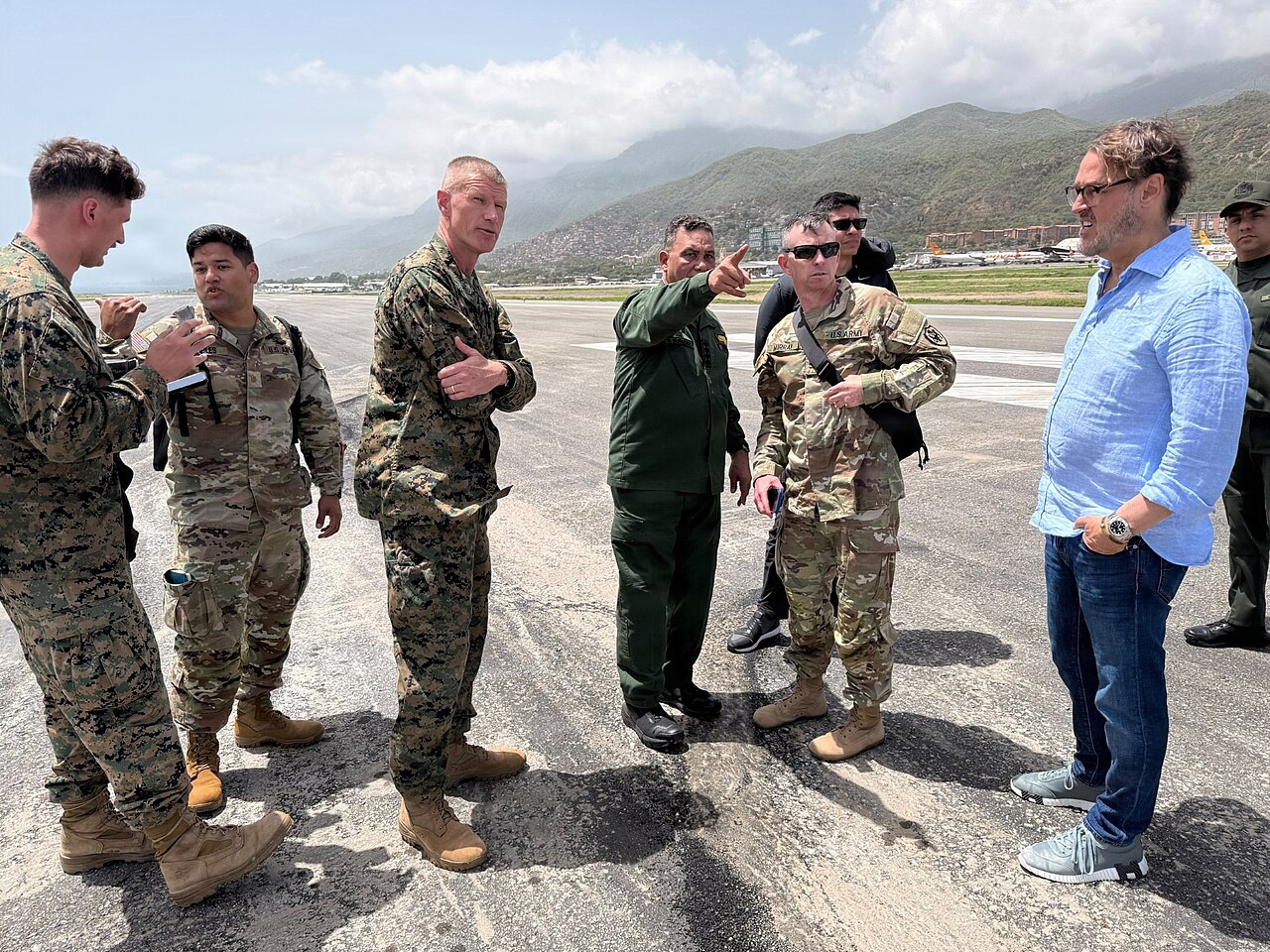
The United States has significantly expanded its military presence in Venezuela to support humanitarian relief efforts following last week’s devastating earthquakes, with more than 900 U.S. personnel now operating inside the country and another 800 stationed in nearby Caribbean locations, according to U.S. Southern Command chief General Francis Donovan.
Speaking to Reuters, Donovan said U.S. forces have played a key role in search-and-rescue operations, restoring airport functionality, and coordinating air and naval logistics to speed the delivery of international humanitarian aid. The deployment also includes four to five MQ-9 Reaper drones providing aerial surveillance to help Venezuelan authorities identify blocked roads, damaged buildings, and priority disaster zones. Intelligence gathered by the drones is being combined with analysis from a Miami-based fusion center to improve emergency response efforts.
Donovan noted that the military is using capabilities typically assigned to monitoring regional security threats to instead assist earthquake recovery by mapping destruction and supporting relief coordination.
The humanitarian mission marks a dramatic shift in U.S.-Venezuela relations. Earlier this year, on January 3, U.S. forces conducted an operation that resulted in the capture of Venezuelan President Nicolas Maduro, who was transferred to New York to face drug trafficking charges. Maduro has denied all allegations. More recently, U.S. and Venezuelan authorities coordinated a military operation that killed the leader of the Tren de Aragua criminal organization.
Venezuela was struck by two powerful earthquakes measuring 7.2 and 7.5 in magnitude less than a minute apart, causing widespread destruction, collapsing buildings, and trapping thousands beneath the rubble. Rescue operations entered their sixth day with only one survivor, a three-year-old child, reportedly pulled alive from the debris, according to National Assembly President Jorge Rodriguez.
Donovan said U.S. Marines were among the first American personnel deployed to assist local rescue teams in searching collapsed structures. The U.S. military also transported international rescue specialists, including teams from Fairfax, Virginia, who successfully rescued a mother and her nine-month-old baby over the weekend.
Beyond rescue missions, the Pentagon’s focus has shifted toward logistics, ensuring humanitarian supplies reach affected communities without creating bottlenecks at airports and ports. Donovan stressed that efficient distribution is essential because relief operations can quickly become overwhelmed if aid accumulates faster than it can be transported.
The Venezuelan government has faced criticism over its initial disaster response, with residents reporting that heavy machinery and organized rescue teams arrived only after several days. In many areas, families and volunteers relied on shovels, ropes, and their bare hands to search for missing loved ones before state equipment reached the hardest-hit locations. Foreign rescue crews also assisted in recovering victims from collapsed buildings.
Asked about concerns surrounding Venezuela’s response, Donovan acknowledged the country continues to struggle with deteriorating infrastructure after years of economic and political challenges. He added that shortages of medical supplies and healthcare workers have further complicated relief efforts.
Despite the large U.S. deployment, Donovan emphasized that Washington has no plans for a long-term military presence in Venezuela. He said the mission remains strictly humanitarian and will conclude once relief operations are complete, with the U.S. State Department overseeing the broader assistance effort.
Still, Donovan expressed hope that the cooperation could serve as a foundation for improved military-to-military relations between the United States and Venezuela in the future, saying the U.S. would welcome closer collaboration if the opportunity emerges.







