


 Pope Leo Backs Press Freedom After White House Media Ban
  Iran Says Diplomacy Only Path to End U.S.-Israel Conflict
  Iran Rejects Nuclear Concessions in Hormuz Deal
  North Korea Warns South Korea Over US-Led Defense Role
  US Backs Musk in Fight Against EU’s €120 Million X Fine
  Pope Leo Warns UN, Multilateral Groups Face Crisis
  China Agrees to Buy 20 Million Tons of U.S. Coal
  Najib Razak Seeks Stay of 15-Year 1MDB Prison Sentence
  What ‘Taiwan Independence’ Means as Xi Presses Trump on US Policy
  Saudi Arabia, Turkey and Pakistan Plan Urgent Defence Talks Over Houthi Attacks
  Putin Says Ukraine Peace Proposals Remain on Table
  Trump to Ease U.S. Fuel-Economy Standards
  South Africa Seeks US Talks Despite Visa Restrictions
  Saudi Arabia Seeks Military Support as Houthi Attacks Escalate
  US Comfortable With Canada Trade Standoff as Import Bans Loom
  Ukrainian Drone Attacks Hit Russian Regions, Injuring at Least 12


 Add as a preferred source on Google
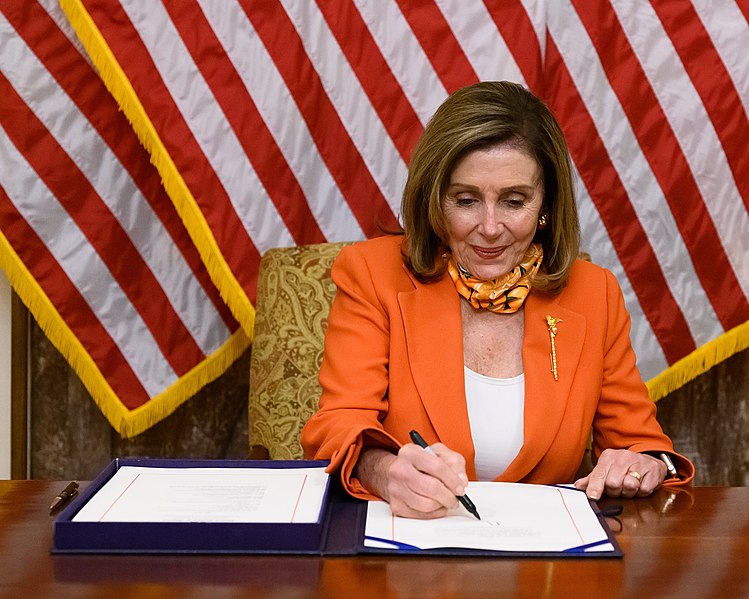
The US House of Representatives passed legislation this week, approving a ban on all Russian oil and energy products from entering the US. The approval of the ban also comes as President Joe Biden announced the same ban.
The majority of the House of Representatives approved of the ban of Russian oil and energy products from entering the country Wednesday. House Democratic leaders moved forward with voting on the legislation anyway, even as it is not expected to be taken up at the Senate.
House Speaker Nancy Pelosi said that even with Biden’s executive order banning oil and energy products from Russia, it felt necessary for the House to take action in order to further punish Russian dictator Vladimir Putin for his invasion of Ukraine. The ban passed the House by 414-17, with two Democratic representatives joining a number of Republicans in voting against the ban.
“We’ve been talking about doing the Russian ban for a while. And we’re so pleased that the president has done that,” said Pelosi Wednesday, who also spoke with Ukrainian President Volodymyr Zelenskyy. “But you’re here in a legislature. This is a democratic process where people weigh the equities, express their views.”
“Putin is using weapons prohibited in the Geneva Conventions, including cluster bombs and vacuum bombs, which cause severe suffering,” the top House Democrat also said Wednesday.
Lawmakers from both sides of the aisle have voiced support in an oil embargo to further punish Russia, despite reluctance from the White House to do so until recently. White House officials initially raised concerns that an oil embargo would cause the rising gas prices to increase even more.
Meanwhile, the House also passed a new spending package that included emergency aid for Ukraine. The new package with a price tag of $1.5 trillion, would also avert a government shutdown with $14 billion in additional aid for Ukraine.
Both Democrats and Republicans came to a deal to increase both domestic and military spending, which is made up of 12 separate pieces of legislation. The package had $730 billion in non-defense spending, which would go to health, education, and science programs, while $782 billion would be for defense spending.







