


 NASA Partners with Katalyst to Save Swift Observatory with Innovative Docking Mission
  SpaceX Delays Starship V3 Launch Ahead of Potential Record IPO
  Blue Origin’s New Glenn Achieves Breakthrough Success With First NASA Mission
  Blue Origin New Glenn Explosion Could Delay Launch Operations Until 2028
  Cogent Biosciences Soars 120% on Breakthrough Phase 3 Results for Bezuclastinib in GIST Treatment
  Tabletop particle accelerator could transform medicine and materials science
  NASA Artemis II: First Crewed Moon Mission Since Apollo Takes Four Astronauts on 10-Day Lunar Journey
  FDA Adds Fatal Risk Warning to J&J and Legend Biotech’s Carvykti Cancer Therapy
  Trump Administration Releases New UFO Files and Apollo Mission Records
  Is space worth the cost? Accounting experts say its value can’t be found in spreadsheets
  Trump and Merck KGaA Partner to Slash IVF Drug Costs and Expand Fertility Coverage
  SpaceX Pivots Toward Moon City as Musk Reframes Long-Term Space Vision


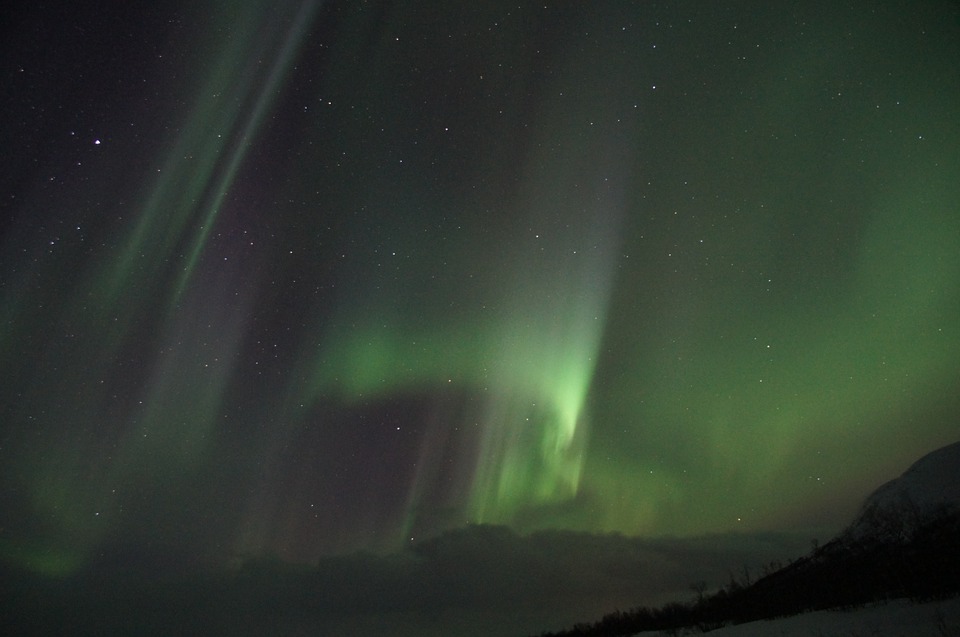
Just like how the weather on Earth can be turbulent, the weather in the Solar System is also unpredictable. A recent report reveals that the planet is currently in the midst of a solar windstorm.
Express reports that Earth is in the midst of a solar windstorm at the moment, as the winds from the Sun have finally reached the planet. According to space weather forecasters, the solar particles traveled 150 million kilometers from the Sun to Earth, and the winds were hitting Earth at a speed of 1,120,000 kilometers per hour. The site Space Weather further described the current storm that the Earth is experiencing. “The stream’s velocity is moderately high, but it contains south-pointing magnetic fields that can open cracks in Earth’s magnetosphere. Arctic sky watchers should be on the lookout for auroras mixed with springtime twilight.”
Auroras are referring to the northern lights and southern lights, aurora borealis and aurora australis. These occur when the magnetosphere is hit with solar winds, deflecting the particles and producing the stunning blue and green lights seen in the Arctic regions.
But aside from auroras, other effects of a solar storm on Earth is the momentary malfunctioning of satellite technology, therefore disrupting GPS navigation, mobile phone reception, and satellite television. In very rare occurrences, solar storms can also affect the electricity, leading to overload in power lines and electrical transformers. A recent study also revealed that solar storms happen once every 25 years.
In other news, 2020 marks the 30th anniversary of the Hubble Space Telescope since its launch back in 1990. The telescope made history as it provided views of deep space and glimpses of the phenomena that occur in the universe. Developed in a joint partnership between NASA and the European Space Agency, it changed the game for many scientists looking to further explore space, and it has produced some of the most iconic images of the cosmos.
The agency recently shared a new photo of the Hubble’s most famous photo of the Eagle nebula’s Pillars of Creation, which was first seen in 1995. Another famous shot was of gas giant Jupiter and one of its moons, Io.







