


 Ghana Says Western Support Growing for Slave Trade Reparations
  US, China Extend Trade Truce to Jan. 10 Ahead of Trump-Xi Summit
  South Korea, US Discuss Warship Building Cooperation
  Judge Orders Trump to Restore White House Access for CNN, MS NOW and Politico
  Yemen Violence Displaces 130,000 as Civilian Toll Rises
  Netanyahu Takes Aim at Mamdani as Israel Election Nears
  France Defends Netanyahu Airspace Clearance Despite ICC Warrant
  Netanyahu’s Brief US Trip Highlights Strains With Trump
  US Invites Putin to Miami G20, Opening Door to Trump Summit
  Taiwan Thanks US for Support Ahead of Trump-Xi Summit
  Russian Missile and Drone Attack on Kyiv Kills Two, Damages Maternity Hospital
  North Korea Warns South Korea Over US-Led Defense Role
  NATO Boosts Intelligence Sharing Amid Russia Hybrid Threats
  Kremlin Says No Decision Yet on Putin-Trump December Summit
  US Backs Musk in Fight Against EU’s €120 Million X Fine
  US Officials Split Over Response to Israeli West Bank Settlements
  Mexico-US Trade Talks Delayed to October as Tariff Negotiations Continue


 Add as a preferred source on Google
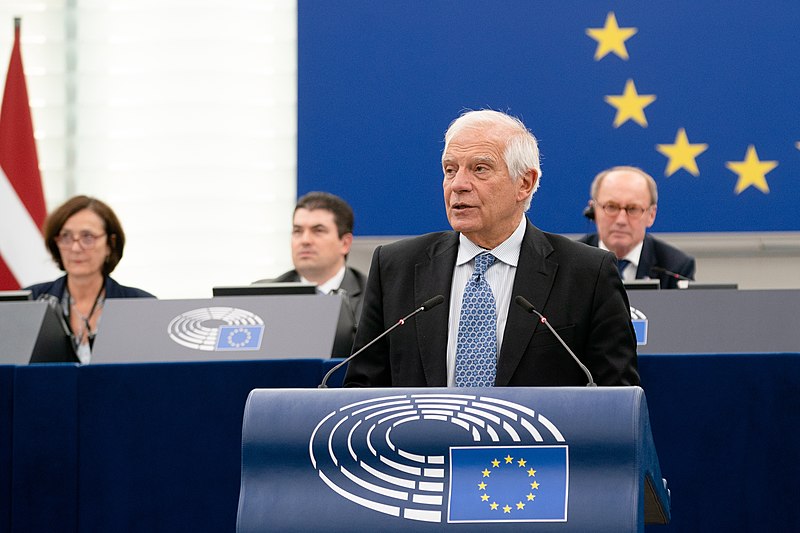
The European Union’s foreign policy chief said that while Serbia and Kosovo both support the normalization of relations, more discussions are needed. Additional discussions were needed in order to implement the Western-led agreement.
On Monday, EU foreign policy chief Josep Borrell said Serbian President Aleksandar Vucic and Kosovan Prime Minister Albin Kurti both backed normalizing relations between Serbia and Kosovo, agreeing that “no further discussions” are needed on the deal between the two nations. However, Borrell said that more discussions are needed on the implementation of the agreement.
“Progress was made today, and I commend the parties for their engagement,” Borrell told reporters in Brussels after the meeting. “At the same time, more work is needed to ensure that what was accepted today by the parties will be implemented. It is important to agree, it is still more important to implement what has been agreed.”
While Kosovo declared independence in 2008, Belgrade has refused to recognize Pristina as an independent state and regards Kosovo as a breakaway province. Recent flares in conflicts in the region have stoked fears of returning to a military conflict.
The new agreement would stop short of requiring Serbia to recognize Kosovo as an independent state, but Belgrade has agreed to recognize Kosovan official documents such as passports, diplomas, and license plates. Serbia will also agree under the new agreement not to block Kosovo’s membership in any international organization.
In the text of the EU-brokered deal, Kosovo will also agree to “ensure an appropriate level of self-management” for its ethnic Serb community. However, the details of the agreement and other outstanding issues are expected to be included in an annex on the implementation of the deal as well as prior commitments. Borrell said the annex was an “integral part” of the agreement that has yet to be agreed upon.
In January, Vucic said Serbia was under pressure from the West to normalize ties with Kosovo, having been warned to either normalize ties or face international isolation, which would do “great damage” to Serbia. Vucic said at the time that he was presented with a Western-led proposal to resolve long-running tensions with Kosovo during a meeting with representatives of the EU, France, Germany, Italy, and the United States.
Vucic said the West told him to accept the proposal, “or you will face the interruption of the process of European integration,” referring to Serbia’s membership bid to join the EU. “the halting and withdrawal of investments and comprehensive economic and political pressures that will cause great damage” to the country.







