


 US Senate Rejects Iran War Powers Resolution in 50-49 Vote
  Ghana Says Western Support Growing for Slave Trade Reparations
  U.S. Treasury Yields Surge as 30-Year Hits 22-Year High
  South Korea, US Discuss Warship Building Cooperation
  Dollar Hits Two-Month High as Fed Rate Hike Bets Rise
  US Dollar Hits Two-Month High as Fed Rate Hike Bets Rise
  Netanyahu Defends Israel at UN as Delegates Stage Walkout
  Asian Stocks Fall as Bond Yields Surge Ahead of Trump-Xi Summit
  EU Defence Build-Up Too Slow for 2030 Russia Readiness Goal
  Japan Private-Sector Growth Slows as Domestic Demand Weakens
  China’s ‘Lipstick King’ Says AI Won’t Replace Livestream Hosts
  Trump, Xi Focus on Trade and AI at White House Summit
  Russian Envoy Dmitriev Heads to US for Ukraine Talks
  Netanyahu Takes Aim at Mamdani as Israel Election Nears
  NATO Boosts Intelligence Sharing Amid Russia Hybrid Threats
  US, China Extend Trade Truce to Jan. 10 Ahead of Trump-Xi Summit
  France Defends Netanyahu Airspace Clearance Despite ICC Warrant


 Add as a preferred source on Google
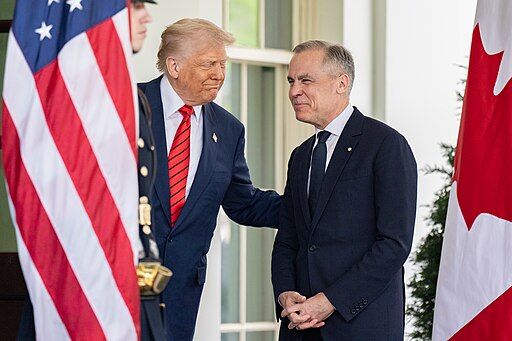
Canadian Prime Minister Mark Carney has signaled a shift in how Canada views its long-standing relationship with the United States, warning that close economic and political ties, once considered a major advantage, may now pose risks. In a recent video message addressed to Canadians, Carney highlighted growing uncertainty stemming from U.S. policies and emphasized the need for Canada to strengthen its independence and economic resilience.
Referencing historical events such as the War of 1812, Carney drew parallels between past and present challenges. He held up a toy figure of General Isaac Brock, a key British military leader who defended Canadian territory against American forces, and praised Indigenous leader Chief Tecumseh for uniting nations to resist U.S. expansion. By invoking these figures, Carney underscored Canada’s history of defending its sovereignty and suggested that similar resolve may be necessary today.
Carney’s comments come shortly after securing a parliamentary majority for his Liberal government, a victory he believes will strengthen his position in dealing with ongoing trade disputes with the United States. Tensions have escalated following tariffs imposed by U.S. President Donald Trump on Canadian exports, including steel, aluminum, and automobiles. Trump has also sparked controversy by repeatedly suggesting the possibility of annexing Canada as the 51st U.S. state.
Adding to the strain, U.S. Commerce Secretary Howard Lutnick recently criticized Canada as a difficult trading partner. These developments arrive at a critical time, as Canada prepares to review the United States-Mexico-Canada Agreement (USMCA), with American officials reportedly pushing for significant revisions.
With nearly 70% of Canadian exports dependent on the U.S. market, Carney stressed that Canada cannot rely solely on its neighbor’s stability. He emphasized the importance of diversifying trade, strengthening domestic industries, and protecting national sovereignty. Moving forward, Carney plans to deliver regular updates to Canadians, outlining his government’s strategy to boost economic growth and maintain control over the country’s future.







