


 Cogent Biosciences Soars 120% on Breakthrough Phase 3 Results for Bezuclastinib in GIST Treatment
  Senate Sets December 8 Vote on Trump’s NASA Nominee Jared Isaacman
  NASA Artemis II: First Crewed Moon Mission Since Apollo Takes Four Astronauts on 10-Day Lunar Journey
  SpaceX Pivots Toward Moon City as Musk Reframes Long-Term Space Vision
  Tabletop particle accelerator could transform medicine and materials science
  Neuralink Expands Brain Implant Trials with 12 Global Patients
  Trump and Merck KGaA Partner to Slash IVF Drug Costs and Expand Fertility Coverage
  Blue Origin New Glenn Explosion Could Delay Launch Operations Until 2028
  Eli Lilly’s Inluriyo Gains FDA Approval for Advanced Breast Cancer Treatment
  FDA Adds Fatal Risk Warning to J&J and Legend Biotech’s Carvykti Cancer Therapy


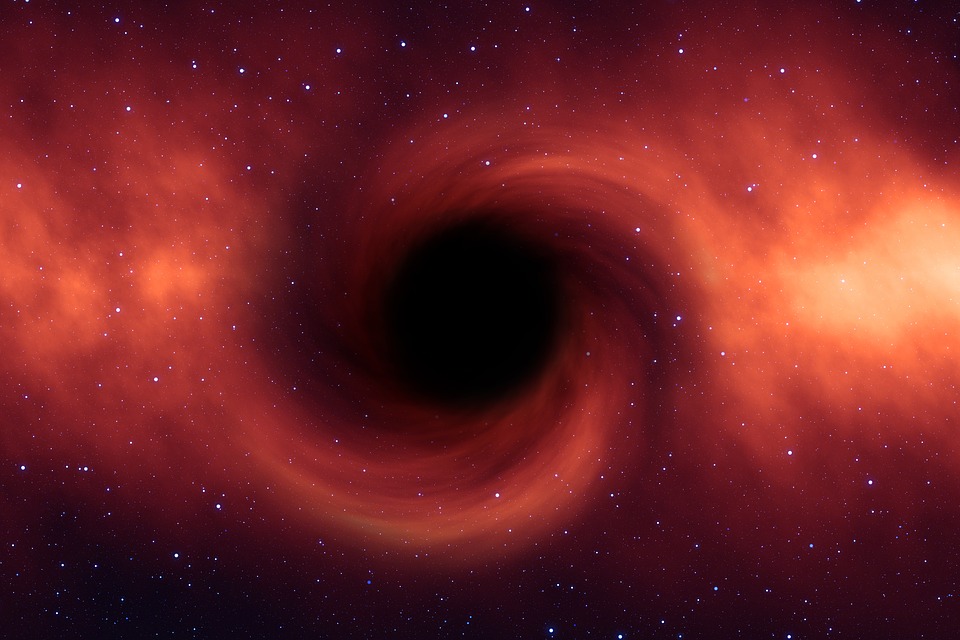
Black holes are among the most enigmatic celestial objects there is, which is why scientists are constantly trying to learn more about them. Astronomers recently found one particular black hole that has a particle beam pointing right at Earth.
Express reports that the black hole discovered by scientists is referred to as PSO J030947.49+271757.31, is also known for being a blazar galaxy, which is an incredibly bright galaxy that has a supermassive black hole at the very center. This black hole, in particular, is facing directly at Earth, aiming light and matter towards the planet. Scientists have also discovered that this black hole is among the oldest based on the wavelength signature of the black hole’s redshift as the longer the wavelength, the more prominent the red becomes.
The study conducted by the scientists suggests that this black hole first came to be around 13.7 billion years ago, during the early years of the universe. This discovery gives scientists more clues about the secrets of the universe and the cosmos in general. According to Italy’s University of Insubria astrophysicist Dr. Silvia Belladitta, spotting a blazar is important. “For every discovered source of this type, we know there must be 100 similar, but most are oriented differently, and are therefore too weak to be seen directly.”
Dr. Belladitta added that because of this discovery, it could be said that there are extremely bright black holes that have already existed during the first billion years of the universe. “The result places tight constraints on the theoretical models that try to explain the origin of these huge black holes in our universe.”
Along with possibly providing more answers as to how the universe was formed, it was previously reported that black holes might shed some light on the concept of time travel, according to CTES College researcher Atharva Palshetkar.
Palshetkar explained that black holes have the ability to dilate time. Dilating time is referring to the difference when measured against two clocks. “Being this close to a black hole, time affects the spaceship and it gets slower and slower as it nears a black hole.”







