


 SpaceX Pivots Toward Moon City as Musk Reframes Long-Term Space Vision
  Trump Administration Releases New UFO Files and Apollo Mission Records
  NASA and SpaceX Target Crew-11 Undocking From ISS Amid Medical Concern
  Eli Lilly’s Inluriyo Gains FDA Approval for Advanced Breast Cancer Treatment
  Blue Origin New Glenn Rocket Explodes During Launch Pad Test, Delaying Space Ambitions
  Blue Origin’s New Glenn Achieves Breakthrough Success With First NASA Mission
  SpaceX Prioritizes Moon Mission Before Mars as Starship Development Accelerates
  NASA Artemis II: First Crewed Moon Mission Since Apollo Takes Four Astronauts on 10-Day Lunar Journey
  SpaceX Delays Starship V3 Launch Ahead of Potential Record IPO
  FDA Pilot Program Eases Rules for Nicotine Pouch Makers
  Tabletop particle accelerator could transform medicine and materials science


 Add as a preferred source on Google
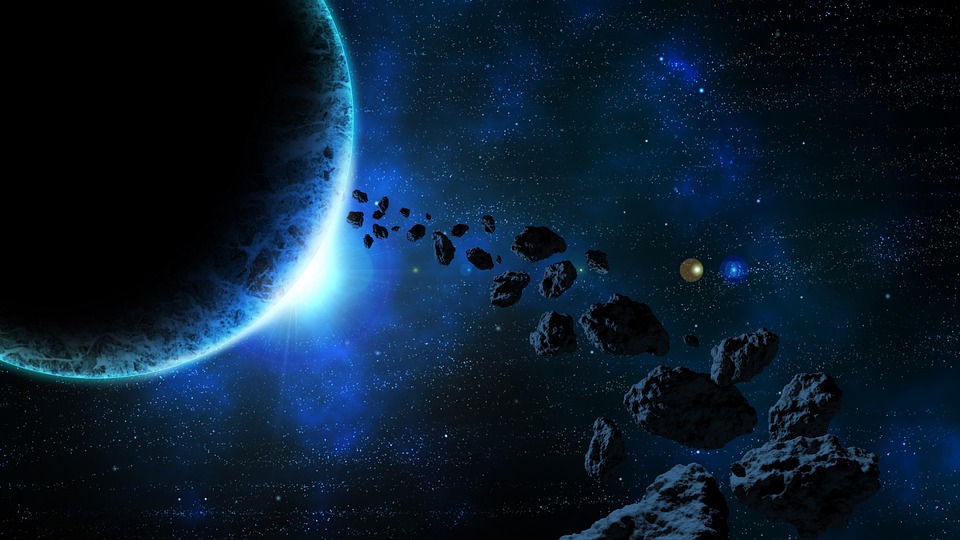
Many asteroids have been coming and passing by the planet, and many scientists believe that it is an inevitable possibility that an asteroid is going to hit Earth sometime in the near or very distant future. Now, an expert believes that the Earth is possibly colliding with not just one, but 200 space rocks would be considered the biggest risk to humanity.
Space agencies all over the world are keeping tabs on the many Near-Earth Objects or NEOs that approach the planet’s orbit or vicinity. Some of the NEOs that come across the planet could also be classified as Potentially Hazardous due to their size. But one single asteroid might not be a cause for concern, as journalist Graham Hancock shares that the cluster of 200 or so asteroids that are hiding within the Taurids meteor shower could pose a threat to humanity.
Speaking to the Joe Rogan Experience back in 2019, Hancock explained that he thinks that the world today is at a point “where history can repeat itself, there are certain cycles that work.”
Hancock continued to say that the debris left from the two Taurids meteor streams would make up this cluster of asteroids, and unfortunately, the Earth passes two of these meteor showers twice a year. The two times the Taurids meteor shower happens also lasts for 12 and a half days. He then warned that there are still larger bits of rock in the stream, 19 to be exact. However, he noted that this possibility is “perfectly within the level of our technology to do something about it.”
Meanwhile, the late Stephen Hawking once predicted when the Earth would somehow implode on itself. In a series that he hosted called “Stephen Hawking: Expedition New Earth,” the scientist said, “With climate change, overdue asteroid strikes, epidemics, and population growth, our own planet is increasingly precarious.”
Back in 2010, Hawking said that the possibility of asteroids wiping out humanity is not just something that could be seen in the movies, as it could happen in real life as well. He went on to name the large asteroids such as Apophis, which can wipe out the world if it ever strikes but said that there is a very slim chance of the rock hitting the planet. “But the problem for humanity in space, is there’s always a bigger rock,” said Hawking.







