


 Blue Origin’s New Glenn Achieves Breakthrough Success With First NASA Mission
  Trump and Merck KGaA Partner to Slash IVF Drug Costs and Expand Fertility Coverage
  Jared Isaacman Confirmed as NASA Administrator, Becomes 15th Leader of U.S. Space Agency
  Eli Lilly’s Inluriyo Gains FDA Approval for Advanced Breast Cancer Treatment
  FDA Lifts REMS Requirement for CAR-T Cell Cancer Therapies
  Neuralink Plans High-Volume Brain Implant Production and Fully Automated Surgery by 2026
  SpaceX Pivots Toward Moon City as Musk Reframes Long-Term Space Vision
  SpaceX’s Starship Completes 11th Test Flight, Paving Way for Moon and Mars Missions
  Trump Signs Executive Order to Boost AI Research in Childhood Cancer
  Tabletop particle accelerator could transform medicine and materials science


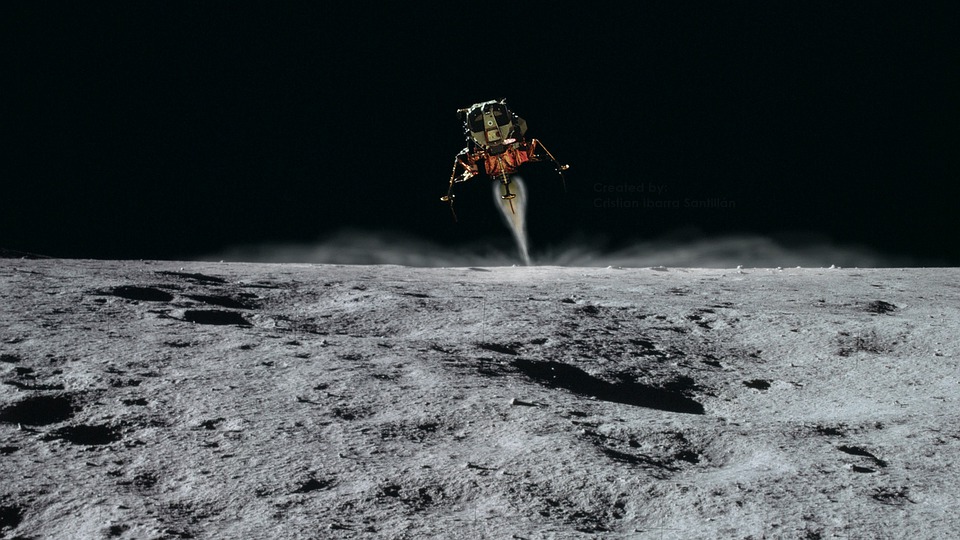
It was in 1969 that the United States won the Space Race against the Soviet Union when astronauts Neil Armstrong and Buzz Aldrin landed on the surface of the moon. Michael Collins, who was piloting the command module during the historic mission, recently admitted that there was a possibility that he would be the only one who made it back to Earth.
Express reports that in an interview in 2019, Collins recalled the time leading up to the historic Apollo 11 mission as well as his memories with Aldrin and Armstrong. Collins shared how he did not envy his colleagues, who got to walk on the Moon while he piloted the Command Module Columbia for 21 hours while Armstrong and Aldrin carried out their experiments. “I like being in the command module by myself, I had my own little way of doing things. I had hot coffee, I took the center seat out and it was almost like being in a little church. As far as feeling left out or anything, not at all, I felt very much an equal partner with them,” said Collins.
However, he noted the possibility that Armstrong and Aldrin may not have made it back, and that he would be the only one returning to Earth should that have happened. Collins revealed that between the two, there was only one little motor and it had to be functioning; otherwise, they would have been stuck on the Moon and they would have died out in space.
“I was going to come home and I would not have been a happy returnee, I’d be a marked man for the rest of my life,” recalled the legendary astronaut. Thankfully it didn’t happen, and the trio made it safely back to Earth.
In some unearthed footage from the trio’s press conference weeks after the mission, Collins revealed that while they were out in space, he did not remember seeing any stars after Aldrin shared that they could not see any from the lunar surface.
That detail found in the photos the two astronauts took on the moon is often what conspiracy theorists bring up when it came to the notion that the moon landing was faked. However, this is because when out in space, the light from the sun is just as bright as the sunlight that reaches the Earth’s surface on a clear day.







