


 Senate Sets December 8 Vote on Trump’s NASA Nominee Jared Isaacman
  Is space worth the cost? Accounting experts say its value can’t be found in spreadsheets
  Trump Signs Executive Order to Boost AI Research in Childhood Cancer
  Trump Administration Releases New UFO Files and Apollo Mission Records
  Neuralink Expands Brain Implant Trials with 12 Global Patients
  Eli Lilly’s Inluriyo Gains FDA Approval for Advanced Breast Cancer Treatment
  SpaceX Pivots Toward Moon City as Musk Reframes Long-Term Space Vision
  Trump and Merck KGaA Partner to Slash IVF Drug Costs and Expand Fertility Coverage
  Blue Origin’s New Glenn Achieves Breakthrough Success With First NASA Mission
  Cogent Biosciences Soars 120% on Breakthrough Phase 3 Results for Bezuclastinib in GIST Treatment
  Blue Origin New Glenn Explosion Could Delay Launch Operations Until 2028
  FDA Adds Fatal Risk Warning to J&J and Legend Biotech’s Carvykti Cancer Therapy


 Add as a preferred source on Google
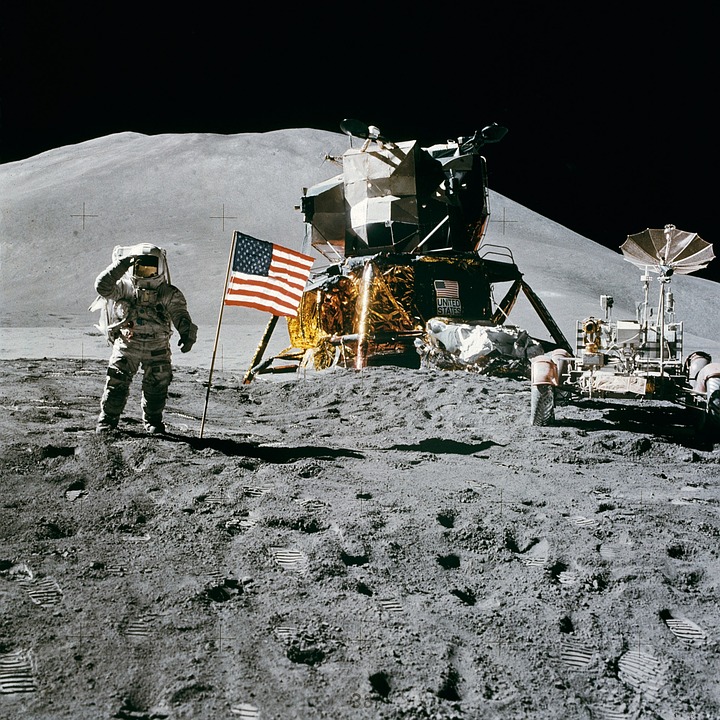
Neil Armstrong and Buzz Aldrin are known for being the first two people to ever set foot on the moon following the historic Apollo 11 mission. An old interview back in 2016 reveals that Aldrin had his own ideas as to how they could complete their mission.
Speaking to Professor Brian Cox at the Science Museum, Aldrin recalled that prior to the actual execution of the mission, he was working on his rendezvous thesis, mainly the rendezvous around the Earth. “I’d pretty much finished that and then it looked like there was this debate between Wernher von Braun and the science adviser, who both thought that the lander Ron Brown designed was too big,” shared Aldrin.
Aldrin then went on to share how the lander needed something like the Nova rocket with nine engines, but the rocket would not be ready until the seventies. Armstrong and Aldrin were able to fulfill the late JFK’s promise to have someone on the moon by the end of the decade in 1969. “So they had to use two Saturn 5, the first for the rocket stage, to take the spacecraft to the Moon, then you would send up the spacecraft and join together,” recalled Aldrin, who then revealed that when the mission was broken up into three parts, where the risk factor was much higher.
He shared that an engineer from another center explained to them that the mission would require a command module for the first part and a lander for when they finally land on the moon. Although the risk was high, Aldrin shared that it was the easier method, and it only needed one rocket compared to the other method, which required two. It was then that Aldrin revealed that he had a third method in mind, but he chose to keep it to himself instead.
Meanwhile, some unreleased photos of the events, including the celebrations that occurred after the moon mission. Some photos included Cambridge University Professor Dr. Stuart Agrell, carrying the bag of lunar samples collected by Armstrong and Aldrin while riding the London Underground. Along with Armstrong and Aldrin was Michael Collins, who was also present during the Apollo 11 mission but was orbiting around the moon, and the three astronauts went on an international tour after being cleared out of quarantine by NASA.







