


 Bessent Says Yen Moves Contained as BOJ Rate Decision Looms
  Bessent Urges G20 to Rethink China Trade Ties
  Iran Weighs Conditions to Reopen Strait of Hormuz
  Nepal Seeks More China Glacier Data After Deadly Himalayan Flood
  US Treasury Plans Weekly Iran Sanctions Push
  Nepal Declines Foreign Rescue Aid After Deadly Flash Flood
  South Korea, Japan and US Plan Joint Military Drills
  Flavio Bolsonaro Pledges to Respect Brazil Election Result
  Norway’s King Harald Dies at 89, Haakon VIII Takes Throne
  US Military Uses Laser to Shoot Down Cartel Drones at Mexico Border
  Tennessee Plans to Rename Nashville Airport After Dolly Parton
  Canada Backs €100B Global Defence Bank as G7 Support Lags
  Israeli Airstrike Kills Hamas Operative, Two Others in West Bank
  Mojtaba Khamenei’s Absence Fuels Iran Leadership Doubts
  Iran’s Khamenei Urges Muslim, Gulf Unity Against ‘Real Enemy’
  Trump Posts AI Video of Iran’s Kharg Island Exploding as Tensions Surge
  ICE Awards $16.7M Contract for Electric Shock Gloves


 Add as a preferred source on Google
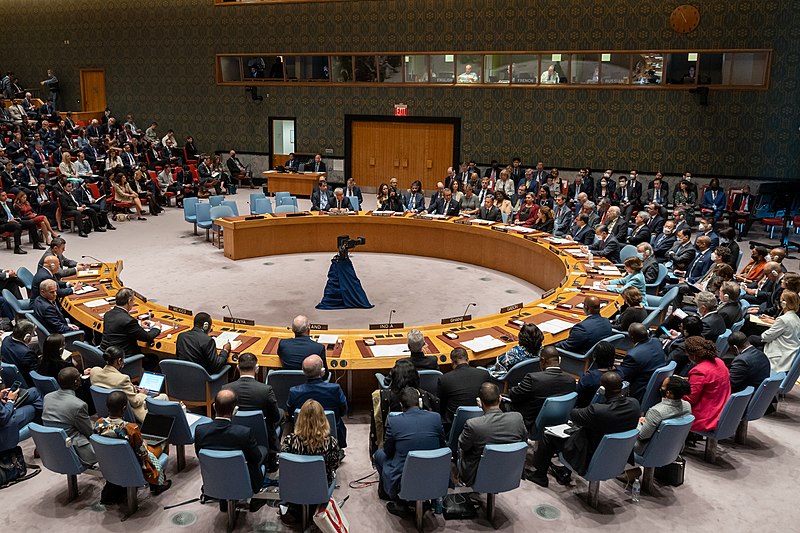
The United Nations Security Council has condemned the increasingly restrictive policies the Taliban has put in place on women in Afghanistan. The panel especially condemned the latest decrees by the insurgent group barring women from attending universities or working for humanitarian groups.
In a statement by the 15-member panel agreed upon by consensus on Tuesday, the UN Security Council said the latest bans on Afghan women and girls “represent an increasing erosion for the respect of human rights and fundamental freedoms.” The council also said the ban on female humanitarian workers “would have a significant and immediate impact for humanitarian operations in the country.”
“These restrictions contradict the commitments made by the Taliban to the Afghan people as well as the expectations of the international community,” said the council, which also expressed support for the UN mission to Afghanistan, also known as UNAMA.
Last week, UN aid chief Martin Griffiths told the security council that 97 percent of Afghans live in poverty, two-thirds of Afghanistan’s population rely on aid to survive, 20 million people face acute hunger, and 1.1 teenage girls were banned from attending school.
“The latest restriction by the Taliban on employment & education of women & girls are unjustifiable human rights violations & must be revoked,” tweeted UN Secretary-General Antonio Guterres. “Actions to exclude & silence women & girls continue to cause immense suffering & major setbacks to the potential of Afghan people.”
The Taliban announced the university ban last week as the UN Security Council met in New York to discuss Afghanistan. The insurgent group then announced a ban on female NGO employees on Saturday.
On Wednesday, the UN said it was temporarily suspending some “time-critical” programs in light of the latest ban on female aid workers. The UN also warned that many other programs in Afghanistan may also be temporarily stopped.
In a joint statement, Griffiths and other heads of several other aid groups said that the participation of women in humanitarian work is “not negotiable and must continue” while calling on the Taliban to reverse the decree.
The group warned that barring women from participating in humanitarian work would have “life-threatening” repercussions on all Afghans.







