


 US Treasury Plans Weekly Iran Sanctions Push
  ICE Awards $16.7M Contract for Electric Shock Gloves
  US Military Uses Laser to Shoot Down Cartel Drones at Mexico Border
  Pentagon Eyes 100-Year Lease on Venezuela Oil Fields
  Norway’s King Harald Dies at 89, Haakon VIII Takes Throne
  Bessent Says Yen Moves Contained as BOJ Rate Decision Looms
  Finland’s Stubb Says Russia Unlikely to Attack NATO
  Bessent Urges G20 to Rethink China Trade Ties
  U.S. Strikes Iranian Launchers on Larak Island
  Tennessee Plans to Rename Nashville Airport After Dolly Parton
  Nepal Seeks More China Glacier Data After Deadly Himalayan Flood
  Ukraine Seeks Early EU Funds to Cover $27B Defence Gap
  North Korea Vows to Strengthen Nuclear Arsenal Amid U.S. Tensions
  Iran Targets U.S. Forces in Jordan as Missiles Intercepted
  Canada Backs €100B Global Defence Bank as G7 Support Lags
  Flavio Bolsonaro Pledges to Respect Brazil Election Result


 Add as a preferred source on Google
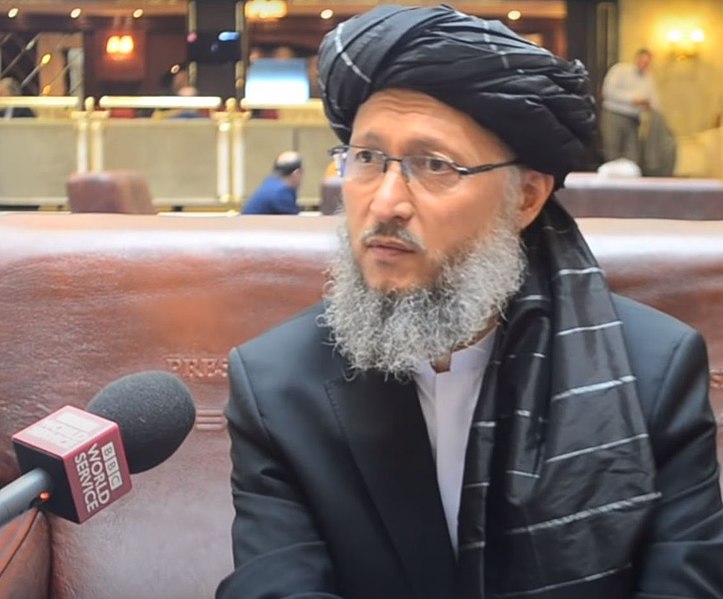
The international community has raised concerns about the Taliban’s policies on women and girls since retaking control of Afghanistan in August last year. The insurgent group’s acting deputy prime minister said no female participants would be present at the upcoming national unity gathering.
Afghanistan’s acting deputy prime minister Abdul Salam Hanafi told the country’s state broadcaster RTA that the national unity gathering, the first since the insurgent group took over the country, would have no women in attendance.
The gathering would be made up of the country’s religious scholars in order to address the Islamic system of government, as well as economic and social issues.
“Different people with different views are going to gather…this will be a positive step for stability in Afghanistan and strengthening national unity,” said Hanafi. When pressed whether there would be women in attendance, Hanafi said men will be representing the women in the country at the gathering.
“The women are our mothers, sisters, we respect them a lot, when their sons are in the gathering it means they are also involved, in a way, at the gathering,” said Hanafi.
Civil society groups criticized the move, saying that the gathering will lose legitimacy if no women are allowed to attend. It remains to be seen whether the issue of women’s rights and education for girls would be discussed at the gathering.
International governments, such as the US, have called for the Taliban to reverse some of its restrictive policies on women and girls after it reversed a decision to reopen schools for girls back in March and required women to keep their faces covered and have a male chaperone when traveling.
Meanwhile, Pakistan’s foreign minister Hina Rabbani Khar called to ease the sanctions by the West on the insurgent group, saying the Afghan economy must function.
Foreign governments, especially the United States cut aid to Afghanistan when the Taliban took over the country, and the strict enforcement of sanctions has also led to an economic crisis in the country.
Khar said isolating Afghanistan economically would lead to the country’s economic collapse. Khar also called on Germany, which was also involved in the west’s military withdrawal from Afghanistan, to play a role in easing sanctions on the country.







