


 Astronomers have discovered another puzzling interstellar object − this third one is big, bright and fast
  Cogent Biosciences Soars 120% on Breakthrough Phase 3 Results for Bezuclastinib in GIST Treatment
  Jared Isaacman Confirmed as NASA Administrator, Becomes 15th Leader of U.S. Space Agency
  Neuralink Plans High-Volume Brain Implant Production and Fully Automated Surgery by 2026
  Neuren Pharmaceuticals Surges on U.S. Patent Win for Rare Disorder Drug
  Tabletop particle accelerator could transform medicine and materials science
  Is space worth the cost? Accounting experts say its value can’t be found in spreadsheets
  NASA Astronauts Wilmore and Williams Recover After Boeing Starliner Delay
  CDC Vaccine Review Sparks Controversy Over Thimerosal Study Citation
  Trump Signs Executive Order to Boost AI Research in Childhood Cancer
  Trump and Merck KGaA Partner to Slash IVF Drug Costs and Expand Fertility Coverage
  SpaceX Starship Explodes in Texas During Test, Citing Nitrogen Tank Failure
  SpaceX Prioritizes Moon Mission Before Mars as Starship Development Accelerates


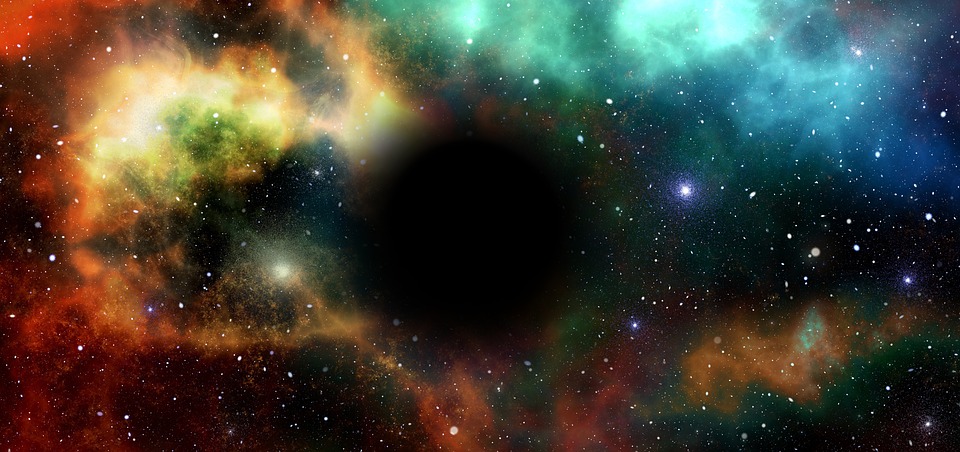
There have been many theories and explanations regarding black holes. However, a scary realization comes in the form of the black hole in the center of our own galaxy, which, experts believe, can consume the planet in the future.
Express reports that the supermassive black hole in the middle of the Milky Way referred to as Sagittarius A can potentially consume the Earth if the planet is directed its way through space. Right now, the black hole is 26,000 light-years away from Earth, which means we’re at a safe distance. This is because one light-year is equivalent to 5.8 trillion miles, but as the sun begins to expand as it goes out, the solar winds could potentially direct the Earth away from its orbit and towards the black hole in the middle of the galaxy.
University of Copenhagen astrophysicist Dr. Charles Steinhardt explained that in the event that the Earth is able to survive being removed from the galaxy, then it would result in either the sun or the planet can be consumed by the black hole after one nonillion years. Steinhardt also went on to say that at the moment, there is a very small chance of it happening. “So if we wait long enough, yes, we might end up merging with our central supermassive black hole.”
Another possibility, which appears to be the more plausible one, is that the sun will expand and burn up the Earth.
With that in mind, can the Milky Way be consumed by the black hole? According to NASA, it cannot. The space agency stated that while the gravitational pull of the black hole is very strong, it is highly unlikely that the black hole could ever consume its host galaxy. They also went on to state that while the gravitational pull is very large for black holes, it is not large enough to consume a whole galaxy.
Thus, even if the sun was to fall into the black hole, the Earth remains intact and safe from any destruction that could happen right away. However, the possibility of the sun becoming a black hole in itself is also highly unlikely, simply because it is not heavy enough.













