


 Florida Investigates OpenAI and ChatGPT Over Alleged Role in FSU Shooting
  Nvidia Pushes 800V Data Center Power Systems to Boost Efficiency and Cut Costs
  Daiichi Sankyo Stock Drops After Earnings Delay and Oncology Review
  U.S. Raises Alarm Over Chinese AI Firms’ Alleged IP Theft Through Model Distillation
  SK Hynix to Invest $13 Billion in AI Chip Packaging Facility
  Tesla Earnings Beat Expectations as EV Growth Holds Amid Robotics and AI Shift
  LG Innotek Stock Hits Record High on $68M Automotive Wi-Fi 7 Deal
  Rising Jet Fuel Costs from Iran Conflict Push Airfare Higher Across Europe
  Intel Stock Surges as AI Chip Demand Drives Strong Q2 Forecast
  Organon Stock Surges After Reports of $13 Billion Buyout Bid by Sun Pharma
  Judge Dismisses Elon Musk’s Fraud Claims Against OpenAI, Trial to Proceed on Remaining Allegations
  SpaceX Eyes $60B Cursor Deal to Boost AI Power Ahead of IPO
  Meta Expands AI Training With Employee Activity Tracking Tools
  Why Global Web3 Projects Can't Afford to Skip South Korea: TokenPost Unveils Data-Driven Entry Solutions
  Hyundai Plans 20 New Models in China to Boost EV Strategy and Market Share
  U.S. Sanctions Target Chinese Refinery Over Iranian Oil Purchases
  Samsung Boosts DRAM Supply to Tesla as AI-Driven Memory Demand Surges


AURORA, Colo., Feb. 23, 2016 -- Heart specialists at UCHealth's Medical Center of the Rockies and University of Colorado Hospital are the first in the region to implant a new device that can reduce the risk of strokes for patients with non-valvular atrial fibrillation and allow patients at high risk of bleeding to stop taking powerful blood thinners.
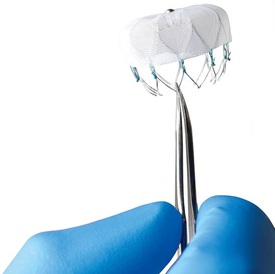
The Watchman device is about the size of a quarter and looks like a tiny umbrella. It was designed to prevent clots from forming in the left atrial appendage by sealing off this section of the heart where most deadly blood clots form in people with atrial fibrillation.
Teams of heart specialists have implanted the device in six UCHealth patients, and additional patients are now being evaluated for eligibility.
More than 2.7 million Americans are living with atrial fibrillation, which is a heart condition where the upper chambers of the heart beat too fast and with an abnormal rhythm. As a result, blood can pool and form clots in an area of the heart called the left atrial appendage. If a blood clot forms there, it can travel through an artery to the brain and cause a stroke.
People who have atrial fibrillation – also called A-fib – are up to five times more likely to have a stroke than someone without the condition, according to the Centers for Disease Control and Prevention.
"To prevent strokes, we have to prevent blood clots," said to Dr. Justin Strote, a UCHealth interventional cardiologist who was part of the multidisciplinary team that conducted the Watchman procedures at MCR.
The development is a dramatic change for how doctors can treat A-fib. For decades, doctors have reduced the risk of clots by treating patients with blood thinner medications. But this common therapy is not well-tolerated by some patients in the long term and carries a significant risk for bleeding complications. The Watchman device was approved by the FDA and approved for Medicare coverage specifically for patients who have a high risk of bleeding and a reason to avoid warfarin, a potent blood thinner.
"The Watchman device can be a safer alternative for many atrial fibrillation patients, and unlike open-heart surgery, the device is placed in the heart during a less-invasive procedure, enabling patients to get back to their normal activities within days," said Dr. Duy Nguyen, a cardiologist and electrophysiologist at University of Colorado Hospital who led the team during the procedures.
To implant the device, a specialized cardiac team inserts it through a catheter in a vein in the upper leg and guides to the heart. The device crosses from the right side of the heart to the left side of the heart before it is positioned in the correct spot in the left atrial appendage.
The procedure is done under general anesthesia and typically lasts one to two hours. After the procedure, patients stay in the hospital overnight, and recovery typically takes about 24 hours. A few months after the procedure, the patients are reassessed to determine if the device has successfully closed off the left atrial appendage, and then the patient can reduce or stop taking blood thinners.
The Centers for Medicare and Medicaid Services requires that confidential medical data be submitted to a national registry to monitor safety and enable further scientific studies regarding this innovative treatment. Faculty at the University of Colorado School of Medicine were involved with the creation of this national registry.
For more information about the Watchman procedure or to schedule an appointment, go to uchealth.org/watchman-device or call 970-616-6384 for Medical Center of the Rockies in Loveland or 720-709-2048 for University of Colorado Hospitalin Aurora.
About UCHealth
|
|||||
UCHealth is a Front Range health system that delivers the highest quality patient care with the highest quality patient experience. UCHealth combines Memorial Hospital, Poudre Valley Hospital, Medical Center of the Rockies, University of Colorado Hospital and a network of more than 40 medical clinics into one organization dedicated to health and providing unmatched patient care in the Rocky Mountain West. UCHealth partners with the University of Colorado School of Medicine and numerous community organizations to provide care. Separately, these institutions can continue providing superior care to patients and service to the communities they serve. Together, they push the boundaries of medicine, attracting more research funding, hosting more clinical trials and improving health through innovation.
A photo accompanying this release is available at:
http://www.globenewswire.com/newsroom/prs/?pkgid=39072
CONTACT: Dan Weaver 720-848-7852; [email protected]








