


 Meta Ordered to Pay $567M Over Child Safety Violations in New Mexico
  Israeli Troops Enter Qusra Homes as West Bank Settler Siege Continues
  North Korea Slams US-South Korea Drills, Vows Stronger Nuclear Deterrence
  Anthropic Signs $9.1B AI Data Center Deal With Riot Platforms
  Cisco Forecasts Strong Fiscal 2027 Growth as AI Networking Demand Surges
  Micron Stock Upgraded to Buy as New Street Sees $2 Trillion Valuation Potential
  US, Colombia Weigh Joint Strikes on Armed Groups in Expanded Anti-Drug Campaign
  Jared Kushner May Visit Israel for Gaza Talks Next Week
  Lenovo Revenue Surges 43% as AI Demand Drives Record First-Quarter Growth
  Nvidia Secures $500 Billion AI Infrastructure Push With Wall Street Giants
  Aviva First-Half Operating Profit Jumps 24% as Direct Line Deal Boosts Growth
  Trump Imposes New Tariffs on Drone Imports Over US Security Concerns
  Bashar al-Assad Sentenced to Death by Syrian Court
  Stripe, Advent Reportedly Pursue $53 Billion PayPal Takeover
  Taiwan Flags AI-Assisted Cyberattacks Targeting Government Agencies
  SMIC Shares Rally as Q2 Profit Surges 262% on Strong Chip Demand
  ANZ Home Loan Applications Drop 12% After Australia Property Tax Changes


 Add as a preferred source on Google
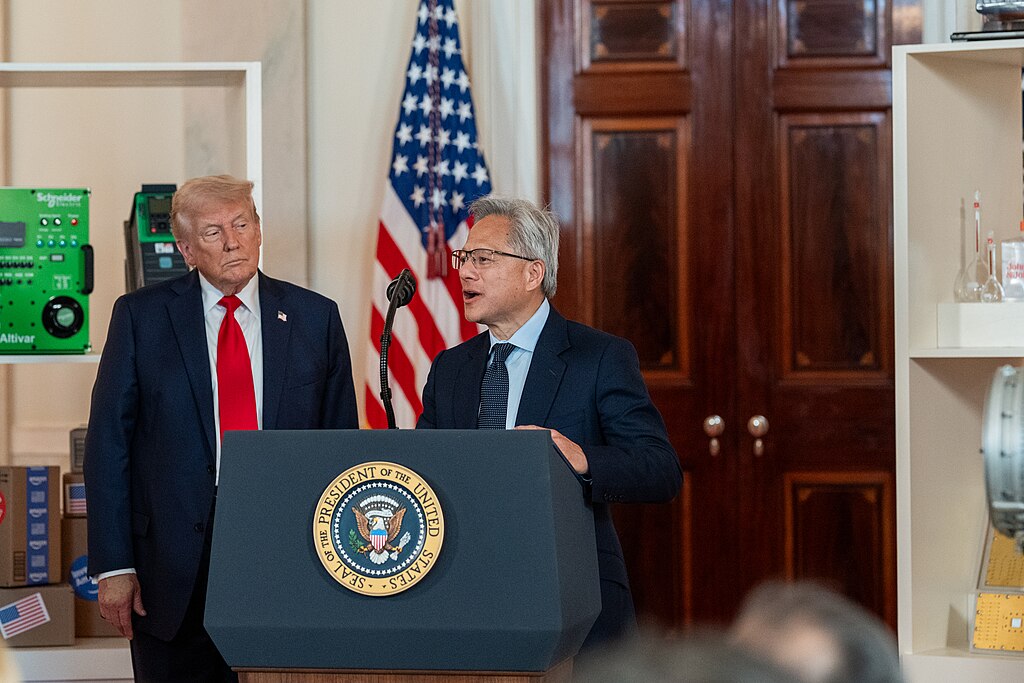
Nvidia’s efforts to expand AI chip sales in China remain stalled even after the U.S. approved several Chinese technology giants to purchase the company’s H200 processors. Although around 10 Chinese firms, including Alibaba, Tencent, ByteDance, and JD.com, reportedly received approval to buy Nvidia’s second-most powerful artificial intelligence chip, no shipments have been completed so far.
The delay highlights the growing tension in the U.S.-China technology rivalry, which continues to disrupt global semiconductor trade. Nvidia CEO Jensen Huang recently joined President Donald Trump’s trip to Beijing ahead of talks with Chinese President Xi Jinping, raising expectations that diplomatic discussions could help revive the blocked transactions.
Before tighter U.S. export controls were introduced, Nvidia controlled nearly 95% of China’s advanced AI chip market. China previously contributed about 13% of Nvidia’s revenue, while Huang estimated the country’s AI market could reach $50 billion this year. However, stricter regulations and political pressure from both governments have complicated the company’s business operations in the region.
The U.S. Commerce Department reportedly approved distributors such as Lenovo and Foxconn to facilitate H200 sales in China. Under licensing rules, approved buyers can purchase up to 75,000 chips each. Despite these permissions, Beijing has reportedly become cautious about allowing large-scale imports due to concerns that reliance on foreign technology could weaken China’s domestic semiconductor industry.
China is increasingly pushing local firms to adopt homegrown AI chips, especially products developed by Huawei. This strategy reflects Beijing’s broader goal of reducing dependence on U.S. technology amid escalating geopolitical competition. Additional security concerns over supply chain vulnerabilities and foreign technology oversight have also intensified scrutiny of Nvidia’s products.
Meanwhile, critics in Washington argue that allowing Nvidia to continue supplying advanced AI chips to China could reduce America’s technological advantage in artificial intelligence. The ongoing uncertainty leaves Nvidia caught between two powerful governments while the global AI chip market continues to grow rapidly.







