


 Gold Price Ends Lower for Fourth Week Despite Rebound as Fed Rate Hike Bets Strengthen
  Javier Milei Cabinet Chief Manuel Adorni Resigns Amid Spending Scandal Investigation
  Trump Threatens 100% Tariffs on Countries Imposing Digital Services Taxes on U.S. Tech Firms
  Trump Announces September Overhaul of Washington’s East Potomac Golf Links
  Taiwan Coast Guard Officer Finds Strength in Faith as China Increases Pressure in Taiwan Strait
  Trump Signs Memorandum Backing Americans’ Right to Repair Their Own Vehicles
  Australia Plans Higher Fines for Social Media Firms Failing to Block Underage Users
  China Factory PMI Seen Returning to Growth in June as AI Export Demand Supports Economy
  Russian Attacks on Dnipro, Zaporizhzhia, and Kharkiv Kill 10 as Ukraine Vows Response
  Despite its best efforts, Iran won’t be able to toll the Strait of Hormuz. Here’s why
  Asian Currencies Stay Range-Bound as Investors Eye China Data, RBNZ Outlook and U.S.-Iran Ceasefire
  Ukraine Strikes Russian Titan-Barrikady Plant With Long-Range FP-5 Flamingo Missile
  China Sets 1.25% Overnight Reverse Repo Rate Below Market Expectations
  China Expands Export Controls, Adds 20 Japanese Companies to Restricted List
  US Strikes Iran Again After Strait of Hormuz Tanker Attack Escalates Ceasefire Tensions
  Canada Grants C$7 Million to Greenland Molybdenum Mine to Strengthen Critical Minerals Supply
  Central Banks Eye Gold, Reduce Dollar Exposure as AI Adoption Accelerates: OMFIF Survey


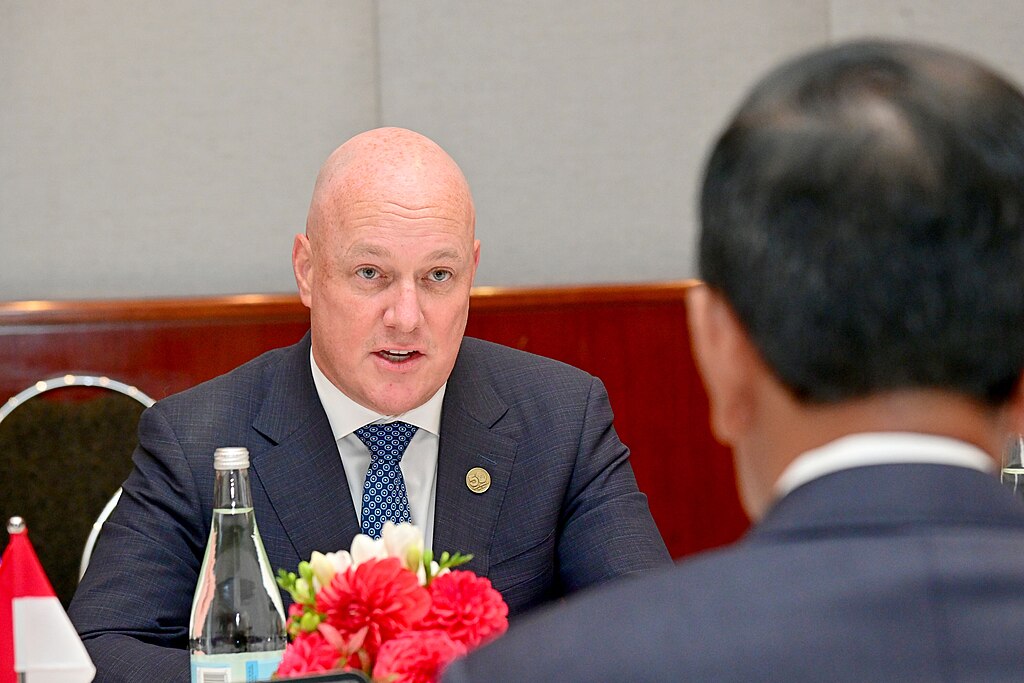
New Zealand Prime Minister Christopher Luxon announced that the government will maintain strict control over day-to-day spending in Budget 2026 while significantly increasing capital investment to strengthen the country’s infrastructure, defence capabilities, and energy resilience.
Speaking during a pre-Budget address on Wednesday, Luxon said the government is reshaping its fiscal strategy to restore public finances and prepare New Zealand for rising global uncertainty and domestic economic challenges. The plan comes as the country continues to face weak economic growth, aging infrastructure, and geopolitical tensions worldwide.
Under the upcoming budget, the net operating allowance will be NZ$2.1 billion, lower than the NZ$2.4 billion projected in December. The government aims to return to an operating surplus excluding the state accident insurer by the 2028/29 fiscal year. At the same time, the capital spending package will rise to NZ$5.7 billion, exceeding earlier forecasts as the government prioritizes investments in transport infrastructure, schools, hospitals, defence, and energy security.
Luxon emphasized that balancing fiscal repair with strategic capital investment is central to the government’s economic approach. He also reaffirmed the administration’s goal of reducing public debt toward 40% of gross domestic product.
The National-led government has consistently promoted spending restraint and tighter fiscal discipline since taking office. Luxon highlighted ongoing savings measures across government agencies while maintaining investments in essential sectors such as healthcare and education.
The prime minister also warned that the global environment is becoming increasingly unstable. He said New Zealand can no longer rely solely on geography, alliances, or renewable energy to protect itself from international shocks. Luxon reiterated plans to nearly double defence spending to 2% of GDP, arguing that economic prosperity depends heavily on national security and resilience in a rapidly changing world.







