


 AMD Unveils Helios AI Servers to Challenge Nvidia as OpenAI Adopts New Platform
  US, China to Hold AI Talks Ahead of Xi’s September Visit
  IBM Q2 Earnings Miss Estimates as Software Growth Offsets Infrastructure Weakness
  Elon Musk Fuels SpaceX-Tesla Merger Speculation After Earnings Call
  Oracle Stock Rises After Winning Up to $6.99 Billion U.S. Defense Software Contract
  ASML Trillion-Dollar Valuation: Can Europe’s AI Chip Giant Reach the Historic Milestone?
  SpaceX Q2 Earnings on Aug. 4 Set Stage for Historic Insider Share Unlock
  Australia ASIC Tightens Auditor Oversight After KPMG Leak Scandal
  Judge Approves Anthropic’s $1.5 Billion AI Copyright Settlement With Authors
  SpaceX Stock Slump Wipes Out Nearly $700 Billion From Elon Musk’s Paper Wealth
  OpenAI Australia Data Center Switches Cooling Strategy After Recycled Water Plan Fails
  SAP Beats Q2 Revenue Estimates as Cloud Backlog and Business AI Demand Drive Growth.
  Domino’s Weighs Appeal After Australian Court Rules Workers Were Misled on Pay
  Macquarie Names Greg Ward as CEO, Signaling Stability and Strategic Continuity
  Wistron Opens $700M Texas AI Factory to Build Nvidia GB300 Superchips
  Rubio Rejects AI ‘Kill Switch’ Claims as U.S. Defends American Technology Abroad
  Morgan Stanley Downgrades Adobe, Workday as AI Transition Raises Growth Concerns


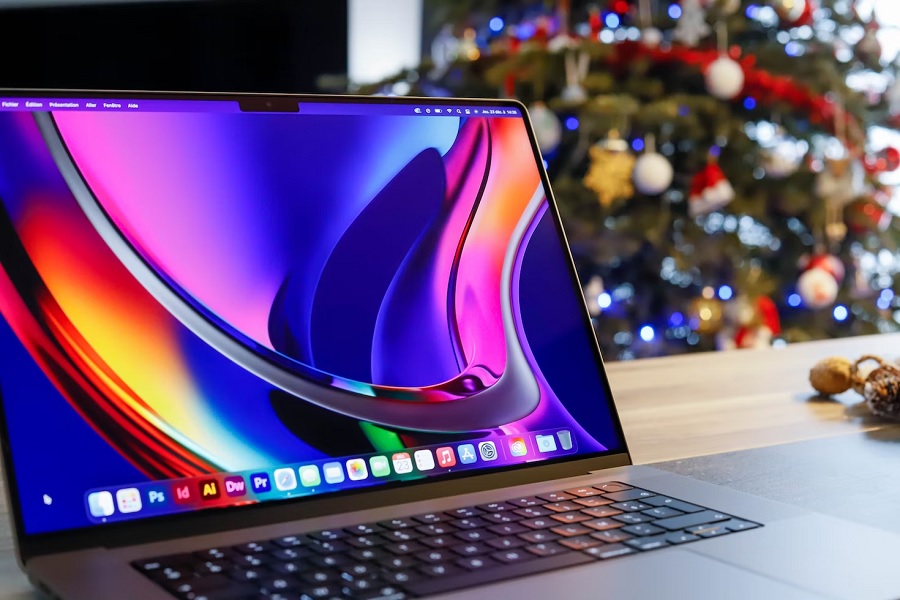
Several well-known Apple sources say that the company could have a surprise announcement brewing for Tuesday, Jan. 17. And it could be about the awaited new versions of the 14-inch and 16-inch MacBook Pro.
FrontPageTech’s Ian Zelbo and Jon Prosser have advised people on Twitter to tune in for an announcement through the Apple newsroom on Tuesday. While their original tweets did not specifically say what products would be unveiled, Zelbo later hinted at the announcement being about the new MacBook Pros.
A few hours later, Bloomberg’s Mark Gurman confirmed that “Apple does have an announcement tomorrow” while sharing a report on regulatory filings for new MacBook Pros. The journalist added that Apple will conduct press briefings later this week and that the media embargo on the products to be announced will be lifted on Monday next week. The latter suggests that the new MacBook Pro’s retail launch could follow soon after its rumored announcement on Jan. 17.
The sources also appear to agree on one thing — Apple will not hold a dedicated media event for the new MacBook Pros. This means Apple fans should look out for a press release to unveil the laptops on Apple Newsroom. The company typically releases these types of announcements around 10 a.m. PT.
In the earlier part of 2022, the new 14-inch and 16-inch MacBook Pros were initially anticipated to launch by fall of last year. However, Gurman reported in late October that their announcement had been internally delayed to “early next year.”
The lack of a media event for the new slate of MacBook Pro also suggests there would be minor upgrades to the upcoming laptops. Apple will likely continue using the same design language introduced in 2021, which included a display notch and thinner display bezels. But one of the most likely changes would be the inclusion of a more powerful Apple silicon.
Similar to their predecessors, the new Macs are expected to be available with M2 Pro and M2 Max chipsets. The latter, according to previous reports, would feature up to 12 CPU cores and 38 GPU cores. These are notable improvements from the M1 Max, which had 10 CPU and 32 GPU cores.
Photo by Mathieu Improvisato on Unsplash







