


 SK Hynix, Intel Discuss U.S. Memory Chip Production Deal
  Apple Pay Set for India Launch With Axis Bank
  Cathie Wood Backs AI Slowdown as Safety Concerns Grow
  Trump Rejects Calls for Tougher AI Regulation
  LVMH-Hermès Dispute Deepens Over Secret 2002 Share Deal
  Hyundai CEO Warns Chinese Automakers Could Disrupt US Market
  France Urges Faster AI Push Despite Safety Risks
  White House Bars CNN, MS NOW and Politico Reporters
  Trump Bans CNN, MS NOW and Politico From White House
  Meta CEO Zuckerberg Backs Independent AI Safety Reviews Over Development Slowdown
  Volvo Cars Plans 13 New Models by 2030 to Boost Sales
  Rosenblatt Starts Nokia at Buy on AI Networking Growth
  Synthetic data could ease people’s concerns about privacy breaches. But who gets to create it?
  Supertanker Orders Surge as US-Iran War Reshapes Oil Trade
  AI is supercharging money scams – here’s what you can do to protect yourself
  Westinghouse Targets $50 Billion Valuation in U.S. IPO
  Big AI wants to slow down AI research. Is it a safety pause or a strategic retreat?


 Add as a preferred source on Google
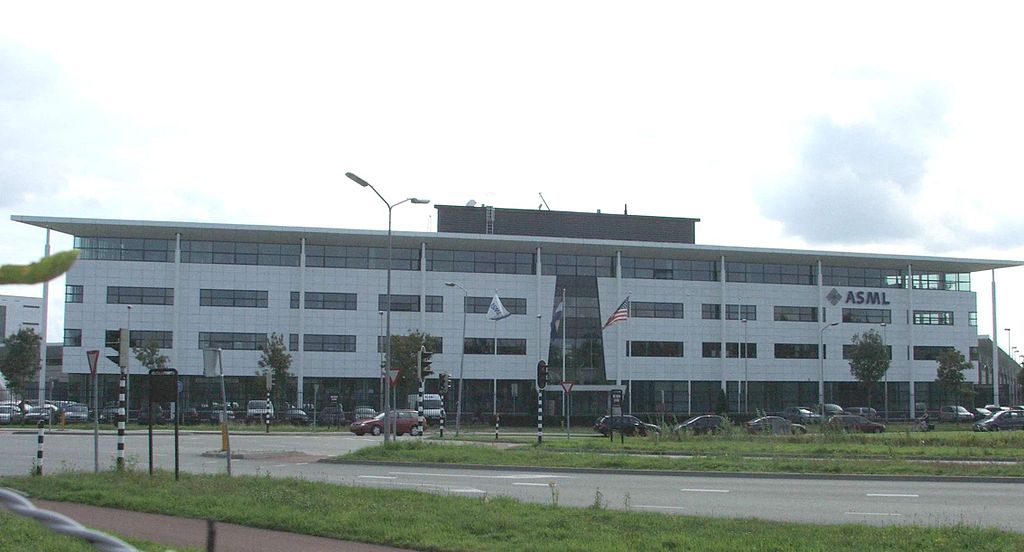
The global artificial intelligence boom has fueled a remarkable rise in ASML’s market value, positioning the Dutch semiconductor equipment maker as Europe’s most valuable listed technology company. Following stronger-than-expected second-quarter earnings, investors are increasingly asking whether ASML could become Europe’s first company to achieve a $1 trillion market capitalization.
ASML’s shares have surged roughly 60% this year, lifting its valuation to nearly $700 billion. Several analysts, including those at Barclays, Bernstein, and Susquehanna, have raised their 12-month price targets above $2,600 per share, a level that would place the company near the $1 trillion mark.
The company holds a unique position in the semiconductor industry as the world's only supplier of extreme ultraviolet (EUV) lithography machines, which are essential for manufacturing the most advanced AI processors and memory chips. This monopoly has made ASML a critical supplier to leading chipmakers such as Taiwan Semiconductor Manufacturing Co. (TSMC) and Samsung, whose customers include AI leaders like Nvidia, OpenAI, Anthropic, Google, and Amazon.
Long-term investors remain optimistic about ASML’s prospects. Portfolio managers describe the company as possessing strong competitive advantages and benefiting from durable industry demand driven by AI infrastructure investments. However, analysts caution that reaching a trillion-dollar valuation will depend on continued spending by hyperscale cloud providers on data centers, along with ASML’s ability to execute its production expansion plans and manage supply chain challenges.
Geopolitical risks also remain a concern. Proposed U.S. legislation, including the MATCH Act, could restrict ASML’s equipment sales and servicing operations in China, a market expected to account for around 20% of the company’s 2026 revenue.
Despite these risks, analysts see additional growth opportunities. Memory chip manufacturers such as SK Hynix, Samsung, and Micron are increasingly shifting from older deep ultraviolet (DUV) production technology to ASML’s higher-value EUV systems, creating a profitable upgrade cycle. Future chip manufacturing projects, including Elon Musk’s planned Terafab facility in Texas for Tesla and SpaceX, could further boost demand for ASML’s equipment.
While AI-related stocks have experienced increased volatility in recent weeks, many analysts believe ASML remains one of the strongest long-term beneficiaries of the AI revolution. If AI investment continues and the company successfully executes its strategy, ASML could become Europe’s first trillion-dollar company, although the path is expected to remain volatile.







